

The CSIR International Convention Centre in Pretoria recently hosted the CyberSecureTech Hackathon 2025, a flagship youth innovation initiative that convened 85 young innovators, entrepreneurs, and tech enthusiasts from higher education institutions across Gauteng and Limpopo. Participants were drawn from higher education institutions, including the University of Venda (UNIVEN), Vhembe TVET College, University of Limpopo, University of Johannesburg, Tshwane University of Technology and other participating institutions, reflecting a growing inter-institutional commitment to strengthening cybersecurity capability and digital resilience in South Africa.
Selected from over 500 applications, 85 participants engaged in 72 hours of intensive collabo-ration, translating real-world cybersecurity challenges into practical, ethically grounded solu-tions. The hackathon positioned cybersecurity not only as a technical discipline, but as a socio-economic imperative closely linked to public trust, service delivery, digital inclusion, and national resilience.
This perspective was further reinforced in the opening keynote address by the Deputy Direc-tor-General (DDG) of the Department of Science, Technology and Innovation (DSTI), who em-phasised the extent to which digital systems have become integral to daily life, underpinning everything from banking and financial transactions to access to essential public and private services. He noted that even systemic challenges such as load shedding carry cybersecurity implications, as disruptions to power and connectivity can expose vulnerabilities in ATMs, elec-tronic payments, and cash-digital withdrawal systems. The DDG emphasised that cyber threats are constant and often invisible, with attempts to compromise systems occurring continuous-ly. However, due to reputation and risk considerations, cyber incidents are rarely disclosed publicly, creating a false perception that such threats are infrequent. In an increasingly inter-connected digital ecosystem, he cautioned that a breach in one system can have wide-ranging ripple effects, underscoring cybersecurity as a national, economic, and societal priority. Against this backdrop, initiatives such as the CyberSecureTech Hackathon play a critical role in developing the next generation of innovators capable of designing resilient systems and safe-guarding South Africa’s digital future.

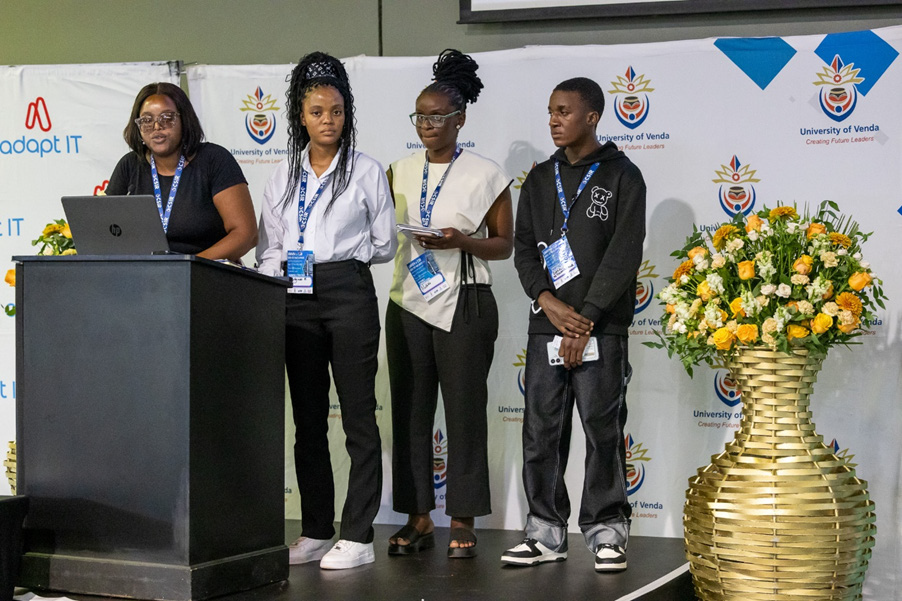
A group of participants
Working alongside industry mentors and facilitators from Adapt IT, Geekulcha, TakeNote IT, CSIR, and UNIVEN, teams developed functional prototypes rooted in African contexts and informed by ethical principles, Ubuntu, and social impact. Led by Ms Shumani Nembudani CA(SA) from UNIVEN’s Faculty of Management, Commerce and Law, the CyberSecureTech Hackathon has rapidly evolved into a nationally recognised platform for interdisciplinary inno-vation, skills development, and youth empowerment. The initiative was further supported by 6 UNIVEN staff and 9 student assistants drawn from the Faculty of Management, Commerce and Law, International Relations and Partnerships, ICT Services, and the Directorate of Community Engagement, Entrepreneurship, Inclusive Innovation and Commercialisation, reflecting a collaborative institutional approach to experiential learning and innovation.
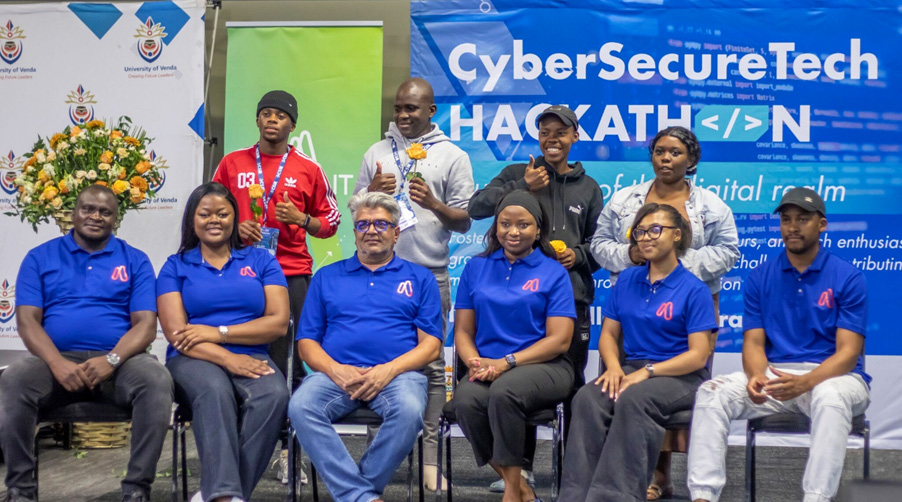
Adapt IT Mentors and First Place Winners: From L to R: Titelo Maleka (from TUT), Sigidane Khum-budzo (from UNIVEN), Mukhumo Sandra (from UNIVEN), and Phooko Mokgomme (from UNIVEN)
The top-performing teams showcased a diverse range of innovative solutions that address some of the most pressing cybersecurity and digital trust challenges facing society today. Their ideas spanned areas such as fraud and scam prevention, phishing detection, protection against misinformation and deepfakes, ethical and POPIA-compliant AI systems, secure digital communication, emergency response technologies, regulatory compliance tools for small busi-nesses, and smart community applications. Collectively, the pitches reflected a strong under-standing of real-world risks and demonstrated how cybersecurity can be leveraged to protect communities, strengthen public trust, and enable inclusive digital participation. The quality of the prototypes and presentations underscored participants’ ability to translate complex cyber-security concepts into practical, scalable solutions relevant to African contexts.
The event’s panel of judges reflected the depth and calibre of the programme. The final judges’ panel was led by Dr Pulane Modiha, a seasoned banking executive and 2025 Mail & Guardian Power of Women Award recipient (Banking and Finance), alongside Prof Ruidong Zhang from Zhejiang University International Business School, whose expertise spans cloud computing, blockchain, machine learning, and data analytics. Pre-final judging included Lovemore Nalube, Technical Product Owner and Engineering Lead at Nedbank; Pranisha Rama, cybersecurity scholar and Lecturer at the University of Johannesburg; and Pratish Lakhoo, Senior Manager at Adapt IT with expertise in strategic initiatives and technology-enabled process optimisation.
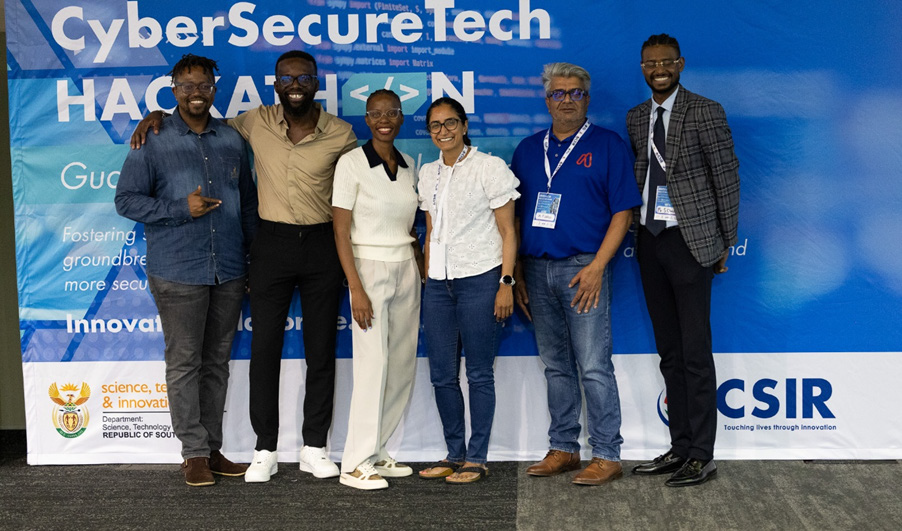
L-R. Mr Matome Mokoena (IRP) Mr Lovemore Nalube (Judge) Ms Shumani Nembudani (UNIVEN –Faculty of Management, Commerce and Law), Ms Pranisha Rama (Judge), Mr Pratish Lakhoo (Judge), Mr Siveshen Chettier (Mzansi Bites)
The hackathon concluded with a formal Pitch Day where 11 finalist teams, down from 18 pre-sented their prototypes and business pitches to the final judging panel. Teams were evaluated on technical innovation, relevance to real-world challenges, feasibility, and social impact. The closing session culminated in the announcement of winners and prize allocations, followed by reflections from judges and partners on the quality and maturity of the solutions presented.
Following an impressive round of final pitches and demonstrations with the final judges, the top-performing teams were announced. Mzansi Shield was awarded first place and received R25,000 in prize funding. Cyber Blockers secured second place with a prize of R15,000, while Data Defence Solutions and Zero Trust jointly received third place, each awarded R5,000. The winning teams were recognised for the strength of their technical solutions, their relevance to real-world cybersecurity challenges, and the clarity of their execution.
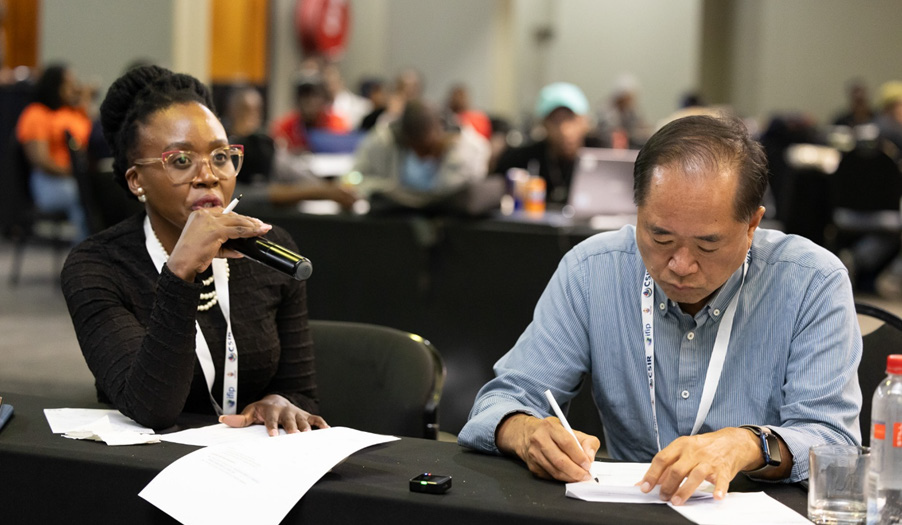
Final Judges: Dr Pulane Modiha, Prof Ruidong Zhang
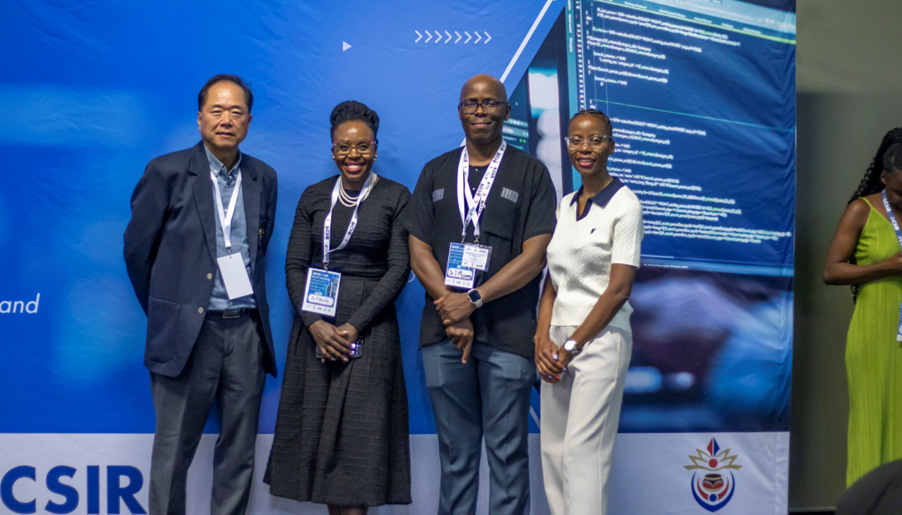
Prof Ruidong Zhang (Final Judge), Dr Pulane Modiha (Final Judge), Dr Jabu Mtsweni (CSIR: Head of Cybersecurity Centre), Ms Shumani Nembudani (FMCL)
Beyond the competition itself, the hackathon prioritised sustainability and post-event impact. All finalist teams will receive six months of structured mentorship, technical support, and busi-ness development guidance, ensuring that promising solutions continue to mature beyond the event. Supported by the UNIVEN, CSIR, the Department of Science, Technology and Innovation, and industry partners, including Adapt IT, Cisco, Eskom, TESP, the CyberSecureTech Hackathon has delivered more than prototypes; it has strengthened pipelines for graduate employability, innovation-led entrepreneurship, and interdisciplinary collaboration.
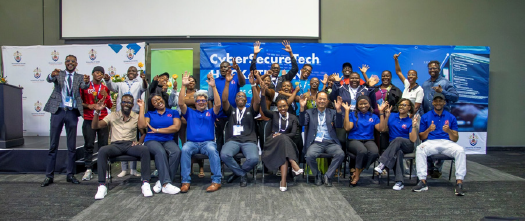
Top 3 Finalists with mentors, judges and the Organising Committee
Building on the success of the 2025 edition, plans are underway to continue the CyberSecure-Tech Hackathon as an annual initiative, with the 2026 edition envisaged to expand inter-institu-tional participation, industry partnerships, and post-hackathon incubation support.
The outcomes of the CyberSecureTech Hackathon 2025 reaffirm a clear institutional and national message: ‘when African youth are trusted with responsibility, provided with the right platforms, and supported through meaningful partnerships, they deliver solutions that are both globally relevant and locally grounded’. The hackathon serves as a practical demonstration of how higher education, industry, and government can collaborate to enhance graduates’ capacity to participate meaningfully in the digital economy while safeguarding South Africa’s digital future.
Issued by:
Department of Marketing, Branding and Communication
University of Venda
Tel: 082 868 2218 / 082 868 1811


