
The University of Venda has established the Centre of Excellence in Mass Spectrometry for Southern Africa (CEMSSA), building on six years of highly successful research outputs that have positioned the institution among the leaders in mass spectrometry–based research.
Housed within the Faculty of Science, Engineering and Agriculture (FSEA), the centre is led by analytical biochemist Prof. Ntakadzeni Edwin Madala, who is driving interdisciplinary collaborations with scholars across multiple universities to expand the centre’s reach and impact.
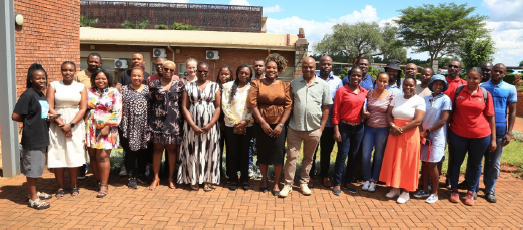
UNIVEN staff photographed with guest speakers
In line with this vision, the University hosted scholars, students, and stakeholders at its Research Conference Centre on 5 February 2026 for a thought-provoking public lecture on innovative approaches to drinking water treatment. The lecture showcased how nanotechnology, together with advanced analyses of natural organic matter, can help address water quality challenges and protect public health, particularly in water-scarce communities.
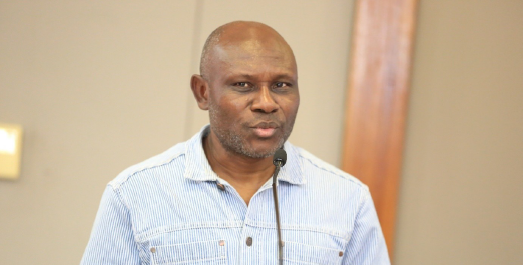
Prof Pascal Bessong, Director of the SAMRC-UNIVEN Antimicrobial Resistance and Global Health Research Unit
Setting the tone for the day, Prof Pascal Bessong, Director of the SAMRC-UNIVEN Antimicrobial Resistance and Global Health Research Unit, reaffirmed the University’s commitment to “en-gaged scholarship” that produces credible knowledge with real-world impact. He challenged academics and students alike to critically reflect on the impact that their studies will make, cautioning against research that remains confined to ‘science for scientists’. When emphasis-ing relevance and excellence, Prof Bessong underscored that pressing local challenges, such as water quality, must be addressed in a world-class fashion. He urged participants to see the lecture not as a “tick‑box exercise” but as “an ingredient to drive our own processes” long after the event, highlighting the importance of sustained collaboration and knowledge exchange.
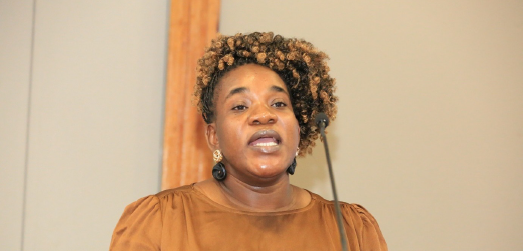
Prof Muthumuni Managa, an Associate Professor and Researcher from the Institute for Nanotechnology and Water Sustainability (iNanoWS) at the University of South Africa (UNISA)
Delivering the first public lecture, Prof Managa illustrated how nanotechnology offers an effi-cient and effective alternative for drinking water treatment, particularly considering the growing limitations of conventional disinfection methods. She explained that widely used approaches such as chlorination often fail to penetrate biofilms effectively and may inadvertently contribute to antimicrobial resistance. Prof Managa introduced antimicrobial photodynamic inactivation as a promising solution, noting its ability to generate reactive oxygen species that disrupt bio-films and inactivate waterborne pathogens. She stressed the need to advance cost‑effective, environmentally sustainable water disinfection technologies capable of delivering safe water to communities facing persistent water insecurity, demonstrating the potential of nanotechnolo-gy to deliver resilient, socially responsive solutions.
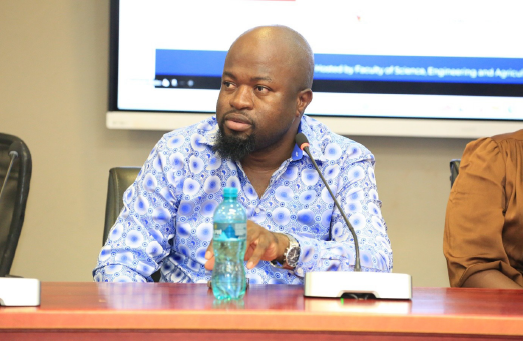
Prof Thabo Nkambule, Professor of the Urban Water Cycle and Water Treatment Technologies, Head: Insti-tute for Nanotechnology and Water Sustainability (iNanoWS), University of South Africa (UNISA)
Prof Nkambule, delivered the second lecture and turned attention to the complexity of natural organic matter (NOM) within the urban water cycle. He described NOM as a “complex hetero-geneous mixture” whose composition varies according to source, climate and human activity, warning that this variability means there is “no one‑size‑fits‑all” solution to water treatment.
Prof Nkambule explained that NOM directly influences treatment efficiency, cost and safe-ty, and cautioned that its interaction with disinfectants can produce disinfection by-products which are carcinogenic and mutagenic. He concluded by emphasising that innovative, con-text‑specific and adaptable treatment strategies are essential to ensure safe drinking water and protect public health in rapidly urbanising environments.
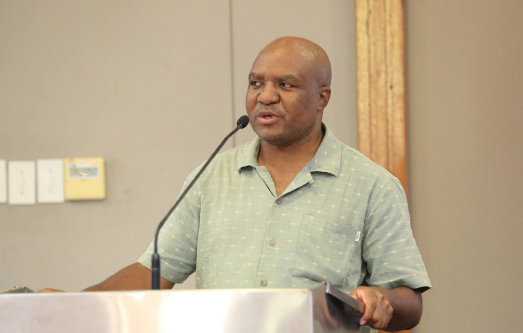
Students and staff engaged enthusiastically in the question‑and‑answer session facilitated by Prof Madala, exploring how nanotechnology could offer an efficient and cost‑effective solution for drinking water treatment, and how the origins and properties of natural organic matter influence treatment outcomes. Discussions focused on adaptability, safety and affordability across different water sources, as well as ways to prevent harmful by‑products. The speakers emphasised that advanced technologies must be tailored to the unique characteristics of each water system, linking scientific innovation to real‑world challenges.
In closing, Prof Bessong thanked participants for their active involvement and described the lecture as the start of an ongoing scholarly journey. He encouraged emerging researchers to adopt a long-term, impact-driven approach, prioritise strong writing, and value collaboration, curiosity and critical engagement to advance meaningful scientific progress.
Issued by:
Department of Marketing, Branding and Communication
University of Venda
Tel: 082 868 2218 / 082 868 1811


