

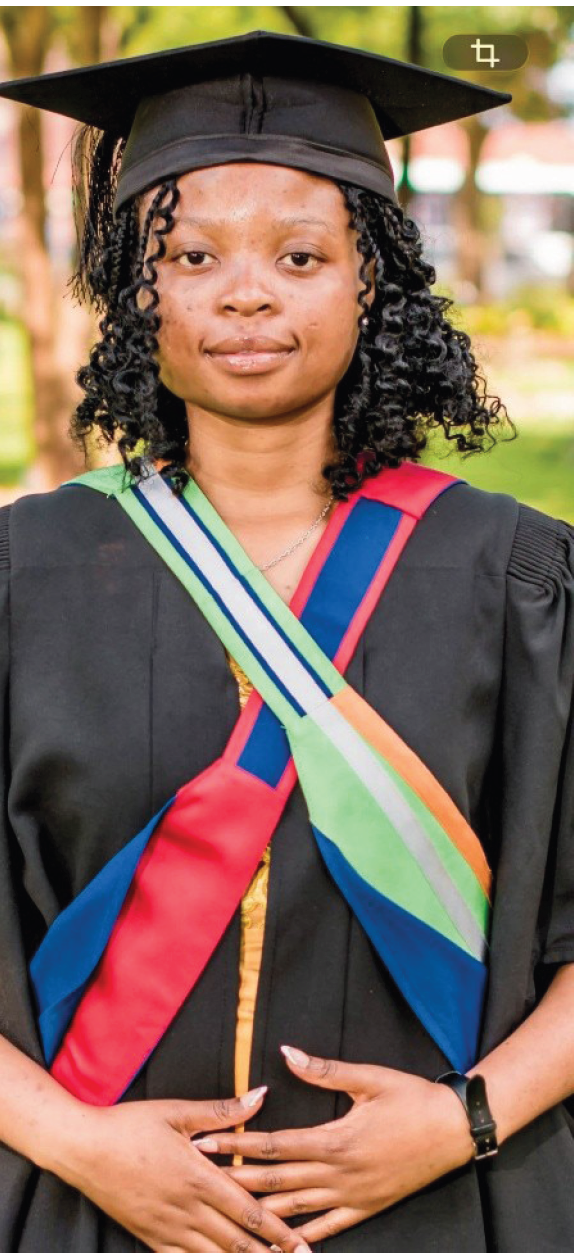
Born into hardship and raised by resilience, Miyelani Maswanganye’s journey from the rural village of Nghezimani in Giyani to the United Kingdom is a powerful story of perseverance, faith, sacrifice, and hope.
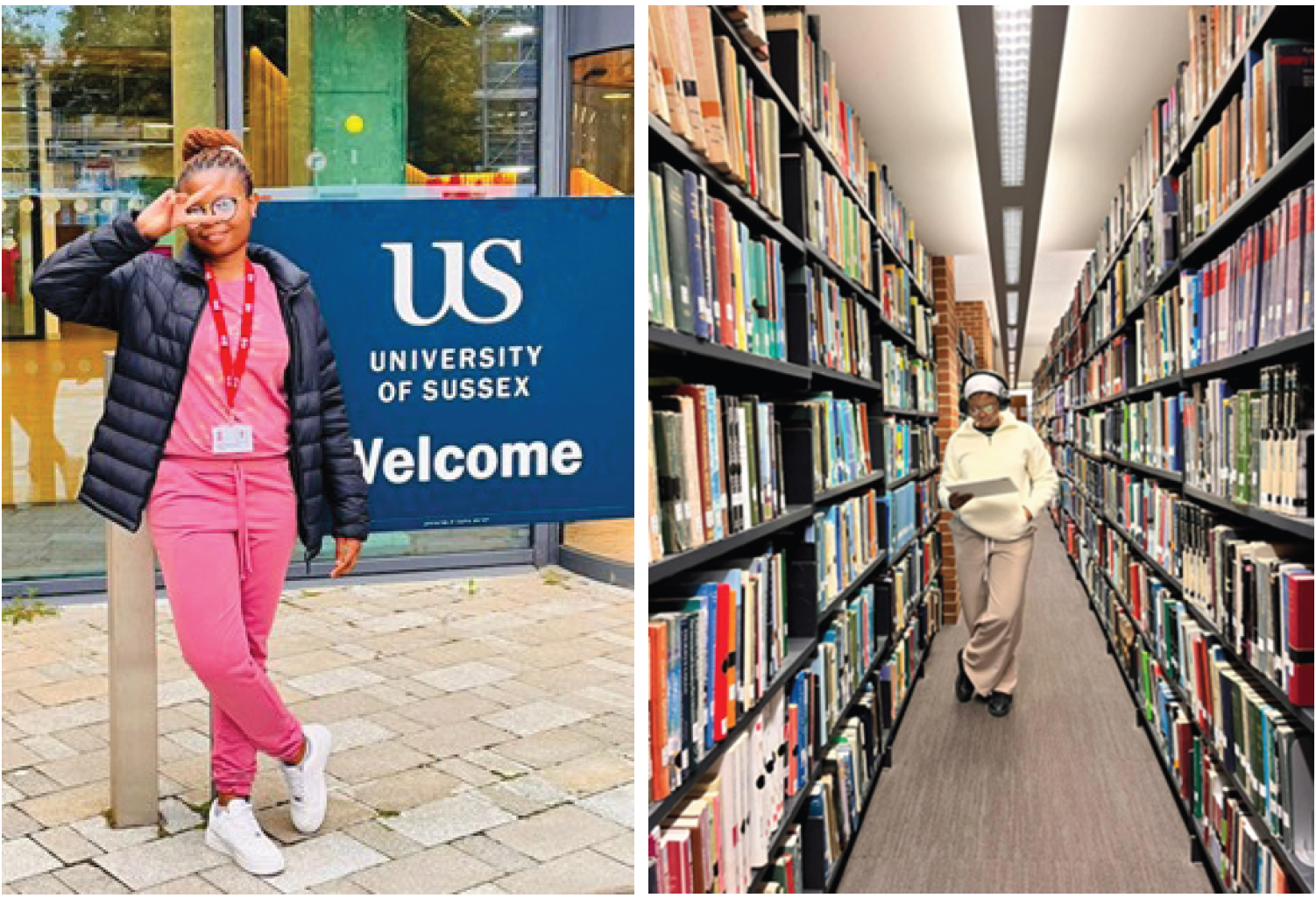
Today, Miyelani is pursuing a Master’s degree in Development Studies at the University of Sussex Institute of Development Studies while returning home to graduate with a Master’s degree in Rural Development with distinction from the University of Venda.
Her story is not only one of academic excellence, but also one of survival against overwhelming odds.
Raised by her grandmother in Nghezimani, Miyelani’s childhood was shaped by responsibilities far beyond her years. While other children were learning through play, she was already caring for siblings, cooking, cleaning, washing dishes, and managing household duties before going to school.
“Life taught me responsibility long before it taught me what it truly meant to be a child,” she reflects.
By the time she reached school each morning, she was often exhausted, late, and emotionally overwhelmed.
Even in Grade R and Grade 1, life already felt heavier than she could carry.
After later moving to Shikundu with her late sister, Miyelani once again found herself raising her siblings after her sister relocated to Johannesburg, where she sadly passed away. Without the presence of her biological mother and never having known her father, Miyelani grew up believing she had to become a provider, protector, and parent long before adulthood.
Despite these hardships, hope arrived through people who saw potential in her long before often exhausted, late, and emotionally overwhelmed.
Even in Grade R and Grade 1, life already felt heavier than she could carry.
After later moving to Shikundu with her late sister, Miyelani once again found herself raising her siblings after her sister relocated to Johannesburg, where she sadly passed away. Without the presence of her biological mother and never having known her father, Miyelani grew up believing she had to become a provider, protector, and parent long before adulthood.
Despite these hardships, hope arrived through people who saw potential in her long before she recognised it in herself.
While attending Hisekelani Primary School, one of her former teachers noticed her academic potential and took her in during Grades 8 and 9. For the first time, Miyelani experienced what it meant to be cared for as a child. The teacher provided her with school uniforms, meals, pocket money, academic support, and emotional care.
“She and her family showed me the love of God through kindness,” says Miyelani.
Later, she was adopted by her pastor, whom she still lovingly calls her grandmother. These women became pillars of strength in her life, teaching her faith, prayer, resilience, and purpose.
Although life remained difficult, Miyelani persevered and completed matric with a Bachelor’s pass. Yet, believing university was financially impossible, she had no intention of pursuing higher education.
Once again, teachers intervened.
One of her high school teachers insisted on applying to university on her behalf, refusing to allow her circumstances to define her future.
However, financial struggles nearly ended her dream before it began. Without university funding, Miyelani faced emotional, mental, and financial hardship during her first year. Traveling long distances daily to campus left her exhausted, and there were times she slept in taxis and attended classes hungry.
During this difficult period, a social worker from the Vhembe District offices stepped into her life and offered support after hearing her story. The social worker helped her secure accommodation closer to campus, bought her winter clothes, and assisted with food. At the same time, the younger sister of one of her teachers began sending her a monthly allowance, even though they had never met in person.
Still overwhelmed by financial pressure, Miyelani eventually considered dropping out of university altogether.
That turning point came when she approached one of her lecturers to ask what would happen if she left university. Instead of discussing procedures, the lecturer asked her why she wanted to quit.
That conversation changed her life.
The lecturer, together with another female academic, became parental figures who helped stabilise her emotionally and financially. Supported by lecturers, mentors, teachers, and the social worker, Miyelani was finally able to focus on her academics.
Her results improved dramatically.
After a difficult first semester, she achieved distinctions in all nine of her modules during her second year. By the time she completed her undergraduate qualification in Development Studies, she graduated cum laude with 20 distinctions.
“Development Studies transformed my life. It helped me understand my purpose and deepened my passion for improving people’s lives, especially in vulnerable communities,” she says.
She later pursued an Honours degree in Rural Development, once again graduating cum laude after achieving distinctions in all nine modules in 2024.
Behind those academic achievements, however, remained a difficult reality marked by delayed funding, emotional struggles, and survival.
“Sometimes funding only came in March or April, meaning I had to survive January and February with almost nothing,” she recalls.
In 2024, Miyelani applied for the prestigious Chevening Scholarship. Unsure whether she would be selected due to the competitiveness of the programme, she simultaneously enrolled for a Master’s degree in Rural Development at the University of Venda.
By what she describes as “the grace of God,” she was awarded the Chevening Scholarship, which enabled her the opportunity to study Development Studies at the University of Sussex’s Institute of Development Studies.
But even that achievement came with immense challenges.
While preparing for her studies abroad, Miyelani faced serious health complications that threatened her ability to obtain the medical clearance required for a United Kingdom study visa.
At one of the lowest moments of uncertainty, she prayed what she calls her “Gideon prayer.”
“I prayed and said, ‘God, if this scholarship is truly mine, then tomorrow they will send me an email asking me to collect my medical certificate.’”
The following day, while visiting a rural village to motivate young people, she received the email confirming she could collect the certificate proving she was fit to travel.
“That moment felt like God answering me directly,” she says.
Travelling to Pretoria for her visa application introduced another challenge. With no relatives, accommodation, or clear plan, Miyelani found herself stranded and overwhelmed.
Then, once again, kindness found her.
A stranger approached her after noticing she was distressed and offered assistance. The woman paid for her meals, transport, accommodation, document printing, airtime, and even covered the costs of a premium visa appointment to ensure she met her university registration deadline.
“To this day, I still believe she was heaven-sent,” Miyelani says.
Within a week, she received her visa and traveled to the United Kingdom.
Arriving in the UK came with another set of challenges. She had to adapt to a completely new culture, harsh winter weather, unfamiliar academic systems, and the emotional difficulty of arriving three weeks late while trying to balance two Master’s degrees simultaneously.
Yet resilience remained her greatest strength.
Ironically, her academic research focused on village chickens, known for their ability to survive under harsh conditions.
“In many ways, I saw myself in that resilience,” she reflects.
By the grace of God, Miyelani recently submitted her dissertation and received confirmation that she passed with distinction. Official confirmation of the qualification is expected on 20 May 2026.
Today, as she returns home from the United Kingdom to graduate with distinction at the University of Venda, Miyelani says her success belongs to every person who carried her through life’s storms.
“My story is proof that even a child raised by pain, rejection, responsibility, and uncertainty can still rise, dream, and become,” she says.
She credits the women who raised her, the teachers who refused to let her give up, lecturers who became parents, mentors, friends, supervisors, and strangers who chose kindness as the foundation of her success.
“Sometimes family is not only defined by blood, but by the people who choose to love, guide, protect, and uplift you when life becomes difficult,” she says.
Now committed to using education, leadership, and community engagement to improve vulnerable communities, Miyelani hopes her story inspires young people, particularly those from rural backgrounds, to believe in the power of their dreams.
“Pain does not have to be the end of the story. Delayed opportunities are not denied dreams,” she says.
“To every black child growing up in a rural village: your background does not determine your future. Keep dreaming, keep fighting, and never give up.
Issued by:
Department of Marketing, Branding and Communication University of Venda
Tel: 082 868 2218 / 082 868 1811


