

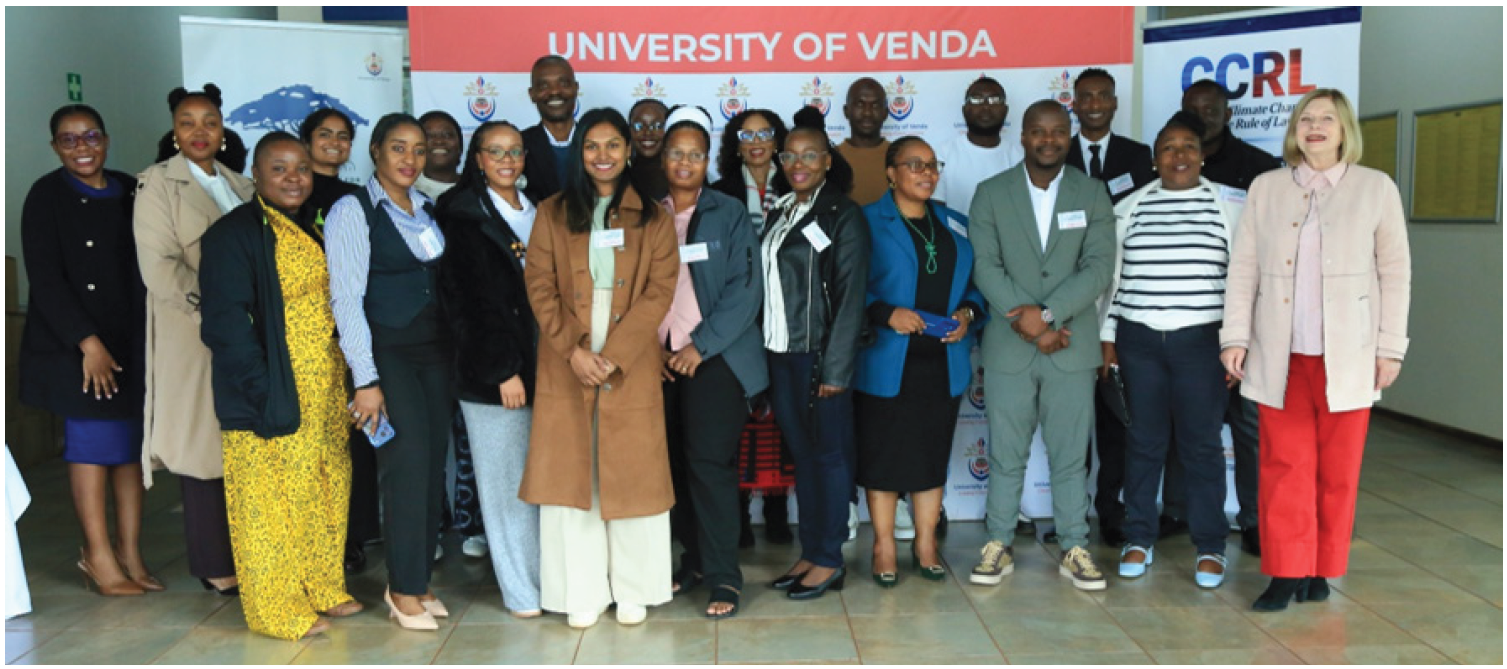
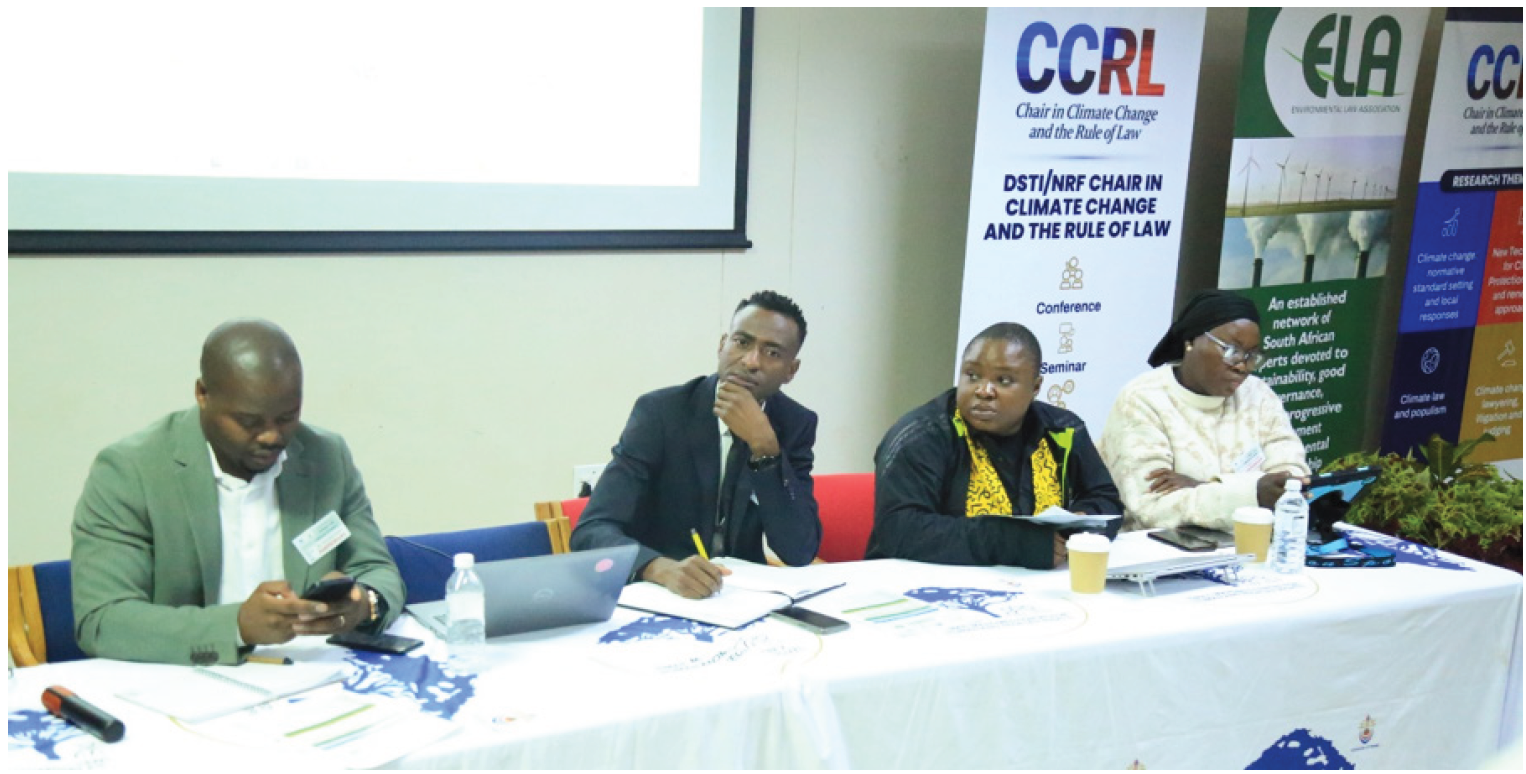
Attendees of the two-day conference
As Africa confronts the escalating impacts of climate change, the need for strong legal frameworks, accountable governance, and effective environmental protection has become increasingly urgent. Against this backdrop, the University of Venda hosted the Conference on Climate Law and Populism in Africa, which brought together leading academics, legal practitioners, policymakers, and researchers from across different institutions in Africa and beyond to examine the complex relationship between climate governance and populist politics.
The Conference, which was a hybrid event held on 25-26 June 2026 at the Student Parliament of the University of Venda, was organised by the DSTI/NRF Chair in Climate Change and the Rule of Law, the Ismail Mahomed Centre for Human and Peoples’ Rights, and the Environmental Law Association of South Africa (ELA). It successfully attracted over 60 participants, including 48 speakers from diverse regions such as the United States of America, the Netherlands, Kenya, South Sudan, Tunisia, Namibia, Ghana, Eswatini, Cameroon, Nigeria, and India. Notably, 25 of these speakers and other participants joined virtually, while the remaining attendees participated in person, showcasing the conference’s commitment to inclusivity and broad representation. The two-day session provided a platform to explore how populist politics are influencing climate law, environmental governance, and sustainable development across the continent while identifying practical legal responses to safeguard climate justice.
Through keynote addresses, scholarly presentations and interactive discussions, delegates explored a broad range of issues, including climate litigation, environmental accountability, renewable energy governance, indigenous knowledge systems, climate-induced migration and community participation in environmental decision-making. Throughout the conference, participants emphasised the importance of protecting climate governance from political interference while ensuring that legal responses remain inclusive, evidence-based, and responsive to Africa’s unique development challenges.
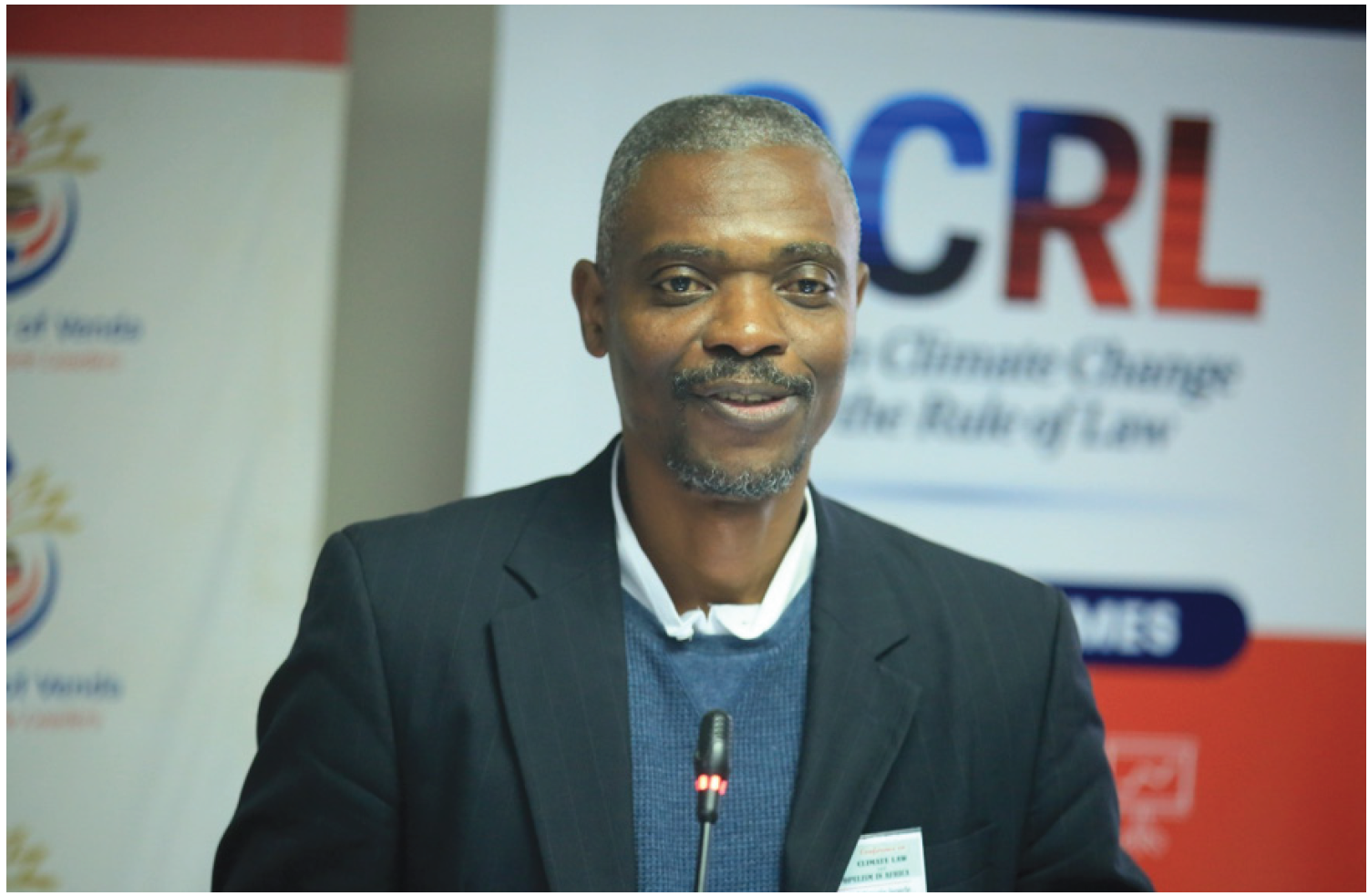
Professor Ademola Oluborode Jegede
Opening the conference, Professor Ademola Oluborode Jegede welcomed delegates from South Africa, across Africa, and the United Kingdom, describing the gathering as both globally significant and particularly relevant to Africa’s growing climate vulnerability. Professor Jegede noted that although Africa contributes relatively little to global greenhouse gas emissions, it continues to bear a disproportionate share of climate-related disasters, including prolonged droughts in Somalia, Ethiopia, and Kenya, devastating floods in South Africa, Nigeria, Mozambique, and South Sudan, and increasing water scarcity across Southern Africa.
Professor Jegede pointed out his observations, that climate change is unfolding alongside the rise of populist politics. While populism can amplify the voices of marginalised communities and encourage democratic participation, it can also oversimplify complex climate issues and portray climate policies as elitist or externally imposed. Such narratives, he argued, risk delaying urgently needed climate action by deepening political divisions.
He lastly stressed that effective climate governance requires a careful balance between democratic participation and scientific evidence, arguing that climate law must remain both people-centred and scientifically informed. He encouraged delegates to exchange ideas, build lasting partnerships and explore how Africa can harness the positive aspects of democratic participation while limiting the risks posed by divisive populist narratives.
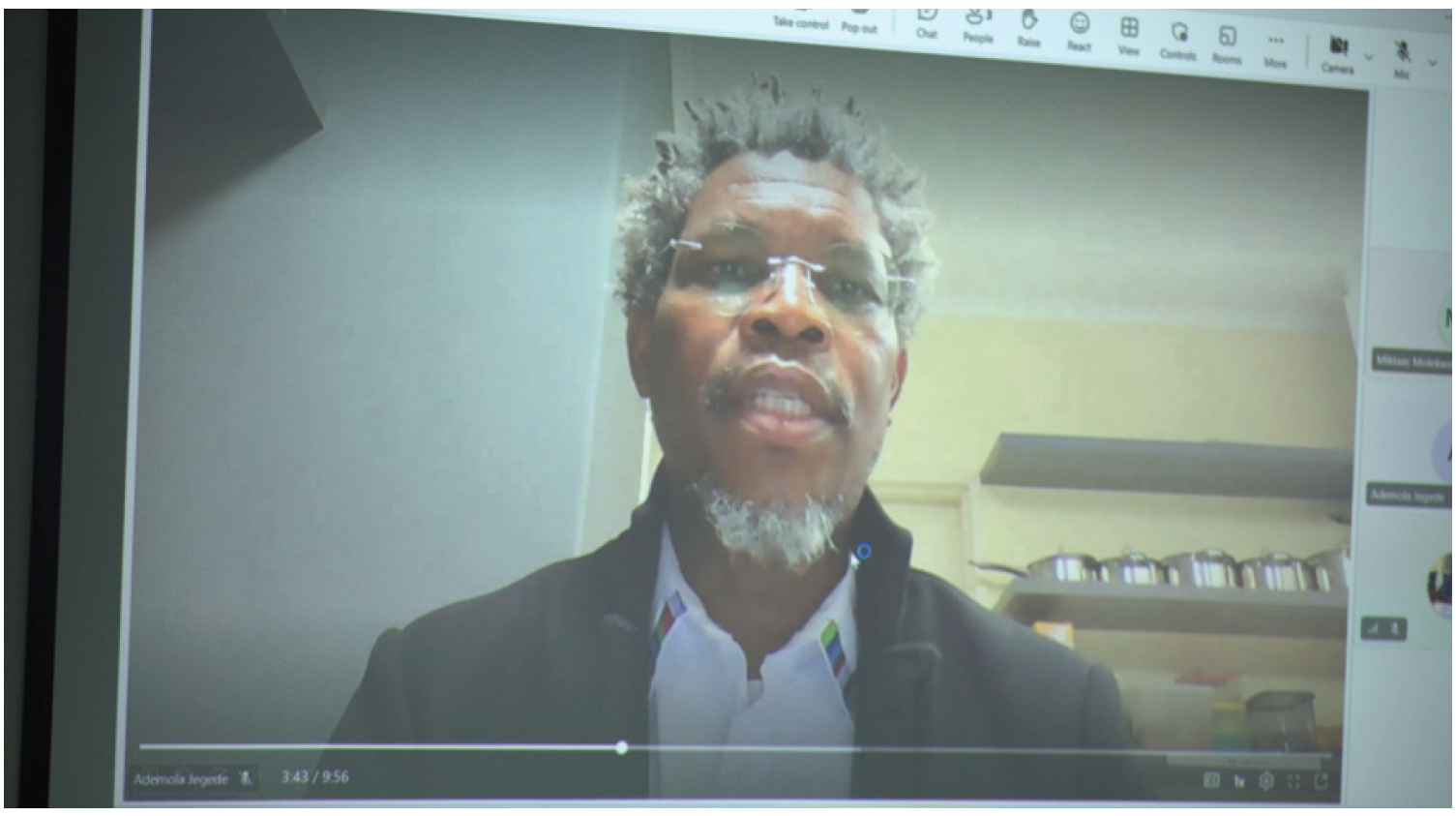
Professor Fulufhelo Netswera, Deputy Vice-Chancellor for Research and Postgraduate Studies
Delivering his address virtually, the University of Venda’s Deputy Vice-Chancellor for Research and Postgraduate Studies, Professor Fulufhelo Netswera, welcomed representatives from academia, government, civil society, and the private sector. He commended the collaboration between the University of Venda, the Environmental Law Association, the Department of Science, Technology, and Innovation, and the National Research Foundation for organising the conference.
Professor Netswera highlighted the importance of balancing climate action with Africa’s broader development priorities. While the continent remains one of the world’s lowest contributors to greenhouse gas emissions, it is among the most vulnerable to droughts, floods, and extreme heat. He argued that climate policies should simultaneously advance environmental protection, poverty reduction, industrialisation, economic growth and equitable access to energy.
He further noted that populist perspectives often challenge climate measures perceived to constrain development and employment while reinforcing the principle that those most responsible for climate change should bear the greatest responsibility for addressing its consequences. He encouraged scholars to develop practical, equitable, and evidence-based approaches to climate governance, examining issues such as the just energy transition, natural resource governance, climate-induced migration, biodiversity conservation, food and water security, renewable energy, and carbon markets.
Reflecting on international climate agreements, including the Rio Summit, the Kyoto Protocol, and the Paris Agreement, Professor Netswera challenged delegates to consider whether global climate governance has delivered equitable outcomes for both developed and developing nations. As he concluded, he expressed confidence that the conference would generate policy recommendations and scholarly contributions capable of influencing climate governance both nationally and internationally.

Professor Melanie Murcott, Chairperson of the Environmental Law Association of South Africa
Delivering a virtual goodwill message, Professor Melanie Murcott congratulated Professor Jegede and the organising committee for convening a timely conference that addressed the intersection between climate governance and populism.
Professor Murcott warned that democratic institutions, particularly Africa’s deliberative democratic traditions founded on accountability and constitutional checks and balances, face growing pressure from exclusionary forms of populism. As climate change intensifies existing inequalities, she noted that vulnerable communities become increasingly exposed to both environmental and political marginalisation.
Drawing on the African philosophy of Ubuntu, she emphasised that individual well-being is inseparable from the well-being of communities and the natural environment. She cautioned that exclusionary populist movements often silence minority voices, weaken democratic institutions, and undermine accountability.
Professor Murcott further argued that populist narratives frequently portray climate laws as economic burdens instead of recognising them as essential instruments for addressing historical injustices rooted in colonialism, extractivism, and racial capitalism. She encouraged delegates to critically assess when populism can strengthen grassroots climate justice movements and when it becomes detrimental by reinforcing exclusionary politics. She concluded by reaffirming ELA South Africa’s commitment to advancing climate justice across the continent.
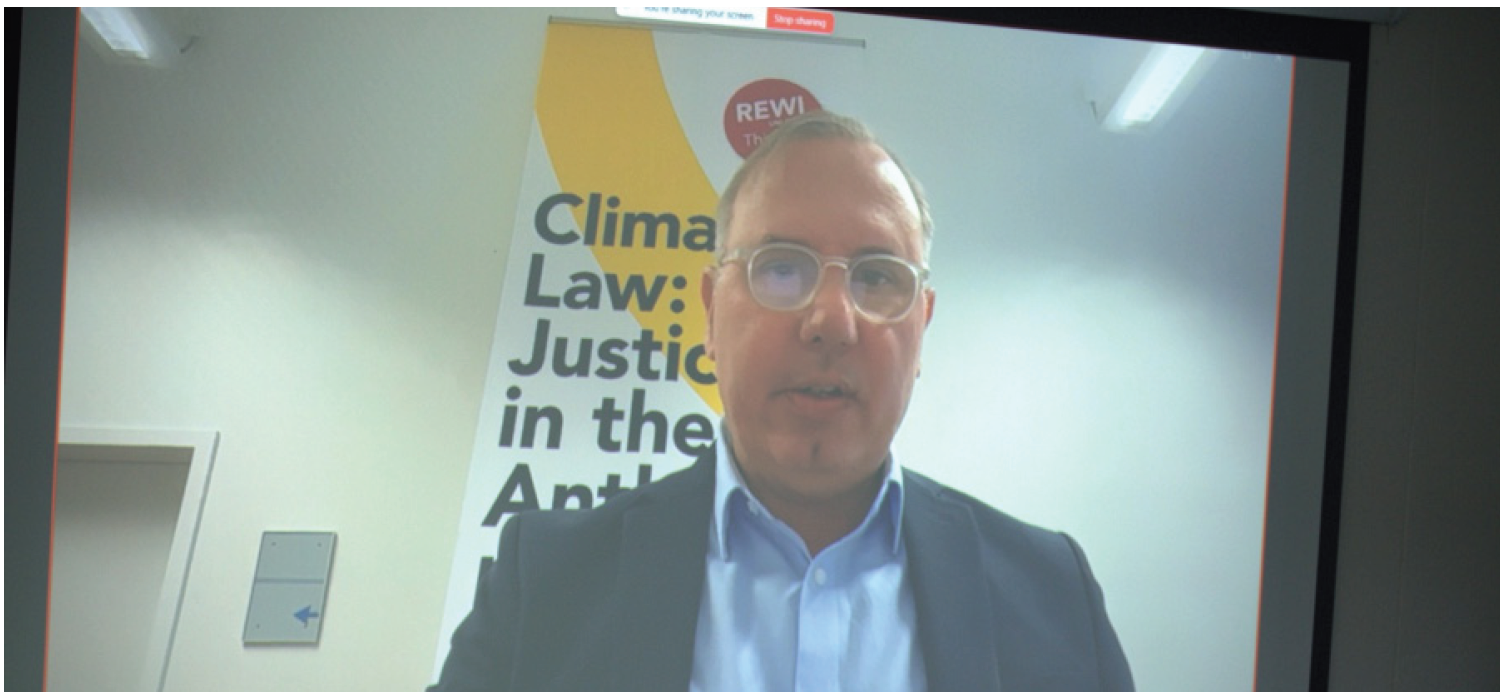
Professor Oliver Ruppel of Stellenbosch University
The conference keynote address was delivered virtually by Professor Oliver Ruppel of Stellenbosch University under the theme; When Climate Forces Movement: The Rise of Strategic Litigation for Climate Migrants. Professor Ruppel explained that climate-induced displacement is no longer a future concern but an increasingly urgent global reality. He argued that existing international refugee and migration frameworks remain poorly equipped to protect people displaced by climate change, creating significant legal protection gaps.
He noted that by late 2025, more than 3,000 climate-related legal cases had been filed across 55 jurisdictions and before 24 international or regional courts, many addressing human rights, displacement, and climate mobility. Drawing on landmark cases from New Zealand, Australia, Argentina, and international courts, he observed that legal success often depends less on proving climate harm than on effectively framing claims within existing legal systems.
Professor Ruppel also highlighted recent advisory opinions issued by the International Court of Justice and the Inter-American Court of Human Rights, which increasingly recognise climate-related displacement as a human rights issue. While these opinions strengthen international legal norms, he cautioned that they do not automatically guarantee relocation or protection for climate migrants.
Describing strategic litigation as an essential mechanism for strengthening government accountability and advancing human rights, Professor Ruppel acknowledged that legal action remains costly, time-consuming, and often inaccessible to vulnerable communities.
Concluding his address, he argued that one of the defining legal challenges of the twenty-first century will be ensuring both “mobility with protection” and “immobility with dignity”. He called for legal systems that protect people’s meaningful choice to move or remain in their communities as climate impacts continue to intensify. Across the two-day programme, scholars examined climate governance through a wide range of legal, political, and social perspectives.
Day one presentations explored theories of populism and environmental governance across Africa, with presentations focusing on climate governance in Nigeria, South Africa, Kenya, and Tunisia. These discussions thoroughly examined renewable energy governance, fossil fuel dependence, sustainable development, sovereignty, and the political dimensions of climate law. Subsequent sessions focused on political actors and climate obligations, addressing climate adaptation legislation, judicial activism, climate litigation frameworks, indigenous politics, subsidy regimes, sexual and reproductive health rights, water governance, and responses to climate shocks.
Attention then turned to climate accountability and public participation. Presentations examined corporate accountability, customary land tenure, forest governance, state climate obligations, hydrological modelling, climate mobility governance, and refugee protection. Comparative insights from South Africa, Nigeria, Cameroon, Uganda, the United Kingdom, and the United States highlighted the growing importance of accountability mechanisms in strengthening climate governance.
The final sessions of the first day explored climate technology, indigenous knowledge systems, and environmental law. Speakers emphasised the importance of integrating indigenous ecological knowledge with technological innovation to support equitable energy transitions, strengthen community participation, and develop more sustainable approaches to climate governance.
The second day commenced with a keynote address by Houda Mejri, an international consultant for SED Gender and Governance Tunisia and a former UN Public Information and Gender Officer. She examined the role of institutions and communities in responding to climate governance challenges. Delivering the Day Two keynote address virtually, international consultant Houda Mejri called for climate governance that is rooted in social justice, inclusivity, and meaningful public participation, arguing that climate policies can only succeed if they are socially legitimate and improve people’s everyday lives. She highlighted Africa’s rich tradition of indigenous environmental knowledge, emphasising that environmental protection is fundamentally about the relationship between people, nature, and future generations.
Outlining the day’s discussions, she identified three priorities for advancing climate governance: building resilient institutions supported by transparent governance, independent courts, and effective accountability mechanisms; strengthening community-led climate action through the active participation of women, young people, indigenous communities, and civil society; and fostering visionary leadership capable of driving cross-sectoral and intergenerational collaboration.
Mejri challenged perceptions of Africa as merely vulnerable to climate change, instead describing the continent as a centre of climate innovation, legal creativity, and political reform. She further called for stronger environmental diplomacy, enhanced South–South cooperation, and greater knowledge-sharing across Africa and the Arab region, expressing confidence that African leadership and solutions will play a defining role in shaping the future of global climate law and governance.
Discussions focused on how courts, civil society organisations, and local communities are resisting opposition to climate action through litigation, advocacy, and public participation. Presentations explored climate-related conflicts, NGO involvement in landmark legal cases, populist narratives in the Niger Delta, climate litigation in Kenya, and the livelihoods of West African fishing communities.
The conference concluded on a high note with discussions on protecting climate governance from politicisation through stronger legal and institutional safeguards. Presenters examined administrative law, judicial approaches to climate rights, forestry governance, climate policy implementation, sustainable human resource management, and the political economy of climate law enforcement in South Africa and Nigeria. Delegates emphasised the importance of strengthening independent legal institutions capable of resisting political interference while ensuring long-term environmental governance.
A recurring message throughout the conference was the urgent need to strengthen legal and institutional frameworks capable of protecting climate governance from political interference, policy instability, and short-term populist pressures. Delegates identified persistent challenges, including weak implementation of climate legislation, competing economic interests, governance failures, and the continued marginalisation of vulnerable communities.
At the same time, the conference showcased innovative approaches to climate justice through strategic litigation, indigenous knowledge systems, community-led environmental governance, and rights-based legal frameworks. Participants highlighted the increasingly important role of courts, civil society, academic institutions, and local communities in advancing accountability and protecting environmental rights.
By bringing together experts from across Africa and beyond, the Conference on Climate Law and Populism in Africa reinforced the central role of law in promoting sustainable development, protecting human rights, and ensuring that climate governance remains inclusive, transparent, and resilient. The discussions made a significant contribution to ongoing efforts to develop legal and policy responses capable of addressing the complex relationship among climate change, governance, and populism in the twenty-first century.
Issued by:
Department of Marketing, Branding & Communication University of Venda
Tel: 082 868 2218 / 082 868 1811


