

On 9 March 2026, the University of Venda (UNIVEN) hosted a distinguished public lecture in partnership with the Academy of Science of South Africa (ASSAf), featuring an internationally recognised agricultural scholar and practitioner, Prof Dr Lindiwe Majele Sibanda. The lecture formed part of the ASSAf Distinguished Visiting Scholar Programme, which aims to mobilise leading scholars to address national and global challenges through science-based dialogue. Hosted by UNIVEN’s Institute for Rural Development (IRD), the lecture also marked the launch of the Rural Development Trumpet Series, a platform designed to stimulate dialogue on rural transformation and sustainable development. The Public lecture took place at the Research Conference Centre.
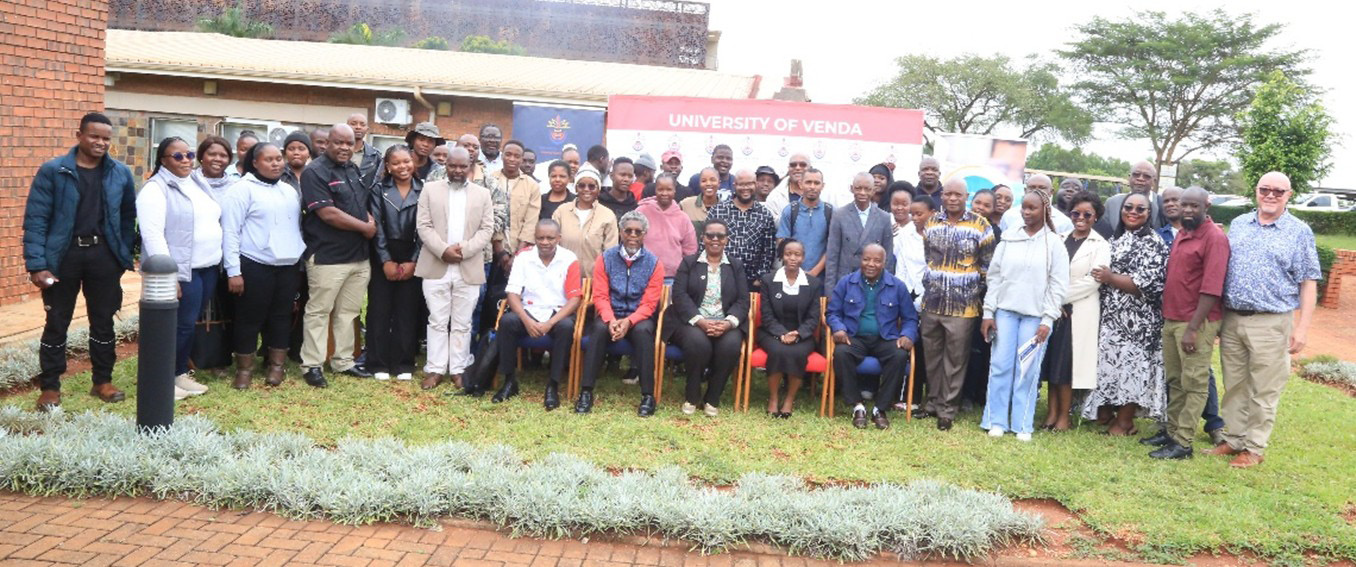
A total of 196 participants participated in the public lecture, reflecting strong interest from academia, government and the farming community. Of these, 138 joined online and 58 attended in-person at the University’s Research Conference Centre. The in-person participants included 35 adults and 23 youth, with 37 male and 21 female attendees. The audience represented a diverse mix of stakeholders, including 7 farmers, 19 interns, 5 postdoctoral researchers, 3 postgraduate students, 2 administrative staff members and several academic staff.
The event was also blessed with the presence of four members of the University’s senior management, including the Vice-Chancellor and Principal, Prof Bernard Nthambeleni.
Government and local stakeholders were represented by the District Director for the Limpopo Department of Agriculture, Land Reform and Rural Development, Mr Masindi Mariba, as well as three agriculture managers from the Makhado Local Municipality and the Vhembe District Municipality. Most notable was the presence of two senior traditional leaders, Thovhele Mutele and Thovhele Mashamba, whose participation reflected the important role of traditional leadership in rural development and agricultural transformation.
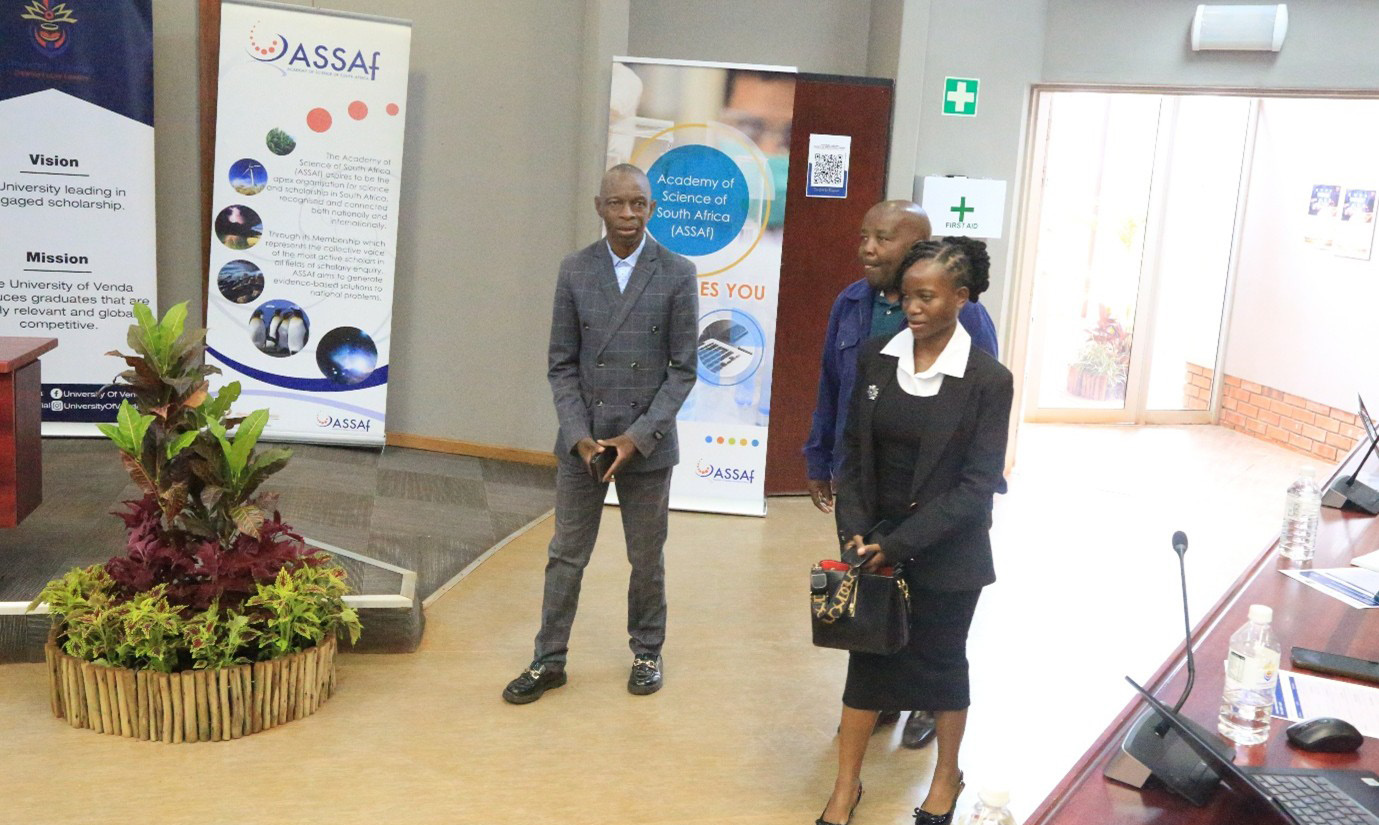
Thovhele Mashamba (left) and Thovhele Mutele (right) accompanied by Mr Makhubele, an official from the Vhembe District Local House of Traditional and Khoisan Leaders Office
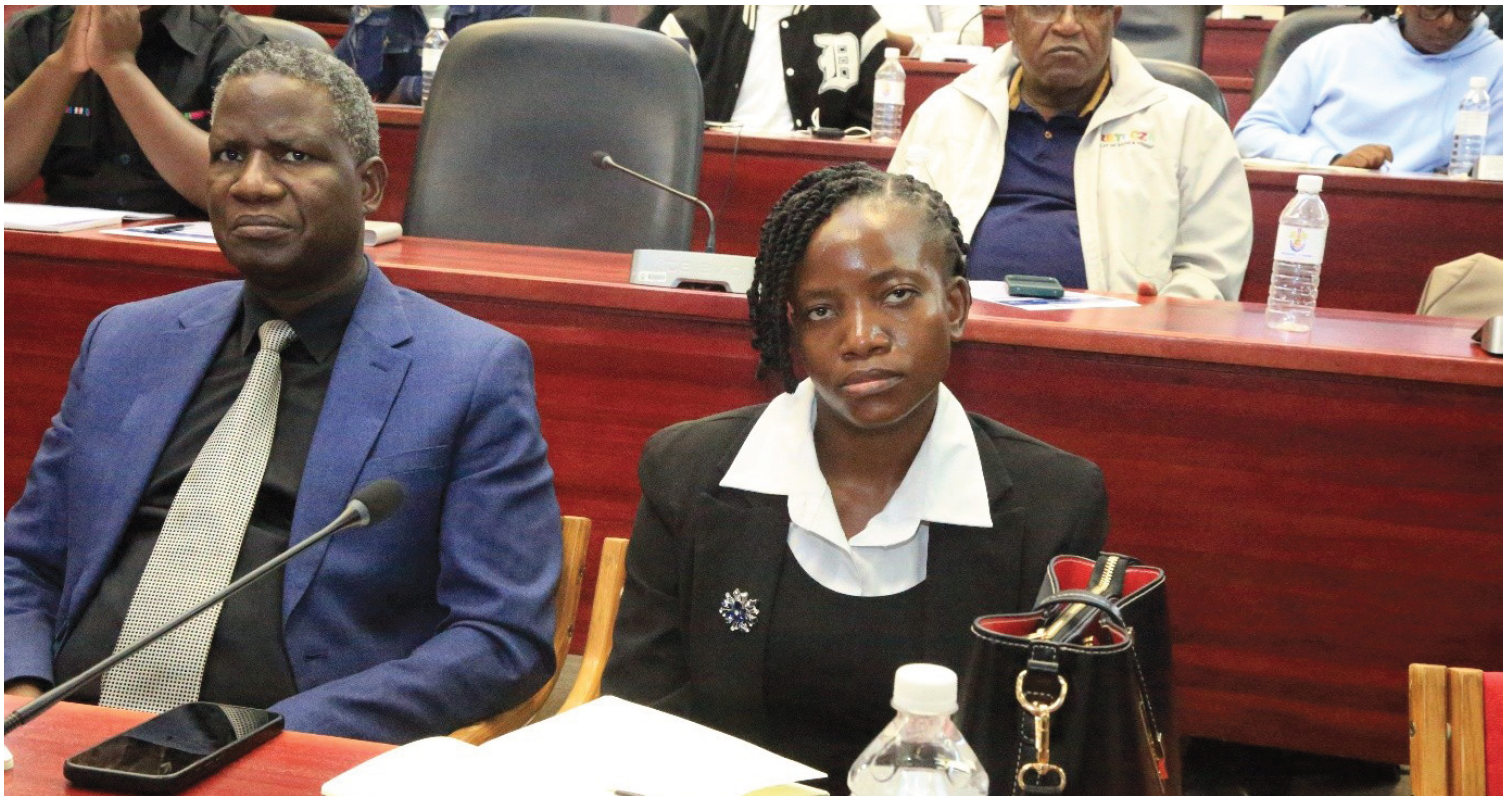
Prof Bernard Nthambeleni, Vice Chancellor and Principal (Left) and Thovhele Mutele (Right), confirming reduced distance between the university and traditional leadership
Universities and the Food Security Agenda
In his welcome address, Professor Fulufhelo Netswera, Deputy Vice-Chancellor, Research and Postgraduate Studies, highlighted the importance of agriculture in addressing poverty and hunger. He noted that global development priorities clearly recognise this role. “SDG1 and SDG2 are dedicated specifically to no poverty and no hunger… because those are the SDGs that can be fought directly through agriculture,” he said.
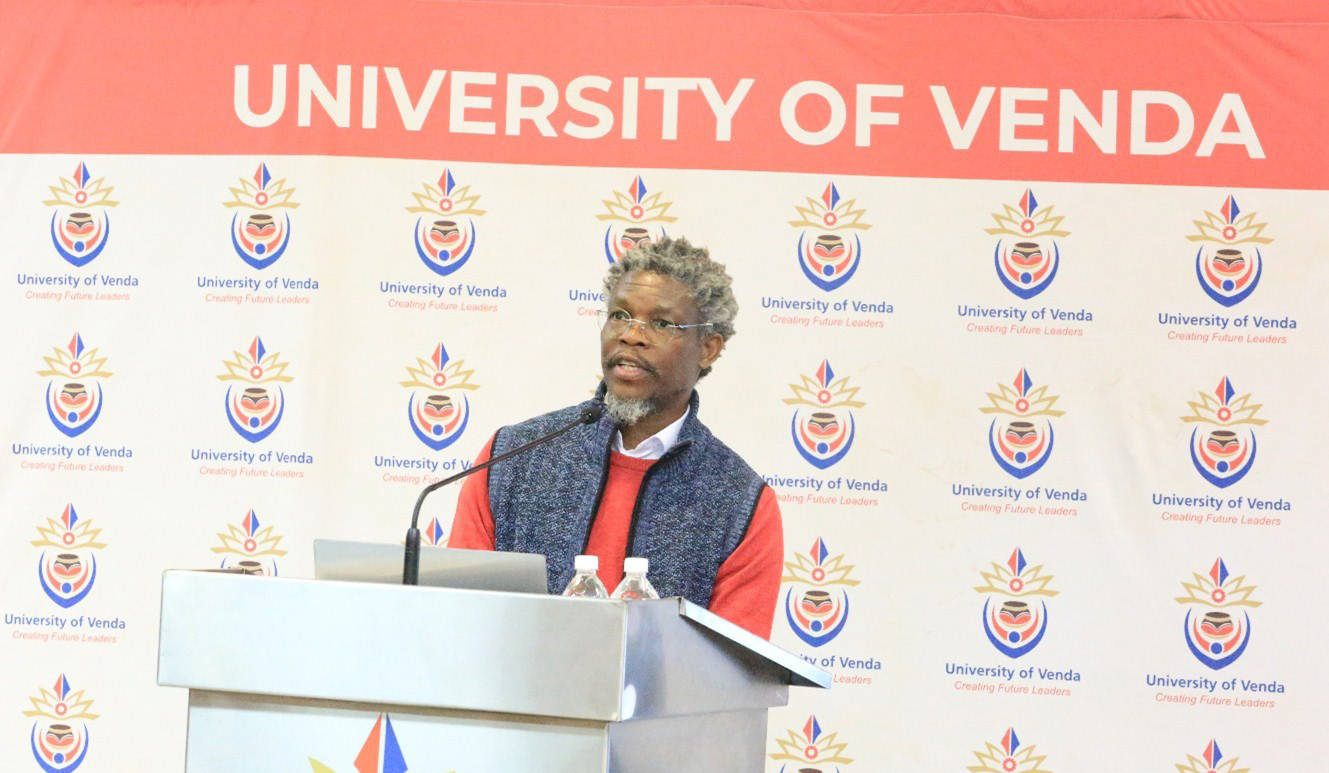
Professor Fulufhelo Netswera, DVC Research and Postgraduate Studies, welcoming participants to the public
lecture
Professor Netswera also revealed local challenges in Vhembe District, especially the loss of agricultural produce due to weak value chains. “Between 50 and 60 percent of our produce goes to waste… vegetables or fruits do not reach the markets,” he explained. To address this problem, the University is working with the government and traditional leaders to strengthen agro-processing initiatives and expand agricultural training opportunities for students.
Science With and For Communities
Introducing the keynote speaker, Professor Joseph Francis, the Director for the Institute for Ru-ral Development, emphasised that universities must work closely with grassroots communities to co-create knowledge and solutions. The Rural Development Trumpet Series, he explained, aims to bring scholars, policymakers and communities together to address pressing develop-ment challenges. “Communities in their varied nature and form are not merely beneficiaries of knowledge, but integral partners or co-designers in its creation, validation and application,” he said. Prof Netswera described Prof Sibanda as a global leader in agriculture and food systems transformation whose work bridges science, policy and development.
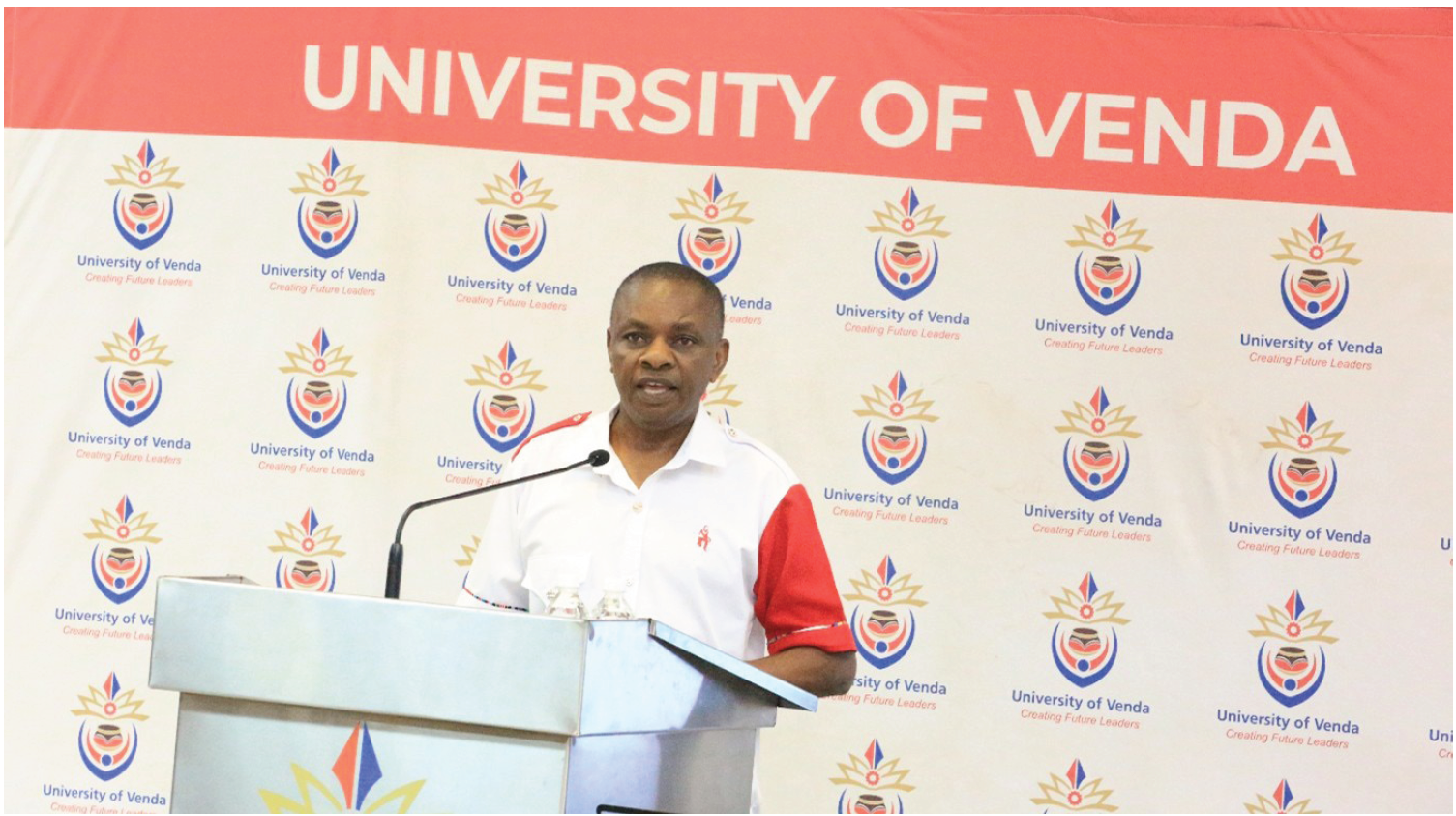
Prof Joseph Francis, Director: Institute for Rural Development, introducing the Public Speaker
From Agriculture to Sustainable Food Systems
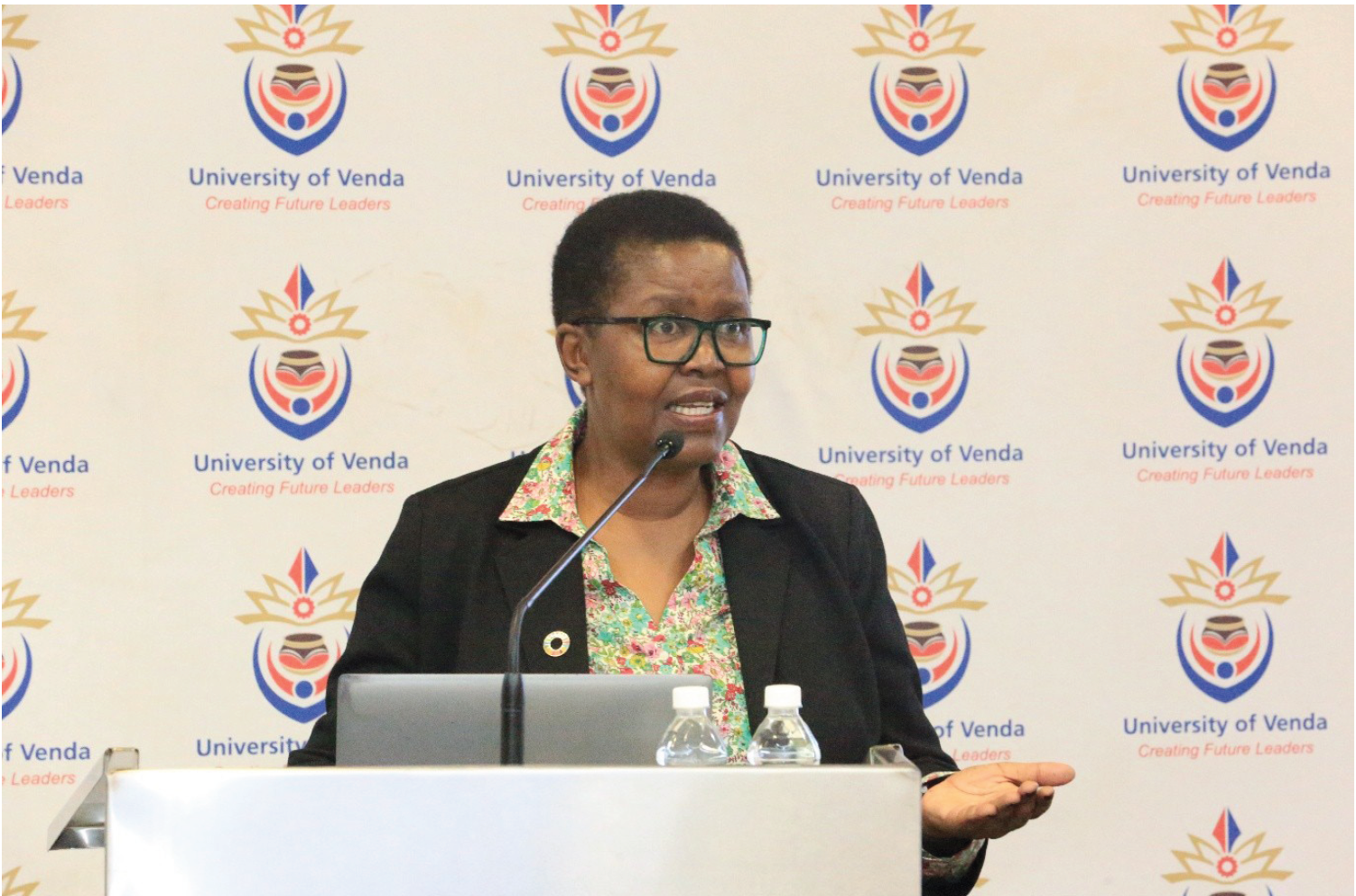
Prof Lindiwe. Sibanda stressing a point as she delivered the public lecture
In her lecture, Prof Sibanda argued that agriculture must be understood as part of a broader system linking farming, nutrition, markets and environmental sustainability. “The best thing that has happened in my profession is moving from agriculture to sustainable food systems,” she noted. She emphasised that modern food systems thinking requires balancing produc-tivity with sustainability, nutrition and climate resilience. Food loss and waste remain a major concern. “If food loss and waste were a country globally, it would be the third biggest emitter of greenhouse gases,” she observed. Prof Sibanda also urged universities to rethink their role in society by connecting research with communities and practical innovation. “Go back to your strategy and ask: through it, are we going to change the community that we were established to serve?” she challenged.
Turning Dialogue into Action
Closing the public lecture, Mr Masindi Mariba contended that the lecture was both inspiring and thought-provoking. He highlighted the importance of strengthening collaboration between universities, government and farming communities to advance agricultural innovation. “It was refreshing to be in this environment of academia… coming to have a lively lecture of this nature brought a lot of thought-provoking ideas,” he said. He emphasised that engagement between stakeholders must move beyond formal consultations toward meaningful debate and practical solutions for farmers and communities.
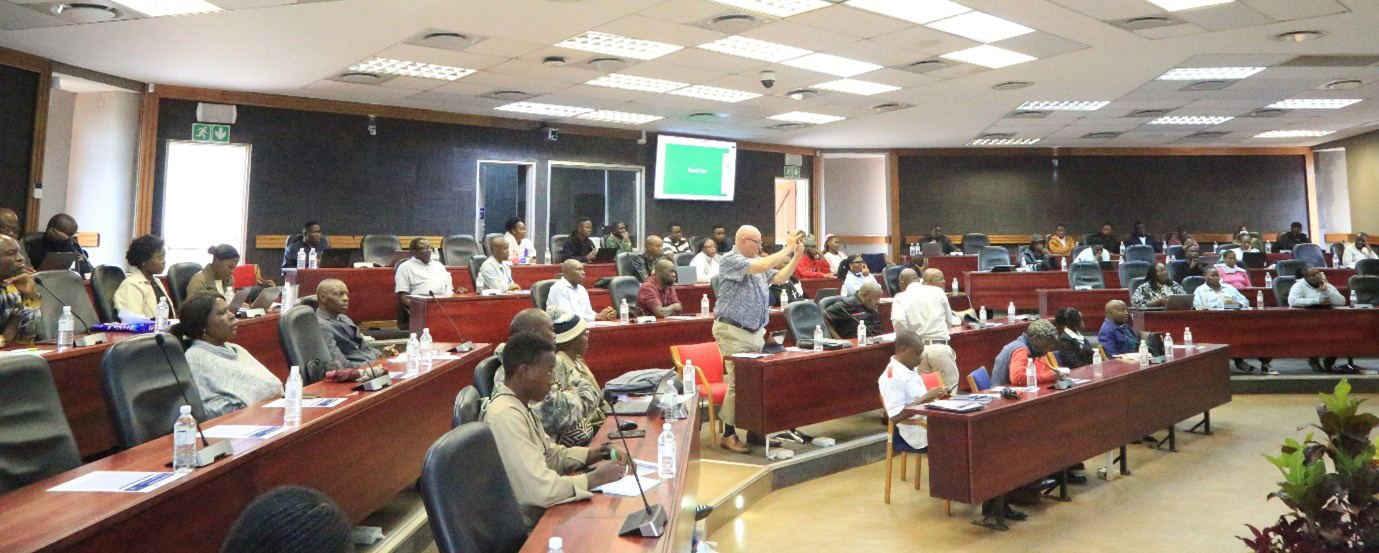
Some in-person attendees in the public
The lecture underscored the important role universities play in shaping the future of food sys-tems in Africa. Through connecting global scholarship with local realities, UNIVEN continues to contribute to sustainable development and rural transformation. As Prof Sibanda reminded the audience, the future of the continent will depend on how societies rethink food systems today: “We all accept that we will need food forever… and food will shape Africa’s future.”
Issued by:
Department Marketing, Branding and Communication
University of Venda
Tel: 082 868 2218 / 082 868 1811


