
The University of Venda (UNIVEN) recently hosted the Customised Workshop about the University Led-University Capacity Development Programme (UL-UCDP) Project on Grants Management. This Workshop took place at the Birchwood Hotel, Oliver Reginald (OR) Tambo Conference Centre in Johannesburg from 22-24 April 2026. The workshop was convened under the theme “Strategic and Operational Grants Management: Building an Effective End-to-End System for Compliance, Performance and Institutional Growth.” It brought together grants administrators, managers, directors, academics and research support staff to reflect on how historically disadvantaged institutions can strengthen grants management as a coordinated institutional system.
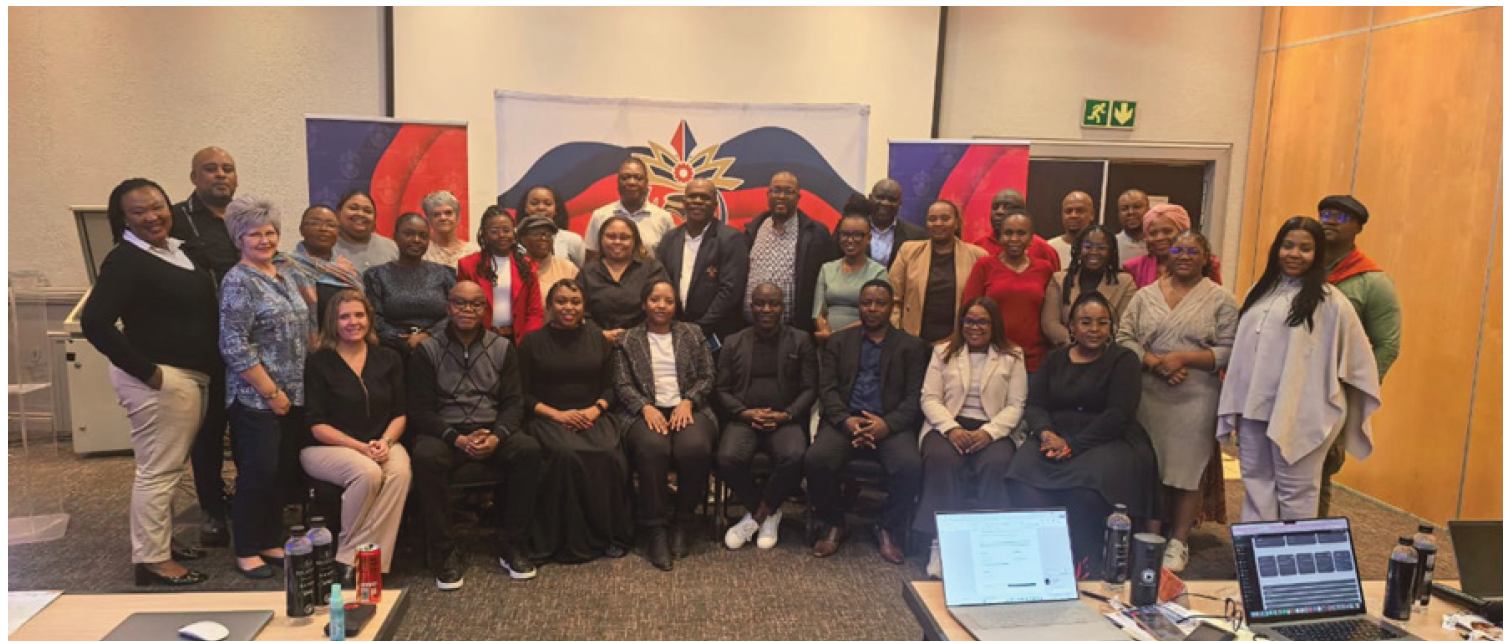
Delegates who participated in the UL-UCDP Grants Management Customised Workshop
The workshop created a platform for participants to engage with the full grants management lifecycle, from proposal development and award acceptance to implementation, monitoring, reporting, donor/funder liaison, close-out and institutional learning. A central message throughout the programme was that grants management should not be treated as a routine administrative responsibility, but as a strategic function that protects institutional resources, supports compliance, builds donor/funder confidence and contributes to long-term institutional growth.
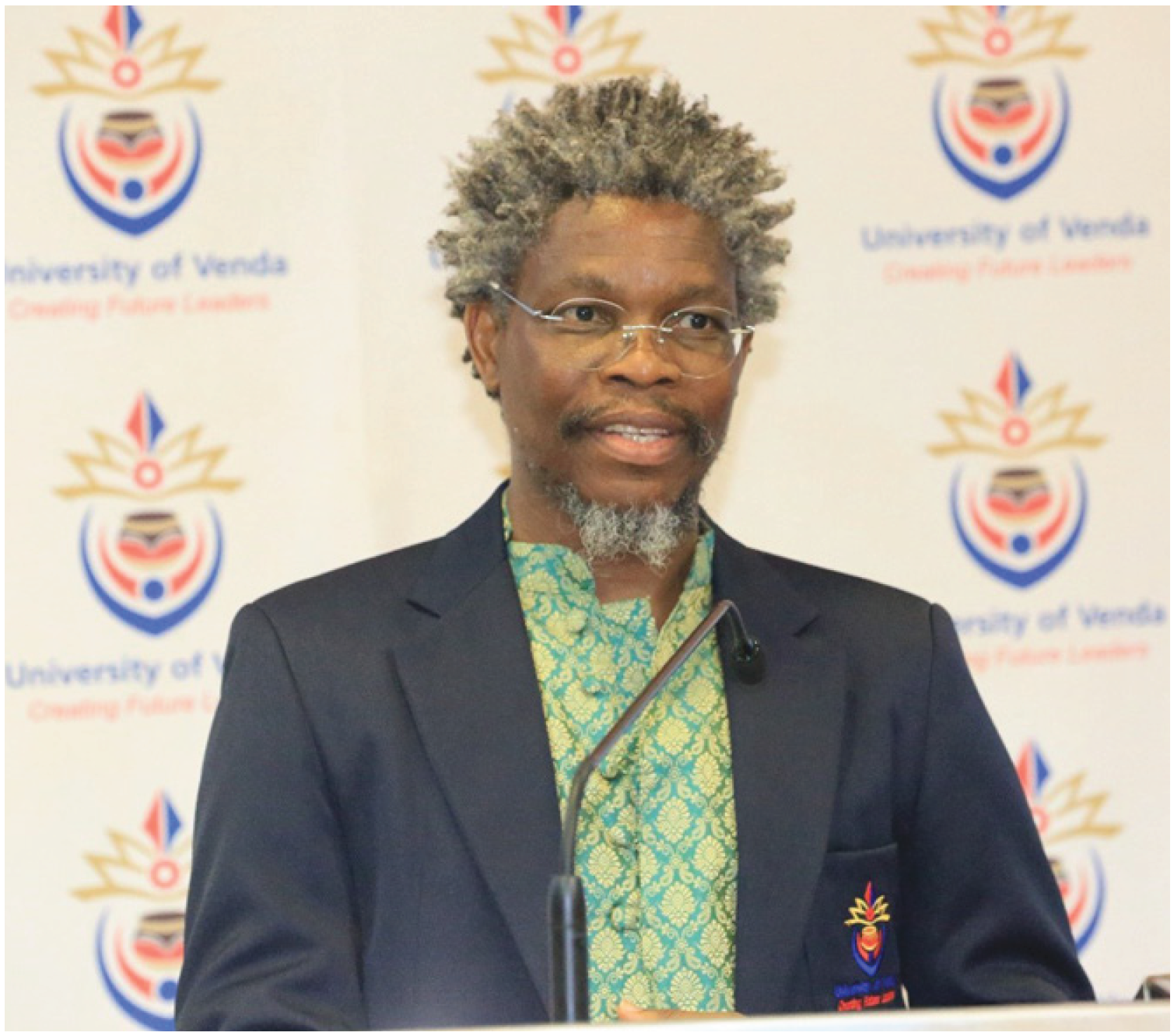
Prof Fulufhelo Netswera welcoming delegates to the workshop
The programme opened with a welcome and opening addresses by the Deputy Vice-Chancellor: Research and Postgraduate Studies at UNIVEN, Prof Fulufhelo Netswera who challenged institutions to actively pursue transformation. He emphasised the need for concrete, actionable plans that will enable historically disadvantaged institutions to overcome their status within the next five years. He encouraged collaboration among institutions, joint research initiatives, and the development of innovative solutions to address national and continental challenges such as water security. His message underscored the urgency of turning transformation from a concept into measurable action.
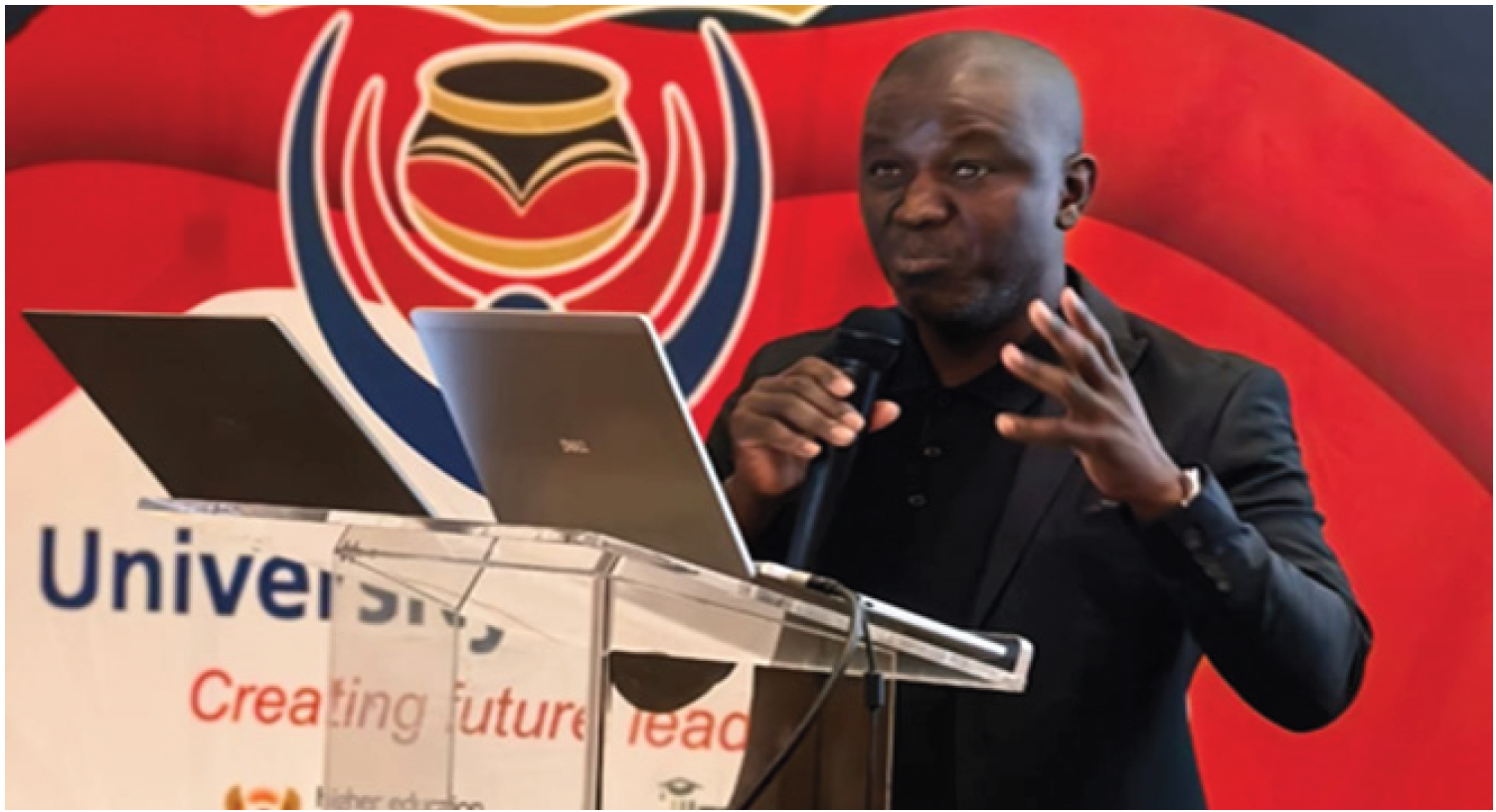
Mr Shiba Diketane, Director of Development Grants from the University of Limpopo, outlining the role of the project in institutional capacity development
Mr Shiba Diketane highlighted that the grants management capacity project, initially conceived by the Department of Higher Education and Training (DHET) as a small UCDP pilot for Historically Disadvantaged Institutions (HDIs), revealed broader sector-wide needs. Evidence showed that grants management challenges extend beyond HDIs, requiring a framework for all higher education institutions and grants. As the project nears close-out, stakeholder consultations will expand participation and strengthen national implementation.

Prof Jabulani Makhubele, Director for Research and Innovation at UNIVEN providing the purpose and vision for the workshop
Prof Jabulani Makhubele outlined the purpose and vision of the training, noting that grants management is central to donor/funder confidence, compliance, performance and institutional growth.
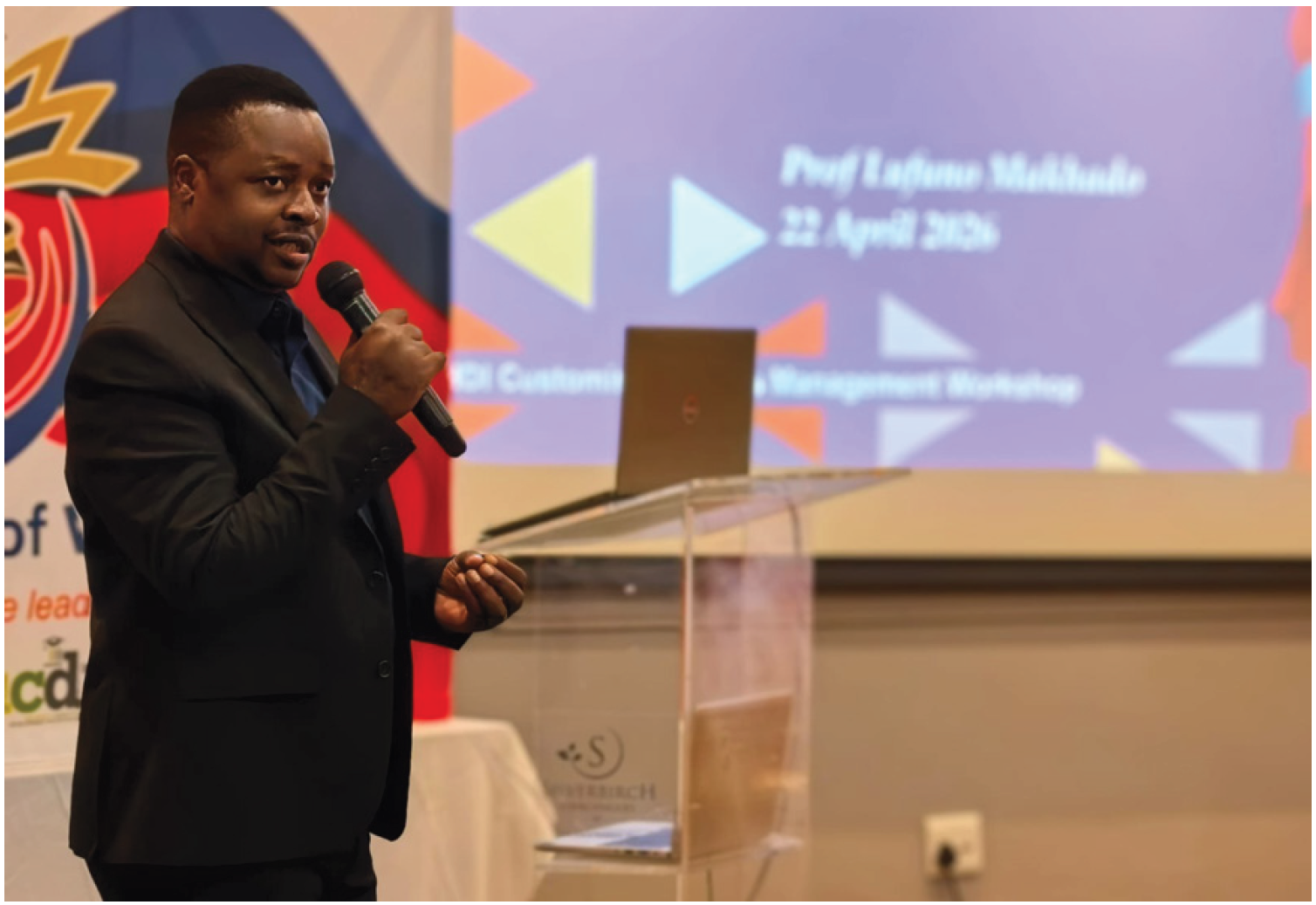
Prof Lufuno Makhado emphasising grants management as a strategic institutional function
Prof Lufuno Makhado, Project leader, followed with a presentation titled “Why Grants Management Matters for HDIs”, outlining the importance of treating grants management as a strategic function for compliance, delivery, donor/funder confidence, and institutional growth. He emphasised that grants management is more than the processing of funds, documents and reports. According to his presentations, it is a strategic institutional function that enables an institution to convert a grant award into accountable implementation, credible results and future funding opportunities. He explained that effective grants management supports four critical areas: compliance, delivery, trust and growth.
Compliance ensures that donor/funder rules, institutional policies and reporting requirements are met. Delivery ensures that funded activities are implemented in accordance with approved plans and budgets. Trust is built when institutions demonstrate responsible stewardship, proper documentation and transparent reporting.
A key message from Prof Makhado was that institutions may succeed in attracting grants, but without strong systems they may still face serious operational, financial, compliance and reputational risks. He noted that weak grant management can result in delayed project start-up, unclear handovers, missed deadlines, unsupported expenditure, overspending, incomplete records, procurement gaps, audit findings and reduced donor/funder confidence. He therefore stressed that even technically strong projects can fail when the institutional grants management system is weak.
Prof Makhado also highlighted the importance of role clarity across the grants lifecycle. In his presentation on roles, responsibilities, and the responsibility assignment matrix (RACI), he explained that effective grant management depends on clear ownership, timely consultation, proper approvals, and a consistent information flow. The RACI approach was presented as a practical tool to clarify who is Responsible, who is Accountable, who must be Consulted, and who should be Informed for each grant management task. His message was that good grants management is not only about having capable people; it is also about making responsibilities explicit before pressure is placed on the system.
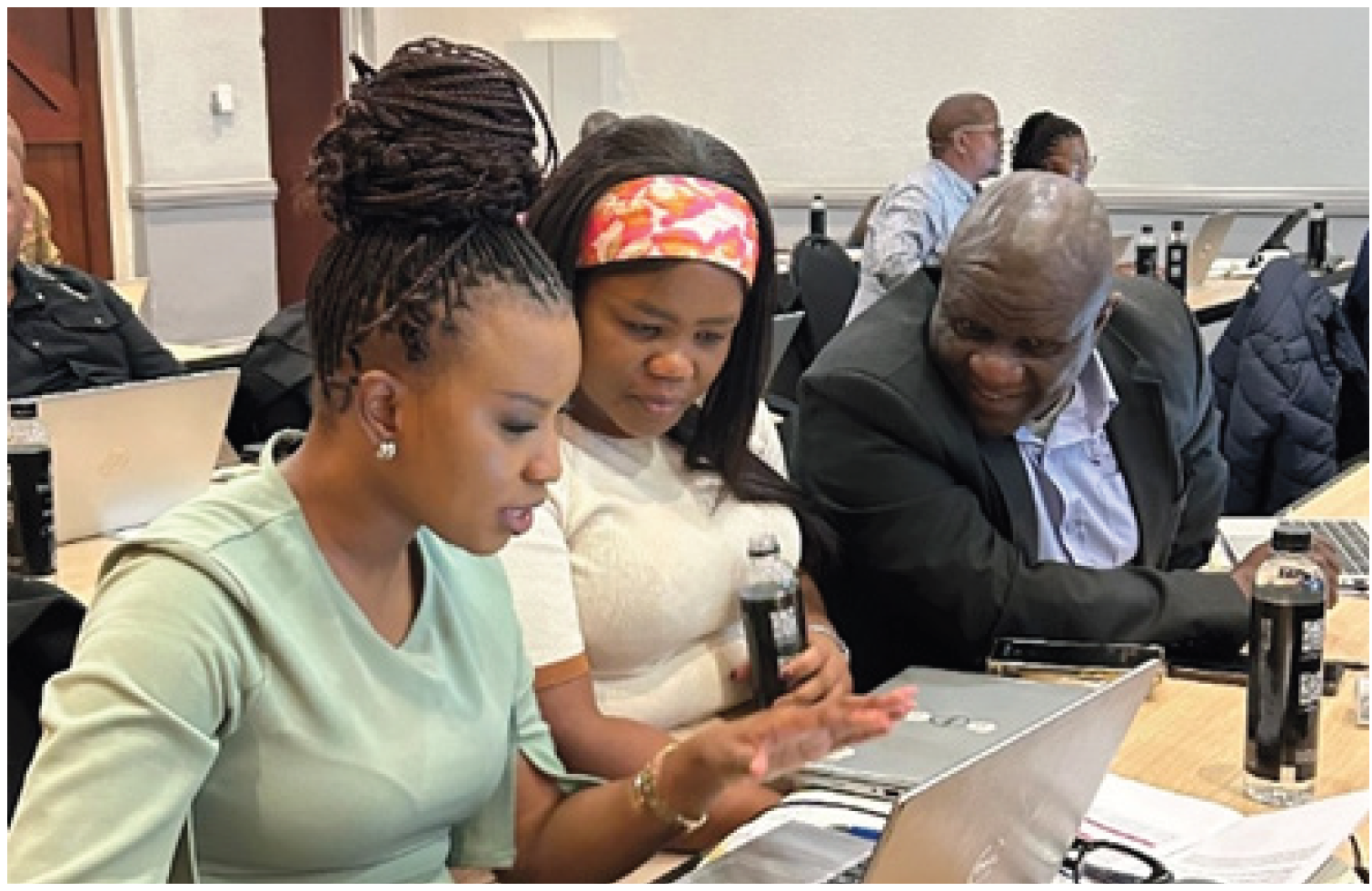
Participants engaging on the role clarity, responsibilities and handover points across the grant’s lifecycle
Through this discussion, participants were reminded that grants administrators, grants managers and directors each play distinct but connected roles. Grants administrators are central to maintaining files, tracking deadlines, ensuring documentation integrity and supporting audit readiness. Grants managers monitor budgets and implementation, coordinate reports, manage risks and follow up on corrective actions. Directors provide strategic oversight, make resource decisions, review escalated risks and monitor portfolio performance. The workshop stressed that weak handovers between these roles often create delays, confusion and avoidable compliance risks.
On the second day of the workshop, participants took part in role-based breakaway sessions for grants administrators, managers and directors. These sessions were facilitated by experienced grants management experts, including Mrs Thato Tantsi from Nelson Mandela University and the Southern African Research and Innovation Management Association (SARIMA) delegate, as well as Dr Sinah Sekhula, who is the NRF Research Coordinator at UNIVEN and Prof Jabulani Makubele, who is the Director of Research and Innovation at UNIVEN and Project Co-leader. The sessions allowed participants to reflect on their own institutional realities and to identify where grants management roles, approvals, documentation, reporting and communication processes
could be strengthened.
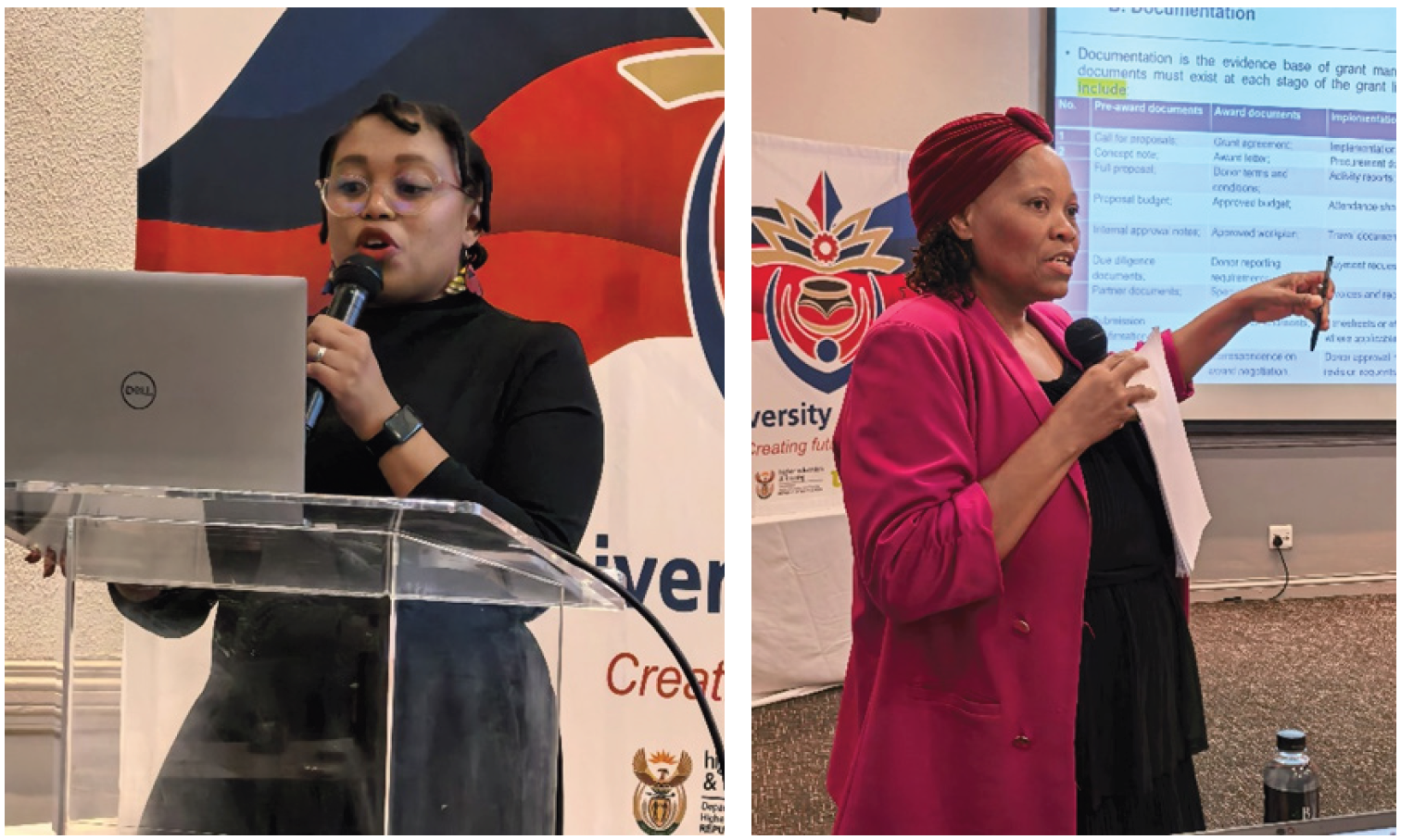
Mrs Thato Tantsi from Nelson Mandela University/SARIMA, facilitating role-based discussions, and Dr Sinah Sekhula, contributing to discussions on research coordination and grants management.
A cross-functional grants simulation was one of the workshop’s practical highlights. Participants worked through real-life grants management scenarios involving reporting deadlines, budget monitoring, documentation gaps, donor communication, compliance risks and escalation processes. The simulation demonstrated how weaknesses in one part of the grants system can affect the entire project. It also encouraged collaboration, practical problem-solving and a stronger appreciation of how different institutional roles must work together.
The final day of the workshop focused on institutionalisation and action planning. Prof Makhado guided participants through the process of designing a minimum grants management system for historically disadvantaged institutions.
He explained that such a system does not need to be complex, but it must be clear, consistent, compliant and usable by all relevant roles. The system should cover the full grants lifecycle and include defined responsibilities, required documents, deadlines, approvals and escalation points at each stage.
Participants were introduced to a set of practical tools that institutions should standardise. These included a grants lifecycle map, RACI matrix, grant start-up checklist, grant file structure, reporting calendar, budget monitoring template, risk and issue register, donor/funder communication log, approval tracking sheet, close-out checklist, portfolio dashboard and a 30–60–90-day improvement tracker. Prof Makhado emphasised that these tools do not need to be sophisticated, but they must be used consistently across all grants.
Another important message from Prof Makhado was that institutions should not operate grants without minimum controls. These controls include a signed grant agreement, an approved budget, a start-up briefing, documented approval for major budget reallocations, properly filed procurement evidence, internal review of donor/funder reports, and complete close-out documentation.
Key outputs from the workshop included compliance risk registers, RACI matrices, immediate corrective action plans, reporting calendars, donor/funder communication guidance and recommended system improvements. Participants also identified priority gaps and developed practical improvement roadmaps to guide implementation over the next 30 to 90 days. These roadmaps included actions such as adopting standard grant file structures, clarifying approval points, identifying high-risk active grants, introducing risk registers, piloting portfolio dashboards and standardising close-out procedures.
Mr Diketane congratulated the University of Venda for formulating a framework he believes is a valuable tool that can be adopted by other universities nationally, not just the HDIs. He indicated in his words that “the most captivating fact about this framework is that it was developed by an HDI university, and it is very rare”. He further assured that his office is excited to offer additional support to the team and suggested future collaborations, which will be announced as they occur.
UNIVEN was well represented by senior academic and professional staff, including Prof Jabulani Makhubele, Prof Lufuno Makhado, Prof Takalani Mashau, Mr Calvin Mulaudzi, Mrs Nontlanhla Ntakana, Dr Pelewe Mphephu, Dr Sinah Sekhula, Mr Bandile Mpukwana, Mrs Doris Mutobvu, Ms Maria Lethuba and Ms Renda Ravele.
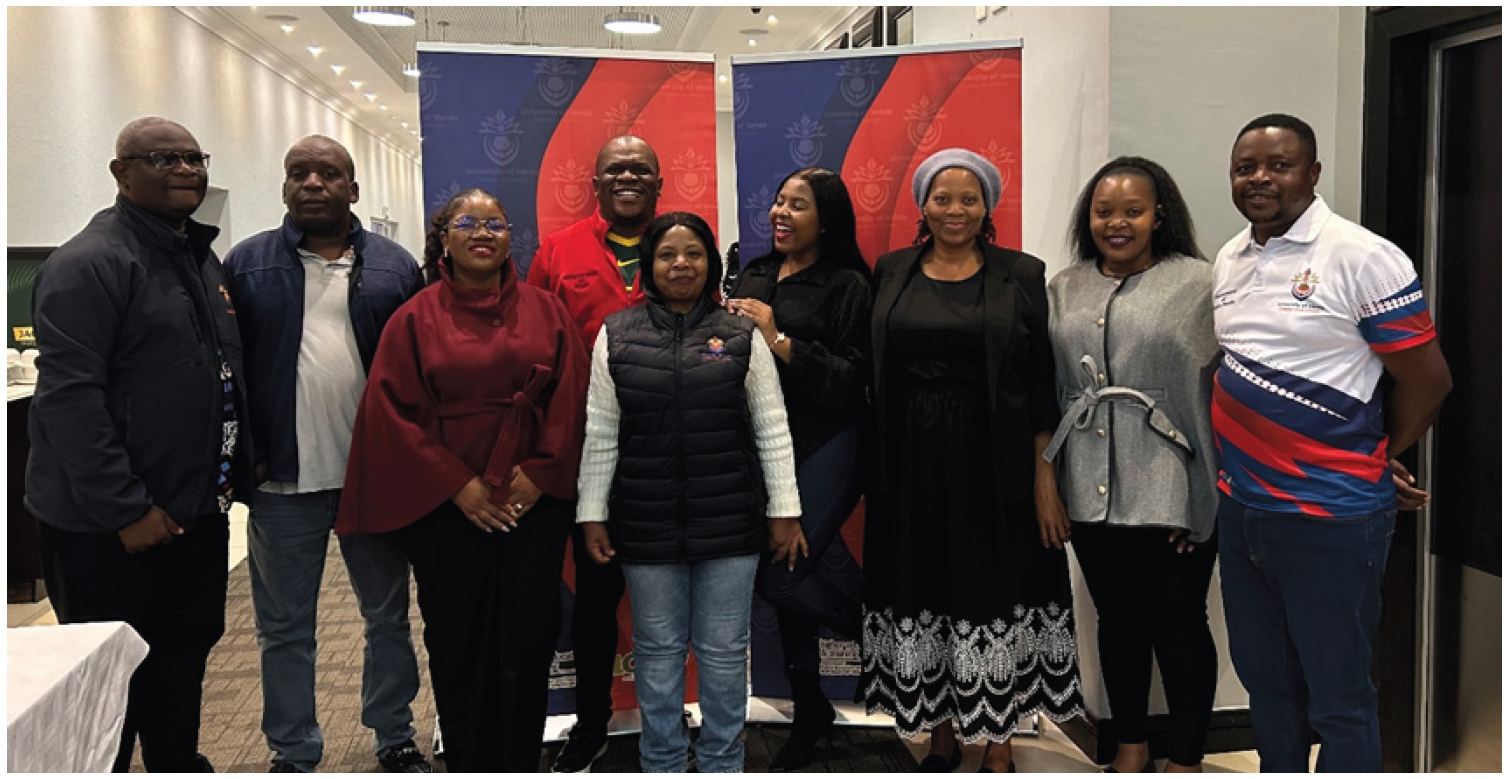
University of Venda delegates who participated in the workshop
In closing, Prof Jabulani Makhubele emphasised that the workshop provided practical tools and strategies to ensure that grants are managed efficiently, responsibly and strategically. The workshop equipped participants with a clearer understanding of the systems, controls, roles and leadership actions required to strengthen compliance, improve donor/funder relationships and support sustainable research and innovation growth.
The UL-UCDP Grants Management Customised Workshop reinforced the message that effective grants management is not only about managing funds. It is about building an institutional system that connects people, processes, evidence, controls and leadership decisions. Through the guidance provided by Prof Lufuno Makhado and the contributions of other speakers and facilitators, participants left the workshop better prepared to strengthen grants management practice, improve accountability and position their institutions for future funding success.
Issued by:
Department of Marketing, Branding and Communication
University of Venda
Tel: 082 868 2218 / 082 868 1811


