
The University of Venda’s Centre of Excellence in Mass Spectrometry for Southern Africa (CEMSSA) made a significant impact at the recent inaugural Metabolomics South Africa (MSA) Conference, held at Misty Hills Hotel in Muldersdrift, Johannesburg, positioning UNIVEN as a growing force in metabolomics and mass spectrometry research.
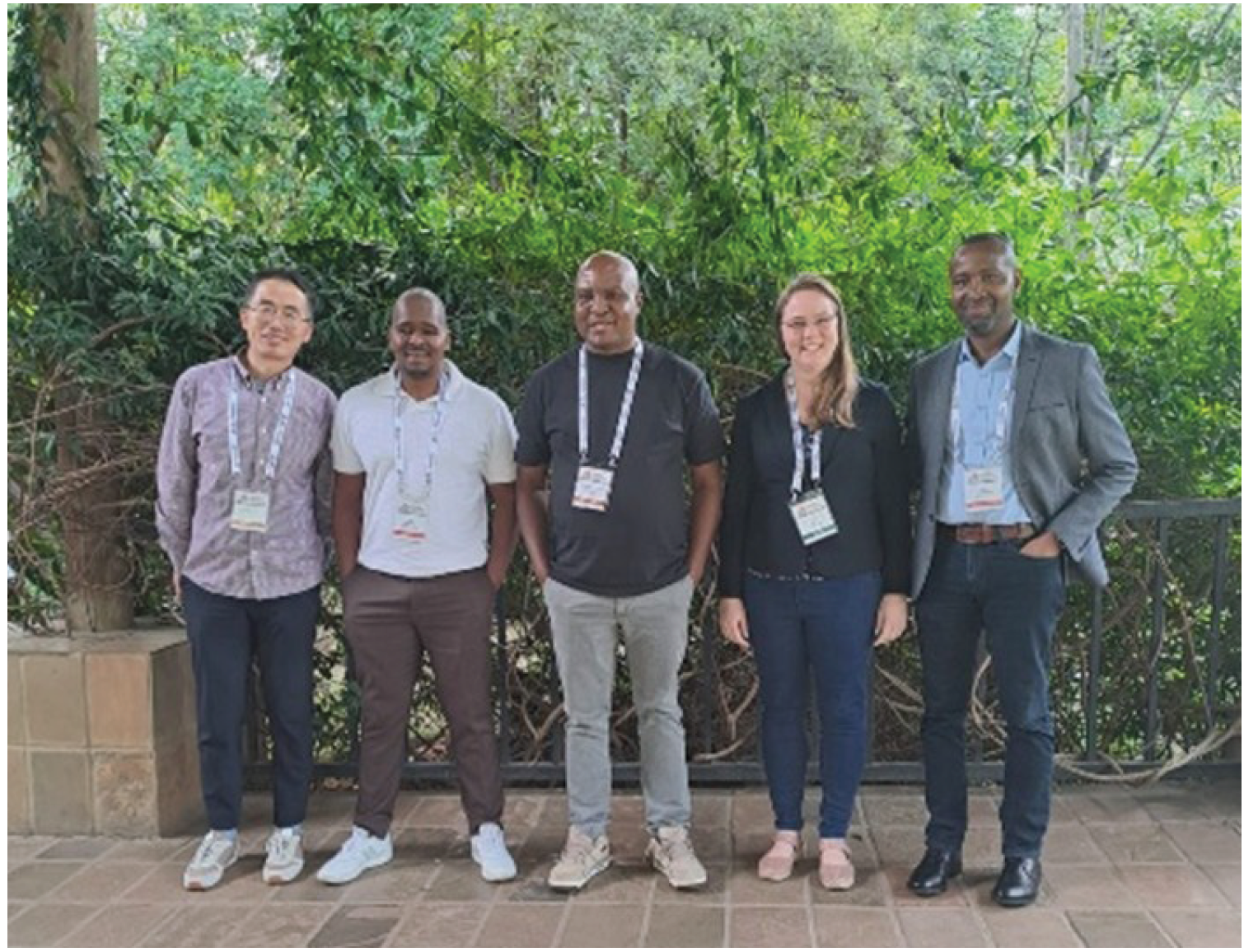
Prof Edwin Madala, together with some of the conference organisers and fellow keynote speakers. From left to right: Prof Jeff Xia (McGill University, Canada), Dr Msizi Mhlongo (Biochemistry, UJ), Prof Edwin Madala (CEMSSA Director UNIVEN), Dr Elize Smit (Chemistry, UJ), and Dr Fidele Tugizimana (Chairperson of MSA)
A major highlight of the conference was a keynote address by CEMSSA Director, Prof Edwin Madala, who was specially invited by the organising committee. His presentation, titled “From UHPLC MS Metabolomics to Metal Protection: Cinnamic Acid Derivatives as Green Corrosion Inhibitors,” showcased groundbreaking research on metabolome complexity, with a strong focus on light-induced geometrical isomerisation in plant metabolites.
Prof Madala presented evidence from previous MSc and PhD studies demonstrating that newly formed isomers possess enhanced metal-binding properties, a novel discovery currently being explored primarily at UNIVEN. He further highlighted the abundance of these compounds in parasitic plants commonly found in the Vhembe District, drawing considerable interest from conference delegates.
The research also revealed the potential application of these compounds as environmentally friendly corrosion inhibitors. Collaborative studies conducted with Prof Lutendo Murulana, Deputy Dean of Research and Postgraduate Studies, provided compelling evidence of their effectiveness against acid-induced corrosion. Delegates welcomed the innovative perspective that climate change-induced plant stress responses could unlock beneficial industrial and sci-entific applications. Discussions further proposed expanding similar studies to alpine plants in mountainous regions to better understand evolutionary adaptation to environmental stress-ors such as increased radiation exposure.
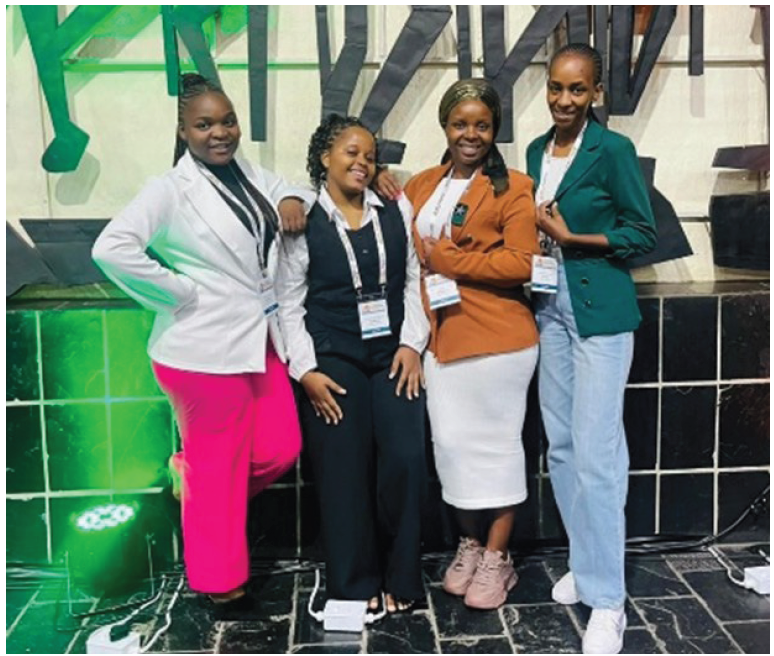
The four MSc students affiliated with CEMSSA who also attended the MSA conference, where they presented their posters on MS-based metabolomics studies.
As part of CEMSSA’s commitment to capacity building and student development, four affiliated students, Ms Muvhulawa Masutha, Ms Thompho Mudau, Ms Teressa Mukoma, and Ms Rose Sekgobela, attended the conference alongside Dr Barbara Moyo from the Department of Food Science and Technology. All five UNIVEN delegates presented research posters focusing mainly on mass spectrometry-related studies.
Prof Madala also participated in a specialist workshop alongside internationally renowned scholars, including Prof Zander Lindeque, Prof Tiziana Capello and Dr Stefano Cacciatore. The workshop, titled “Study Design, Sample Handling and
Statistical Considerations,” explored critical aspects of metabolomics research.
Drawing from his internationally recognised work on metabolome complexity, Prof Madala shared best practices for plant extract preparation within the metabolomics pipeline. He emphasised the importance of proper sample handling and reducing structural artefacts caused by light exposure, which can introduce variability in datasets when sampling methods are not standardised.
During the workshop, Prof Madala underscored that plants naturally produce chemical compounds as defense mechanisms against environmental stress rather than for human use. However, he explained that these stress-induced metabolites can be harnessed for valuable applications, particularly in addressing oxidative stress-related conditions.
The workshop was well received and provided an important platform for UNIVEN, through CEMSSA, to showcase its growing expertise in mass spectrometry and metabolomics research. Several delegates expressed interest in future collaborations, with follow-up engagements already underway.
Overall, the conference significantly strengthened CEMSSA’s visibility while opening doors for new institutional partnerships and engagement with potential funders such as DIPLOMICS. These engagements are expected to support infrastructure development, including the acquisition of advanced analytical instrumentation to further expand the centre’s research capabilities.
Knowledge and skills gained during the conference are already being transferred across UNIVEN, including to colleagues in Zoology who are beginning to integrate metabolomics approaches into animal studies. Early findings from these initiatives have already produced promising data expected to generate several research publications in the near future.
Issued by:
Department of Marketing, Branding and Communication
University of Venda
Tel: 082 868 2218 / 082 868 1811


