
The Green Technology Confucius Institute (GTCI) at the University of Venda (UNIVEN) recently held the International Chinese Language Day celebration at the GTCI Art Hall. The event, which combined thematic lectures and interactive exchanges, focused on topics such as Chinese language learning, technological cooperation, cultural exchange, and international relations. Over 100 participants coming from various University faculties, students, and guests participated in this event.
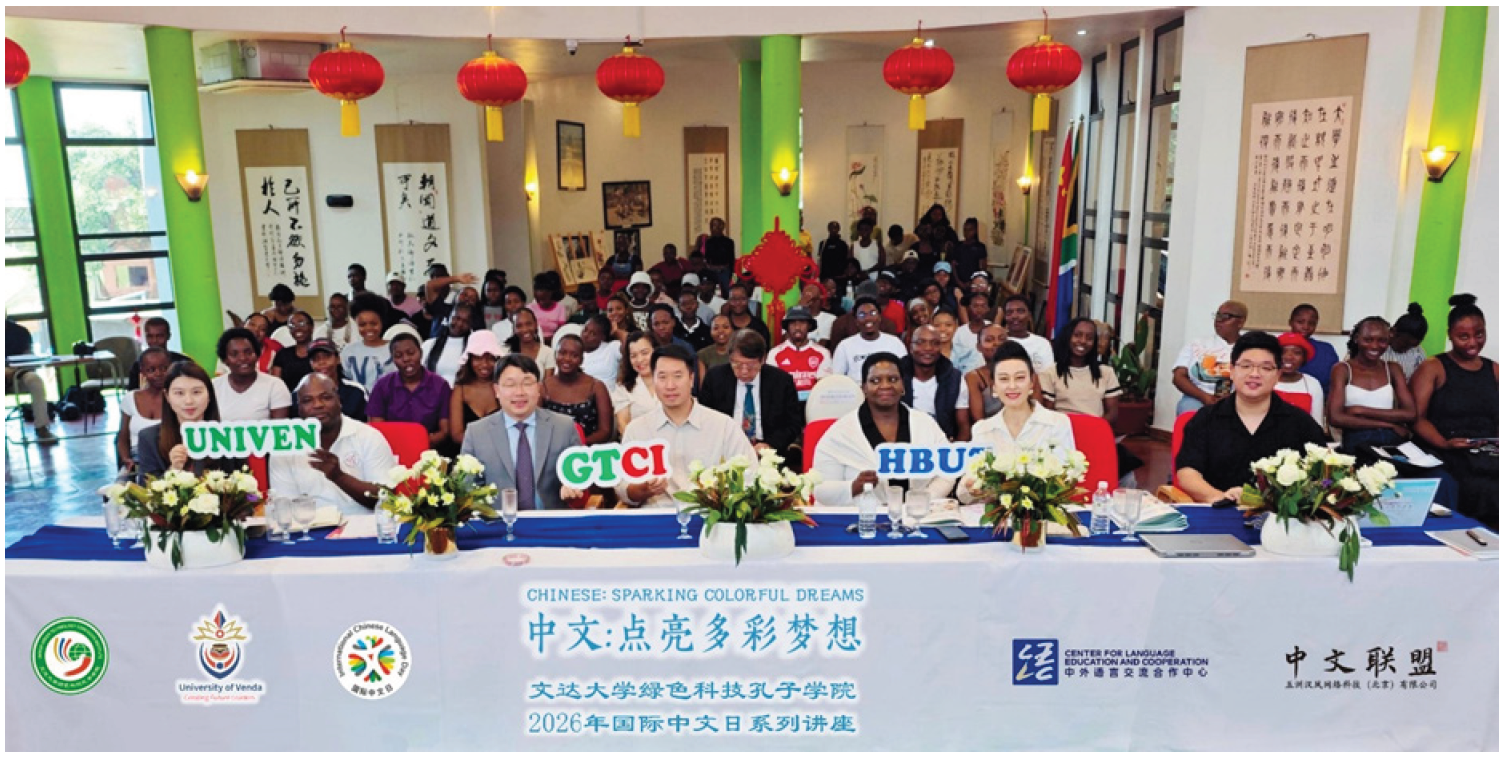
The International Chinese Language Day was established by the United Nations and is celebrated on 20 April annually to promote multilingual equality and cultural diversity. The 2026 International Chinese Language was celebrated under the theme: ‘Chinese: Sparking Colorful Dreams’. There have been several events worldwide to celebrate the Chinese Language education and cross-cultural understanding through various cultural exchanges.
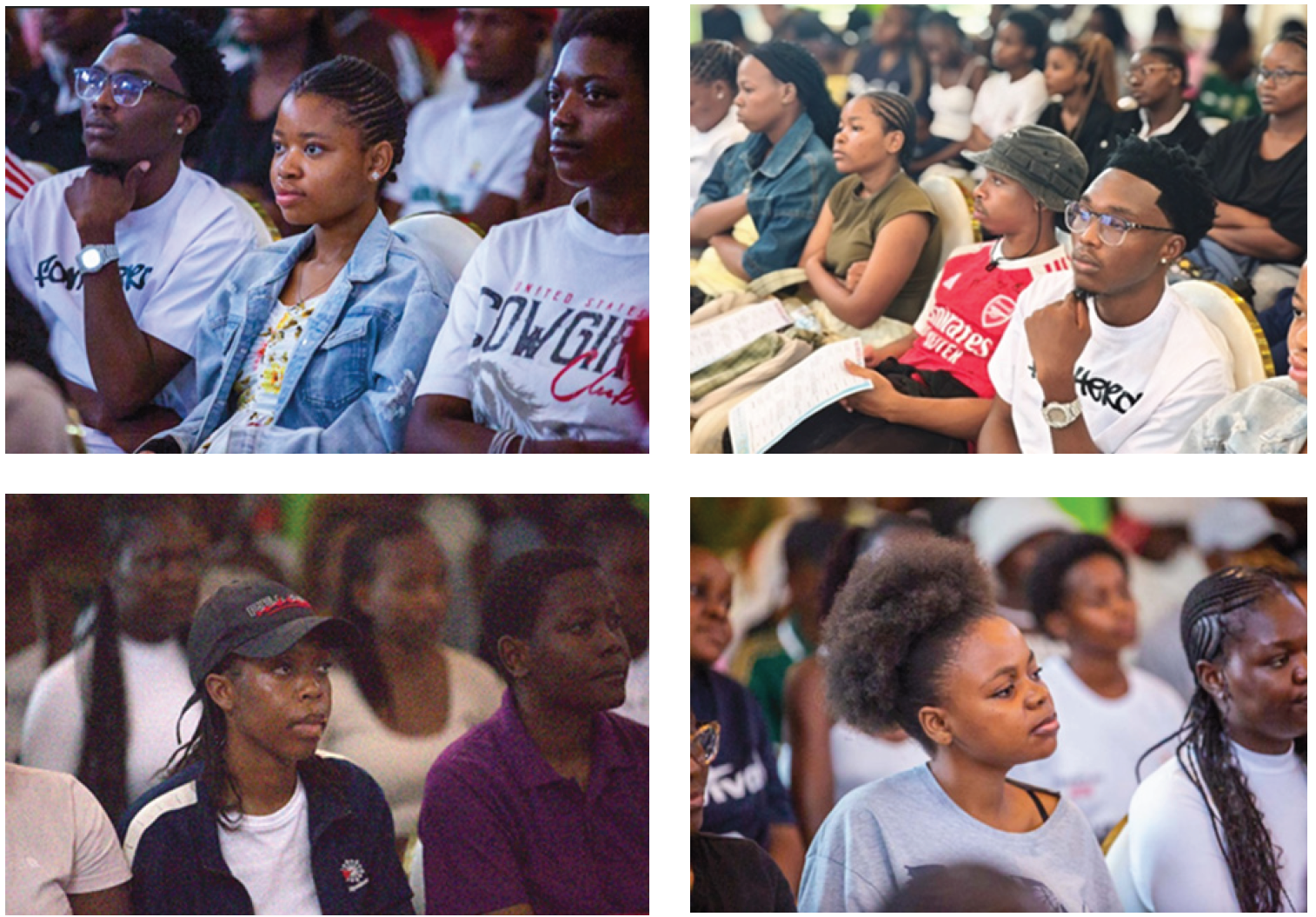
On photo: Participants attentively listening to speakers
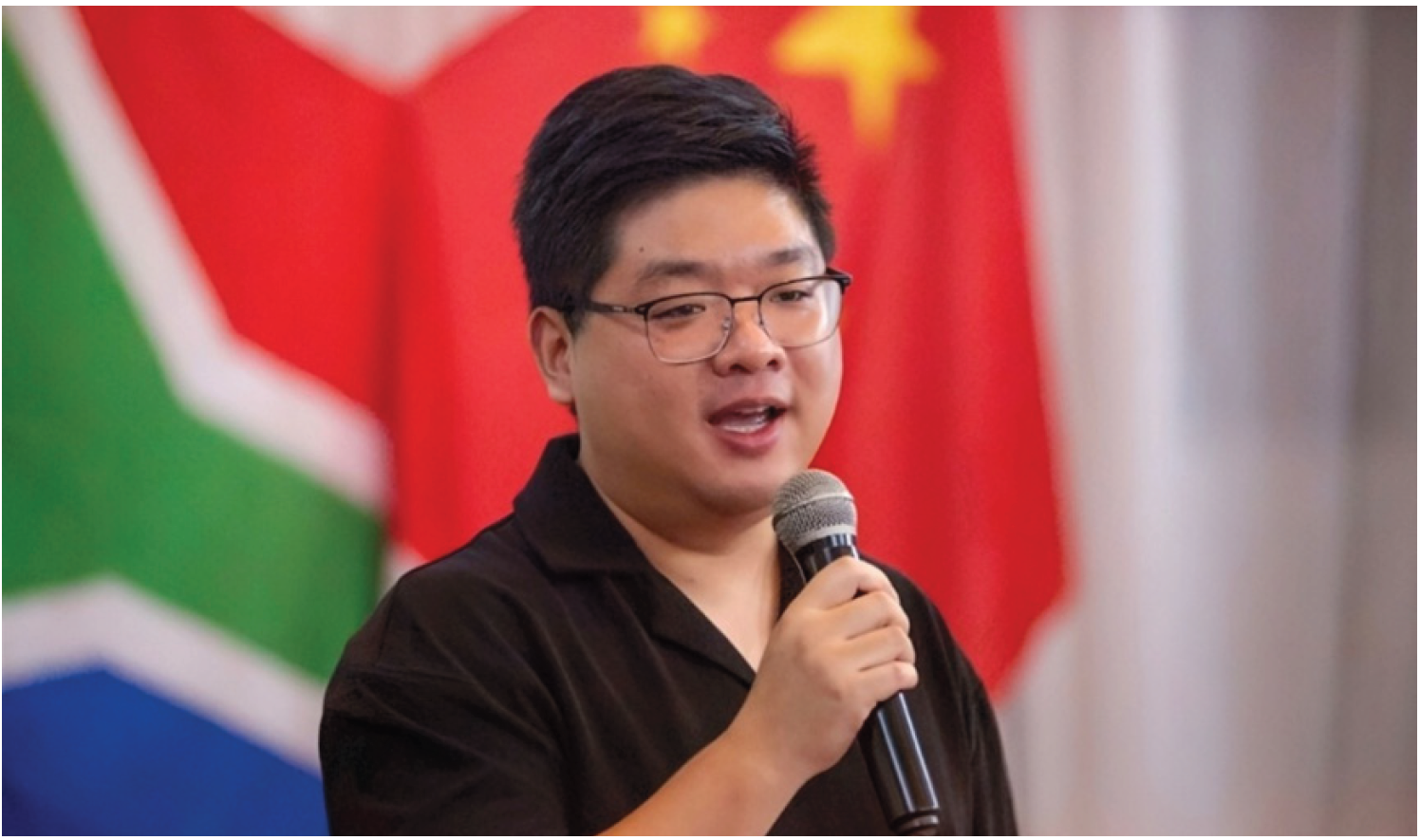
On photo: GTCI Manager and Senior Lecturer, Mr Ted XIONG during the official opening of the event
The event was hosted by GTCI Senior Lecturer, Mr Ted XIONG, who, in his opening speech, emphasised that language is a vital bridge connecting civilisations. He stated that the International Chinese Language Day showcases the importance of language in enriching culture and promoting mutual understanding. In the context of globalisation, multilingual proficiency is crucial to international cooperation, and GTCI will continue to provide UNIVEN with a high-quality platform for language learning and exchange, thereby fostering students’ international competencies and global perspectives.
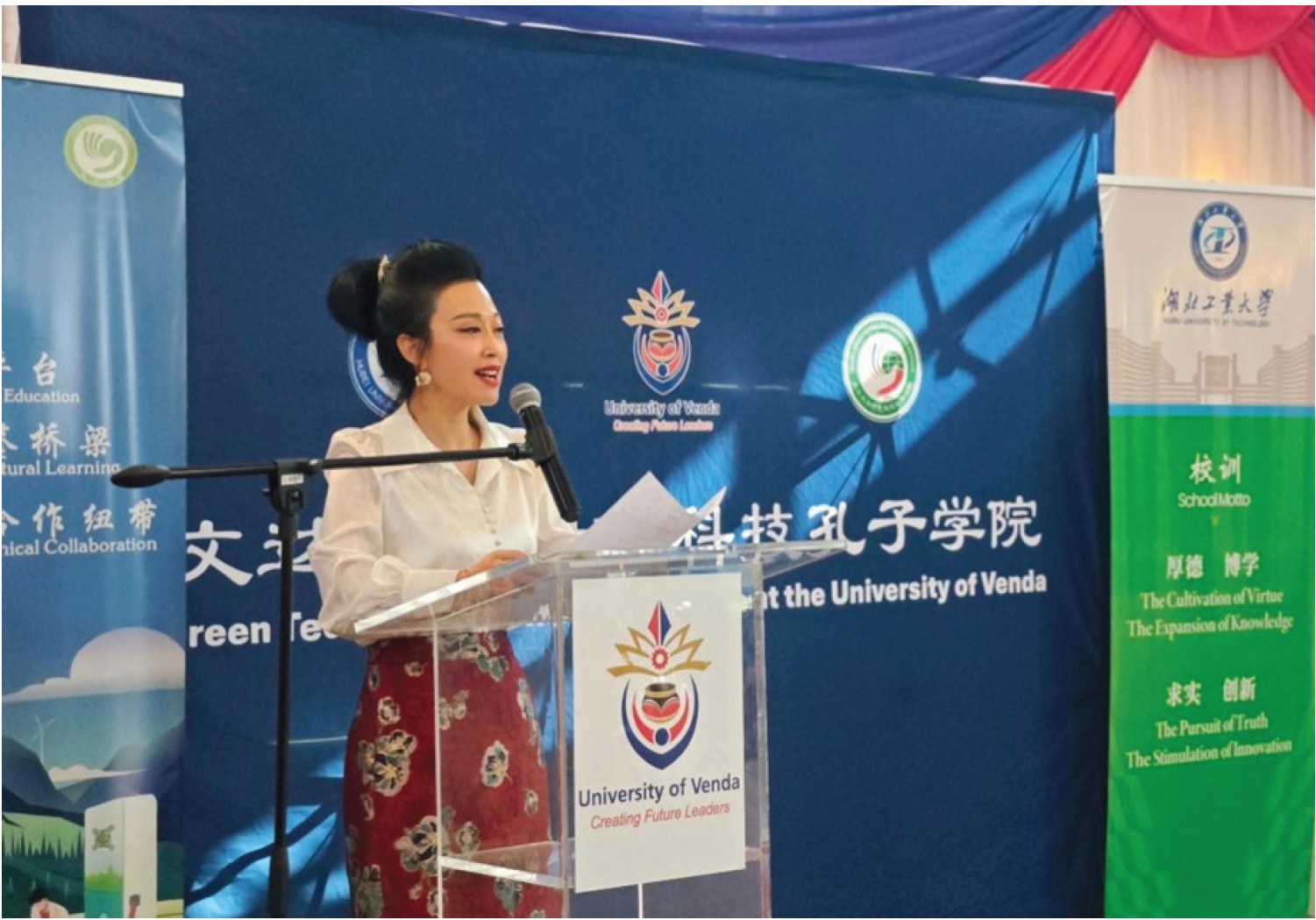
On photo: Co-Director of GTCI, Prof Grace GE delivering a welcoming speech
The Co-Director of GTCI, Prof Grace GE, welcomed the guests and introduced the event’s background. She expressed her heartfelt thanks to the participants and emphasised that the GTCI is dedicated to advancing the integration of international Chinese language education with green technology and cultural exchanges. UNIVEN faculties and students through thematic lectures delivered by experienced journalists and prominent public officials. She hoped that participants would gain a deeper understanding of South Africa cooperation, China-South Africa exchanges, technological development, and international Chinese language education, and encouraged more students and faculty to join future courses and activities at GTCI.
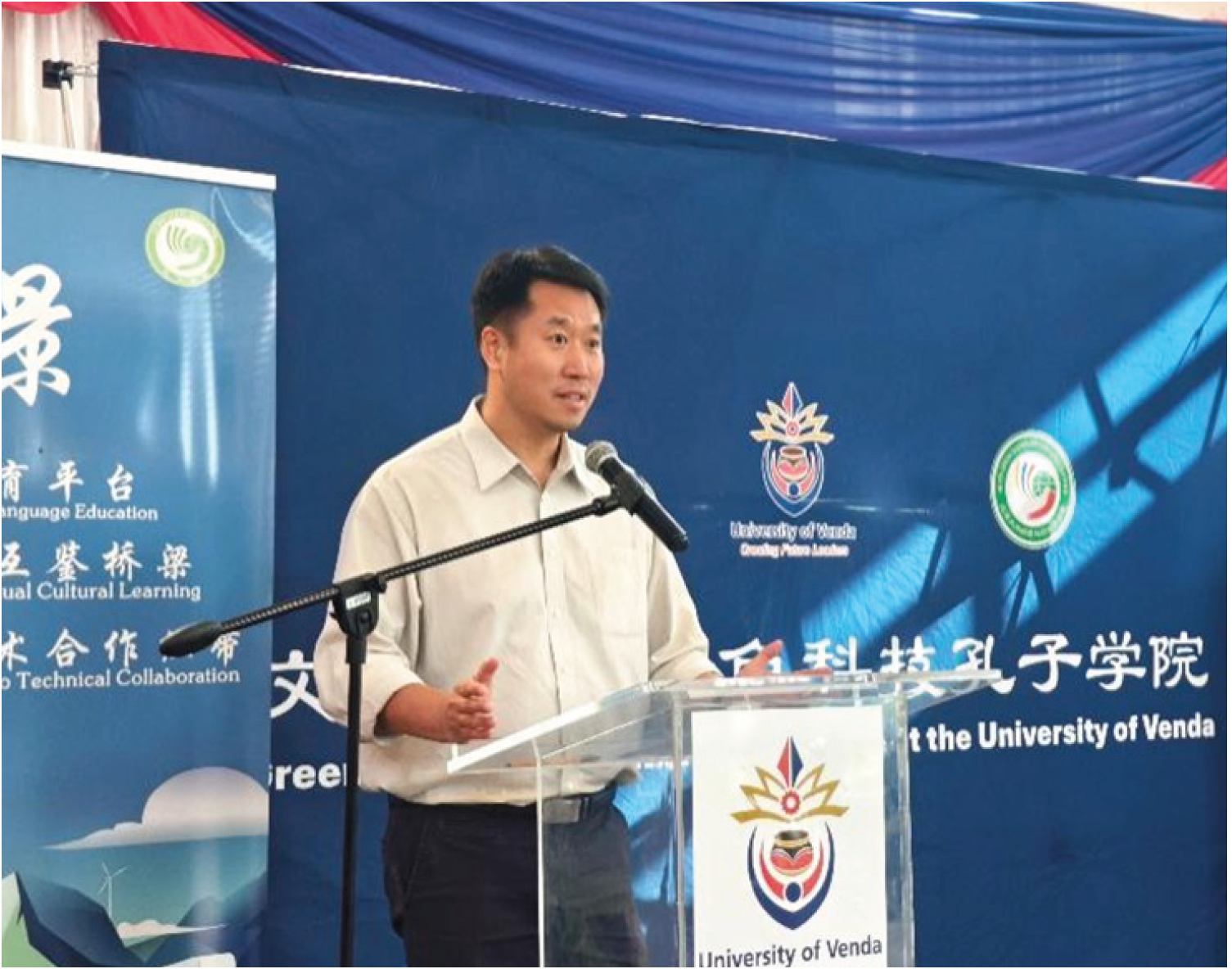
On photo: Mr ZOU Song delivering the keynote speech
During the keynote speech session, as the first guest speaker, Mr ZOU Song, delivered a presentation titled ‘Chinese as a Bridge: Exploring the Universe — China-South Africa Science and Technology Cooperation through the SKA Project.’ Mr ZOU Song is the Chief Reporter at the Africa Center Branch of People’s Daily, the most authoritative and influential newspaper in China, with over twenty years of international news reporting experience. Currently based in South Africa, he spoke about the cooperation between China and South Africa on large-scale scientific projects, particularly the Square Kilometer Array (SKA). SKA is the world’s largest and most sensitive radio telescope array, and China has been one of the earliest and most significant participants in the project. Mr ZOU Song highlighted China’s role in designing and manufacturing high-precision antennas, transporting the equipment to South Africa, and participating in the installation and testing. He emphasised the foundational role of language proficiency in scientific collaboration and noted that learning Chinese can facilitate young scholars to engage in green technology and cutting-edge scientific research.
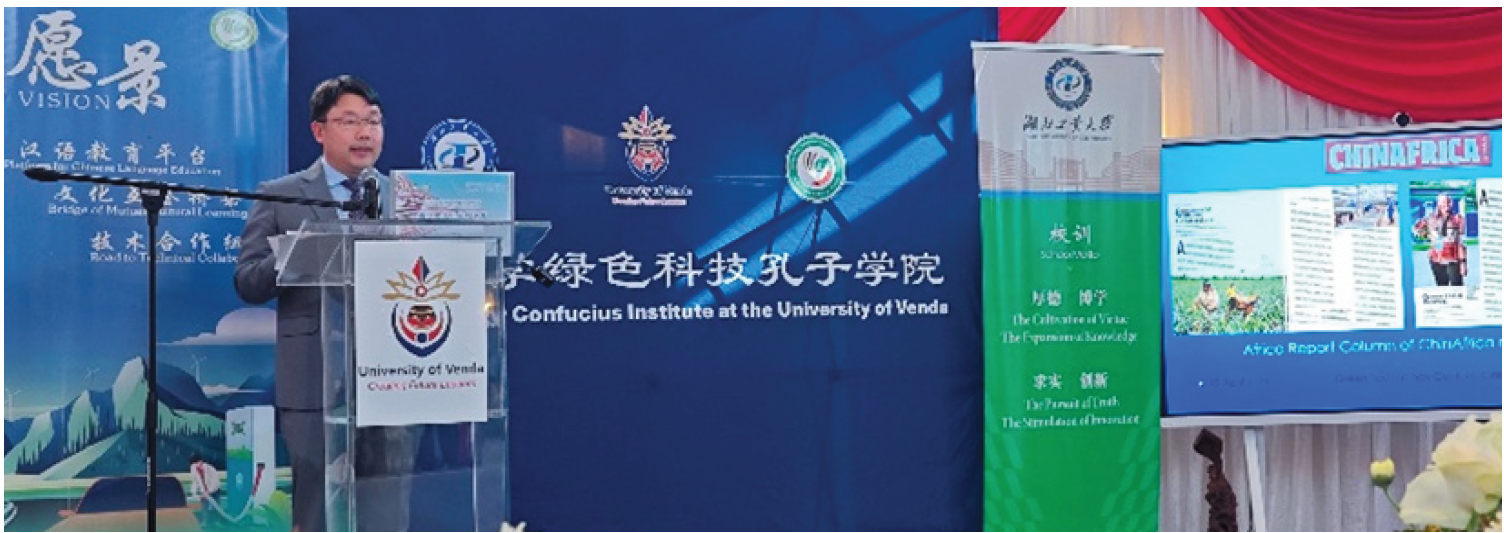
On photo: Mr NI Yanshuo delivering the keynote speech
The second guest speaker, Mr NI Yanshuo, delivered a presentation titled ‘China-South Africa Cooperation Mechanism and Cultural Exchange from the Perspective of International Media’. Mr NI is the Chief Reporter from the Europe and Africa Center of China International Communication Group and the ChinAfrica magazine. He discussed the development of China-South Africa relations from the establishment of diplomatic ties in 1998 to the elevation of their partnership to a “new era comprehensive strategic cooperative partnership in 2024”. He used examples such as wind power, solar thermal power stations, and BYD electric cars to illustrate how these green energy projects are attracting international media attention. Mr Yanshuo emphasised that the media is an essential bridge for cross-cultural understanding and noted that 2026 is the “China-Africa Year of Cultural and People-to-People Exchanges,” which offers new opportunities to deepen mutual understanding between China and Africa.
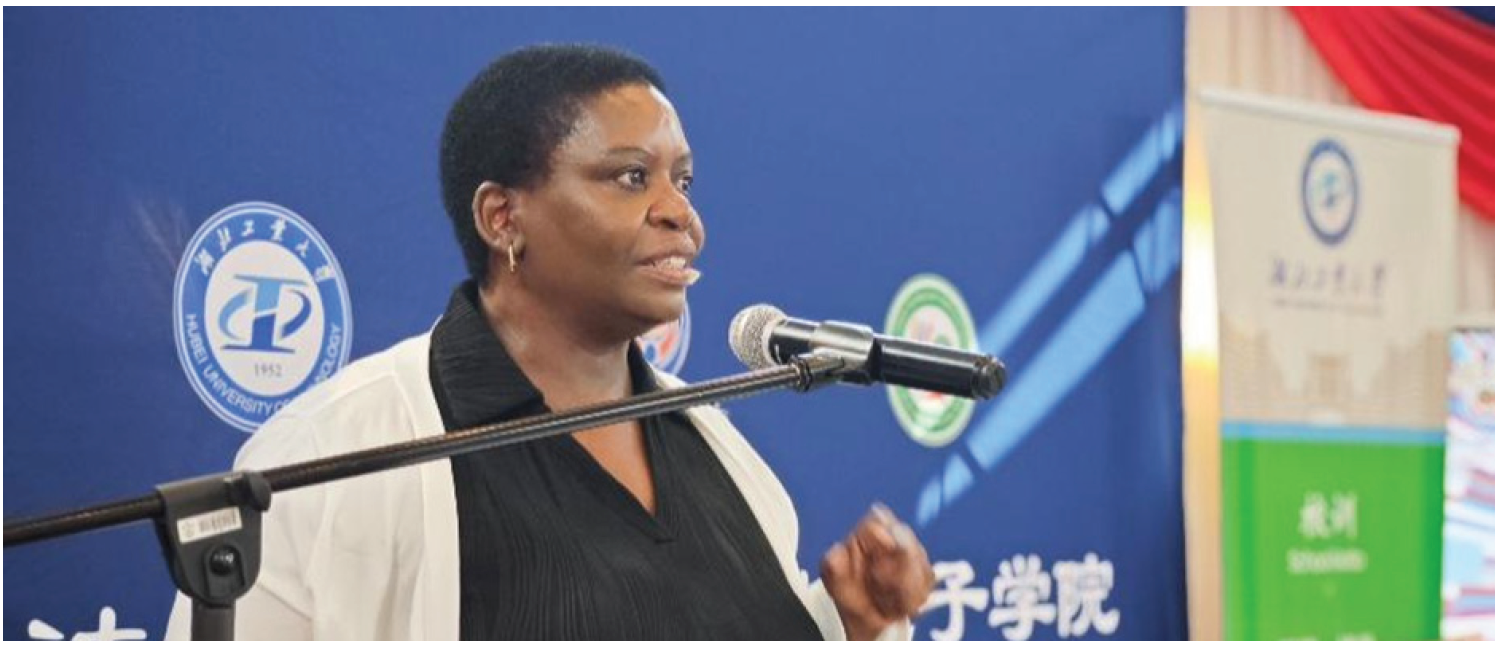
On photo: Ms Dorah Maraba delivering the keynote speech
The third guest speaker, Ms Dorah Maraba, gave a presentation titled ‘Strengthening Global South Initiatives through Cultural Exchange: A Case Study of Limpopo Province.’ Ms Dorah Maraba is the Chief Director for International Relations at the Office of the Premier of Limpopo Province. She spoke about the significance of cultural exchange in promoting regional cooperation and the broader Global South initiative. Ms Maraba began by asking students about measures that were taken by China over the past three decades to improve people’s livelihoods and economic development, transforming it into a globally influential nation. She shared the development experiences and paths she witnessed during her visits to China, encouraging students to draw from China’s development model to energise South Africa’s growth. She also praised GTCI’s efforts to offer Chinese language training for students planning to study in China and encouraged attendees to continue studying Chinese and to be ambassadors of the China-South Africa cultural exchange.
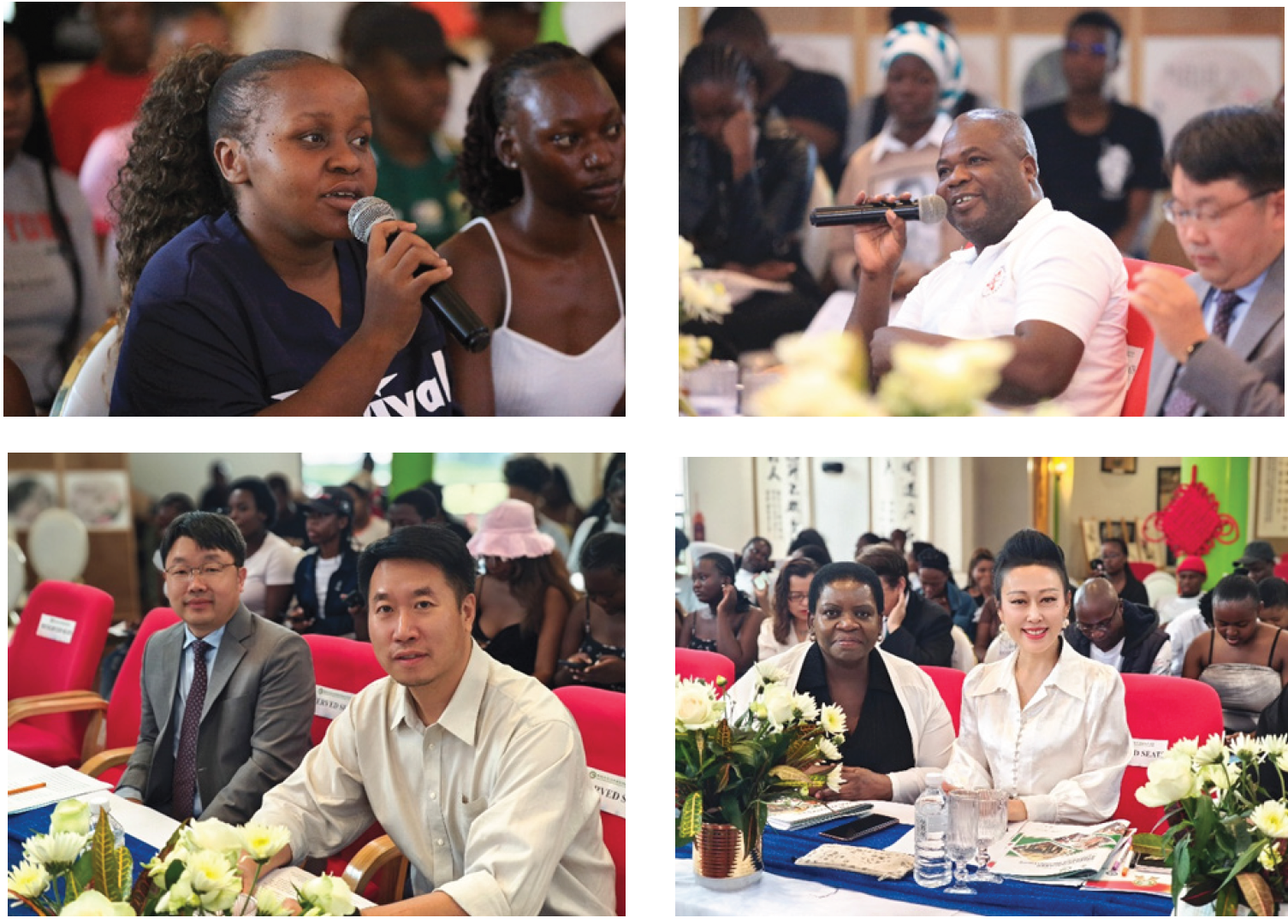
On photos above: Participants and guest speakers
The interactive discussion session was lively and engaging, with students actively asking questions about the keynote presentations, focusing on frontier technology and international cooperation practices. Topics included how the SKA project ensures ecological safety during construction and operation, how China and South Africa can maintain pragmatic cooperation amid global technological competition and changing international dynamics, and the new characteristics of their diplomatic relations. The three guest speakers responded based on their fields of expertise, noting that the SKA project adheres to strict international standards for site selection, ecological monitoring, and sustainable construction. They also highlighted the increasing trust and collaboration between China and South Africa through multilevel cooperation, as well as the growing pragmatism, innovation, and diverse interactions in their bilateral relations. After the keynote speeches, Prof Maluta, the Co-Director of GTCI, thanked the guests and participants, acknowledging the event’s positive role in promoting Chinese language education and international exchanges.
The event, through a combination of thematic lectures and interactive exchanges, vividly demonstrated the practical value of the Chinese language in promoting technological collaboration and cultural mutual understanding, positioning language as an essential link between different civilisations and knowledge systems. The event deepened participants’ understanding, showing that Chinese language learning extends beyond language skills to become an important path for global governance, technological advancement, and shared cultural values.
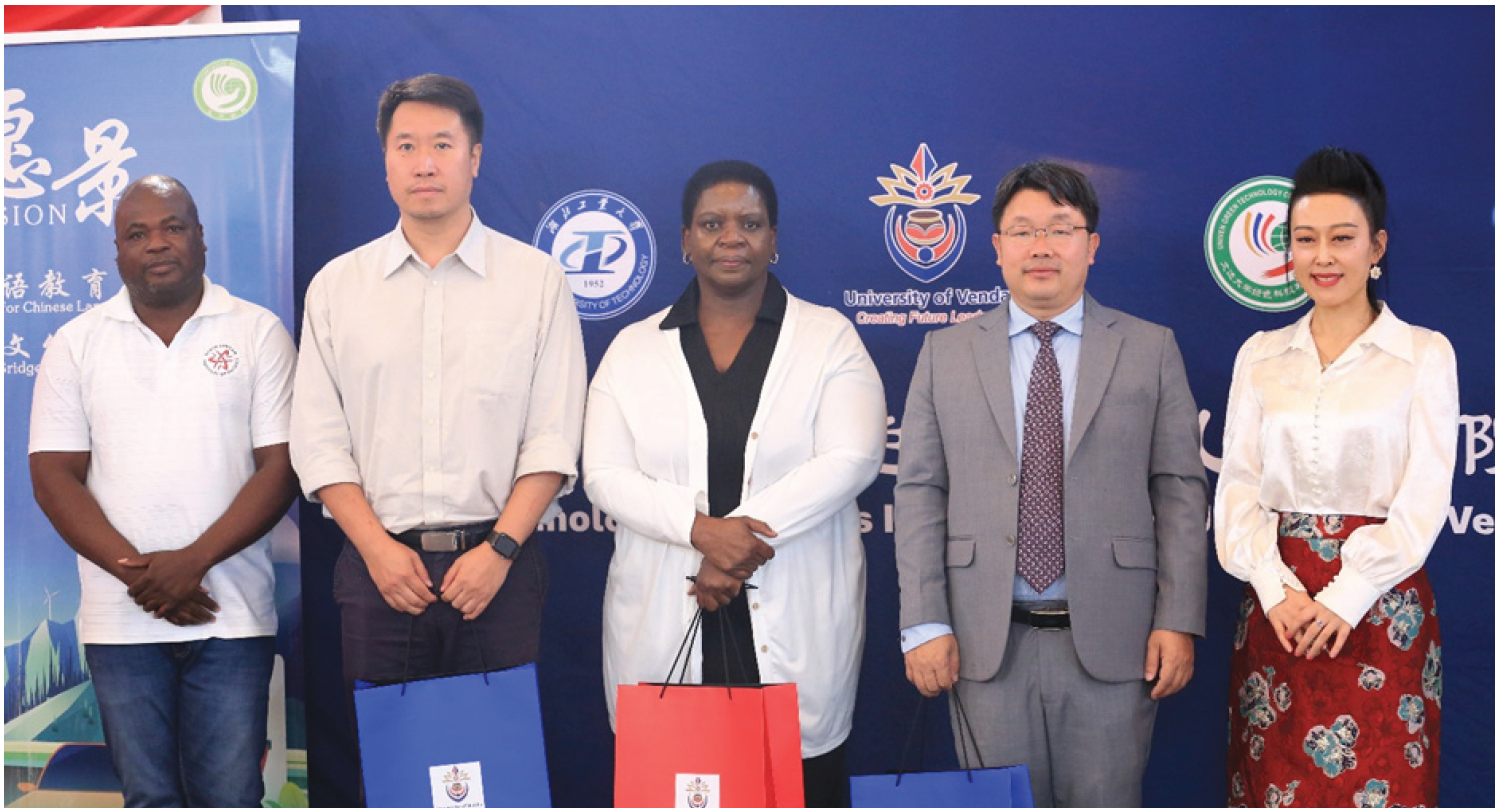
On photo: Guest speakers and GTCI Co-Directors posing for a photo
GTCI will continue to uphold an open, inclusive, and win-win approach, fostering deeper integration of language education with technological innovation and cultural exchange. GTCI aims to build a higher-level international exchange and cooperation platform that cultivates interdisciplinary talent with professional skills, cross-cultural communication abilities, and a sense of global responsibility. It will also promote mutual learning between civilisations, sustainable development, and deepen China-South Africa educational and cultural cooperation.
Issued by:
Department of Marketing, Branding and Communication
University of Venda
Tel: 082 868 2218 / 082 868 1811


