
Thohoyandou, Limpopo – The University of Venda (UNIVEN),through the Faculty of Science, Engineering and Agriculture, in partnership with the National Disaster Management Centre (NDMC), the Limpopo Provincial Disaster Management Centre (PDMC) and the Vhembe District Disaster Management Centre, successfully hosted the 2026 National Disaster Management Research Seminar, bringing together leading academics, researchers, policymakers, disaster management practitioners, students and development partners to strengthen collaboration in building resilient and sustainable communities.
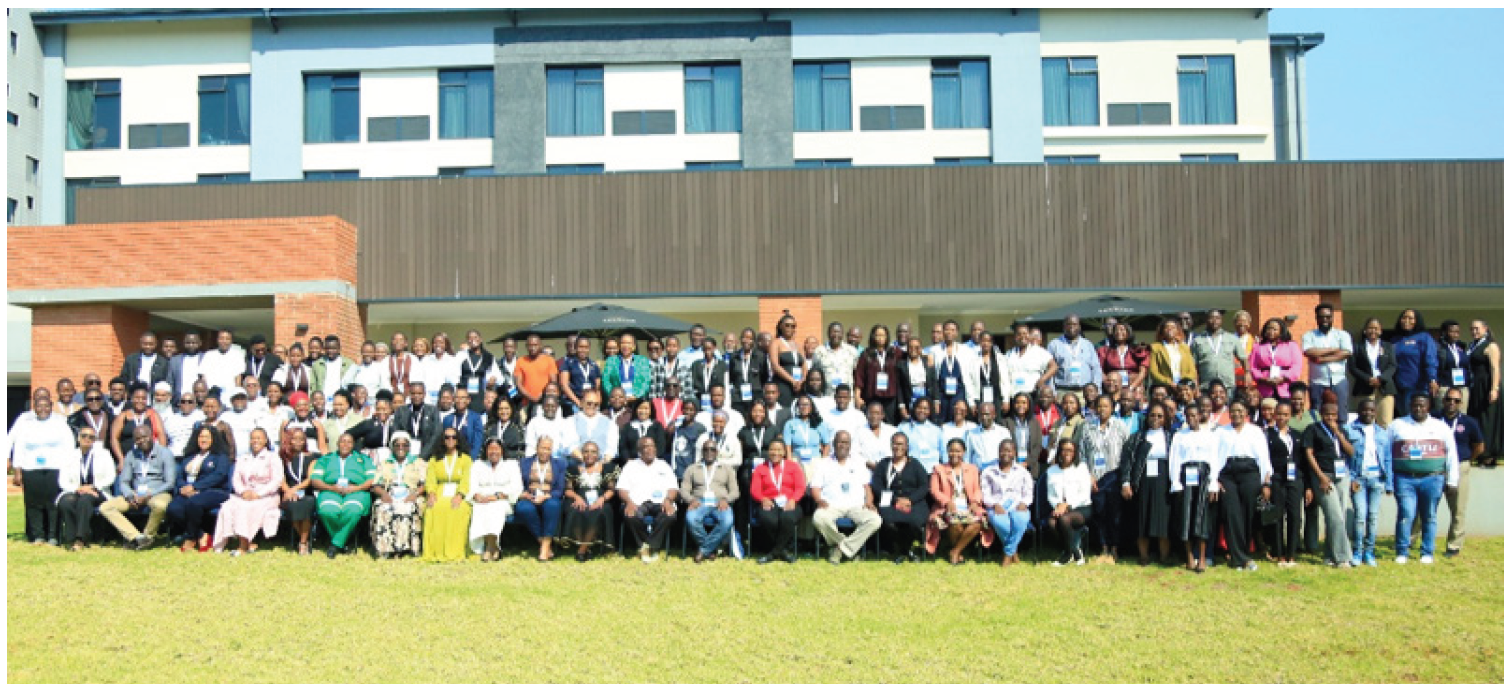
A group photo of attendees
Held under the theme, “Women in Disaster Risk Reduction: Advancing Research, Innovation and Resilience for Sustainable Communities,” the seminar formed part of the FSEA’s Women’s Month celebrations while reinforcing government’s commitment to advancing evidence-based disaster risk reduction through research, innovation and strategic partnerships. Throughout the day, delegates explored emerging disaster risks, climate change adaptation, disaster governance, indigenous knowledge systems, technological innovation and community resilience, with a particular focus on recognising and strengthening the role of women in disaster risk reduction. This prestigious event took place at Premier Hotel, Thohoyandou on Thursday, 06 August 2026.
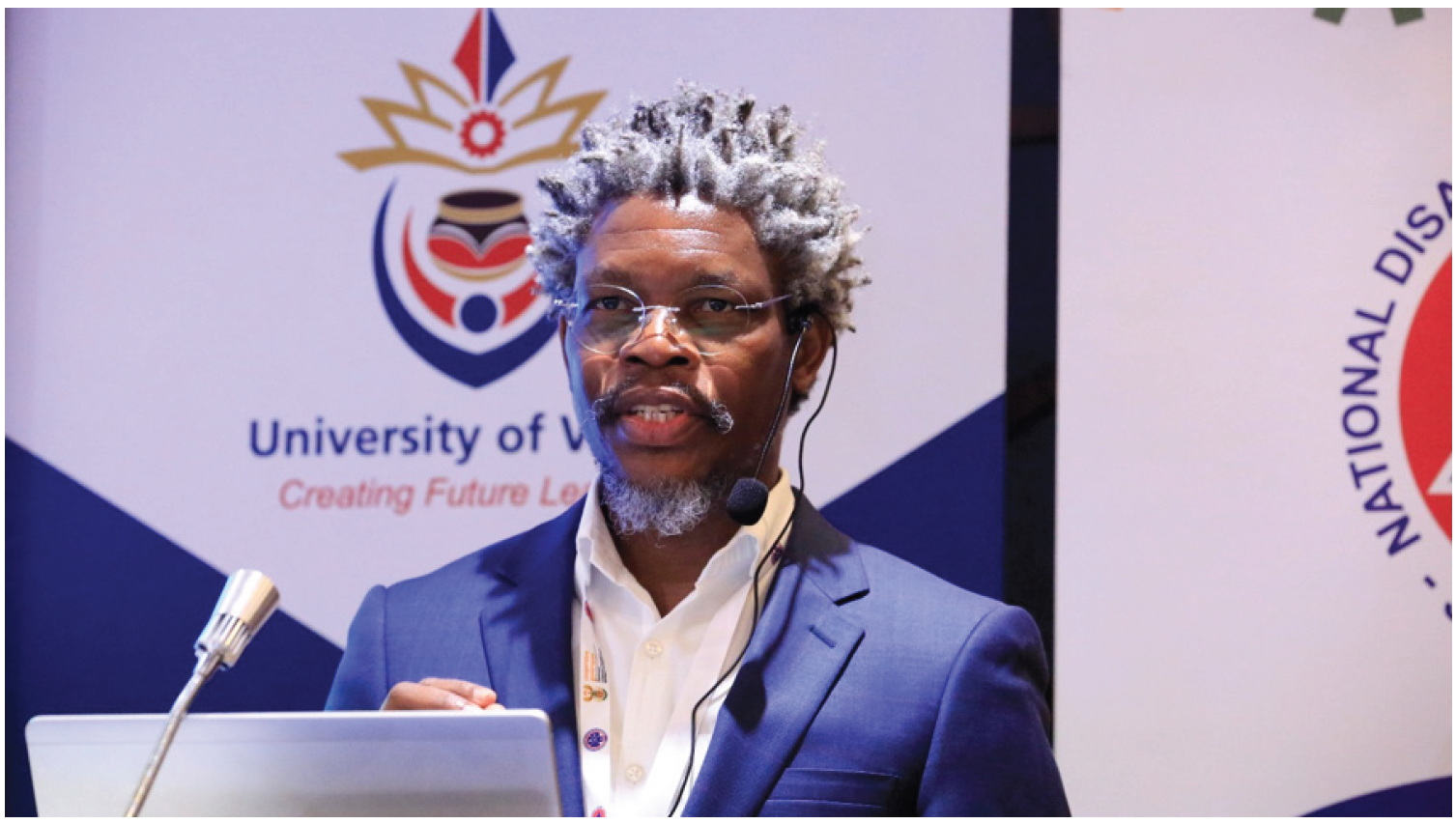
Welcoming delegates, Professor Fulufhelo Netswera, Acting Vice-Chancellor and Principal of the University of Venda described the seminar as an important platform for advancing research, collaboration and innovation at a time when communities around the world continue to face increasingly complex disasters, including extreme weather events, wildfires and conflicts. Addressing government officials, academics, researchers, disaster management practitioners, students, representatives from non-governmental organisations, the corporate sector and members of the public, he emphasised that disaster risk reduction requires strong partnerships between institutions and sectors to anticipate, mitigate and respond to emerging risks through evidence-based research and informed policy.
Reflecting on the seminar theme, Prof Netswera highlighted the indispensable contribution of women to disaster preparedness, response and recovery, while acknowledging that their voices remain underrepresented in leadership and decision-making. He called for greater recognition of women as leaders whose knowledge, experience and resilience are essential to building safer and more sustainable communities. Concluding his remarks, he challenged delegates to translate research into practical interventions that improve disaster preparedness, strengthen resilience and create lasting impact within communities across South Africa.
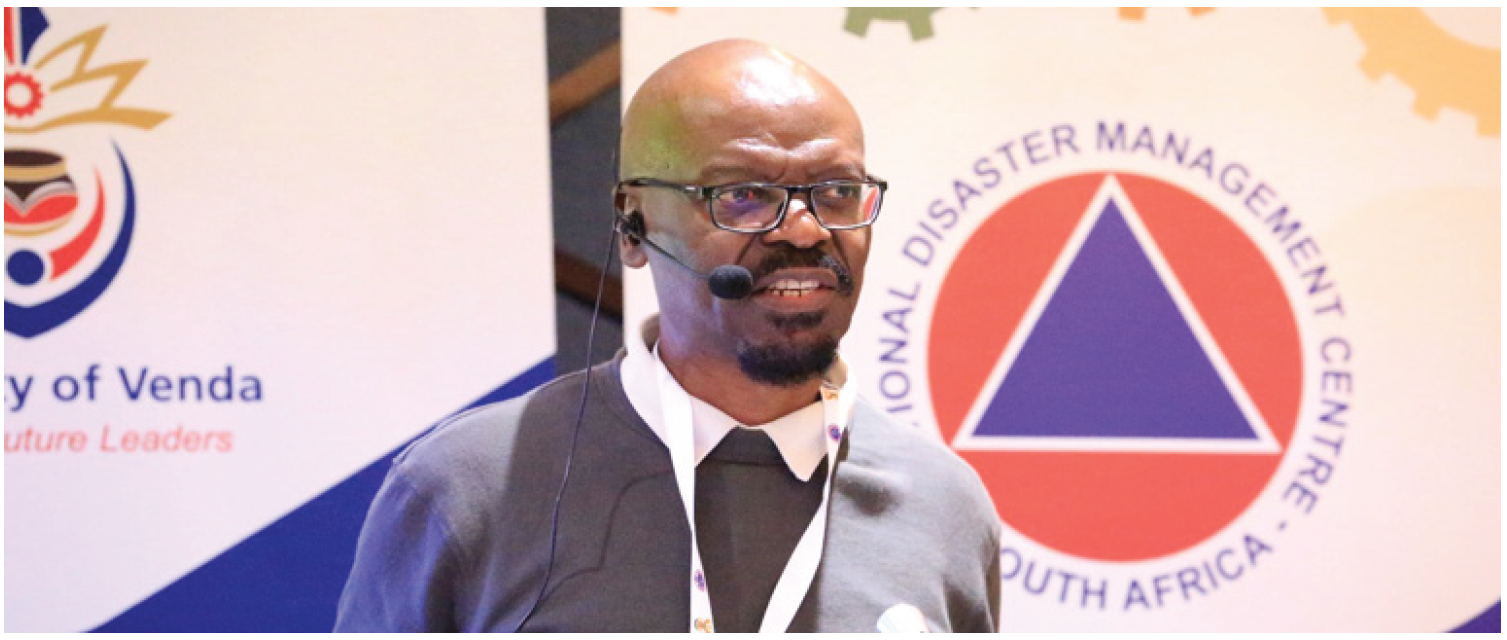
Delivering remarks on behalf of the Limpopo Provincial Disaster Management Centre, Dr Takalani Daniel Makananisa, Head of the Provincial Disaster Management Centre, commended the collaborative partnership between government, academia and disaster management stakeholders for creating a platform that promotes knowledge sharing, research and innovation. Reflecting on progress achieved under the Sendai Framework for Disaster Risk Reduction, he noted encouraging advances in international cooperation and the implementation of disaster risk reduction strategies, demonstrating the value of coordinated action in strengthening preparedness and resilience. He reaffirmed the Provincial Disaster Management Centre’s commitment to working closely with research institutions and practitioners to ensure that research informs practical solutions that contribute to safer and more resilient communities.
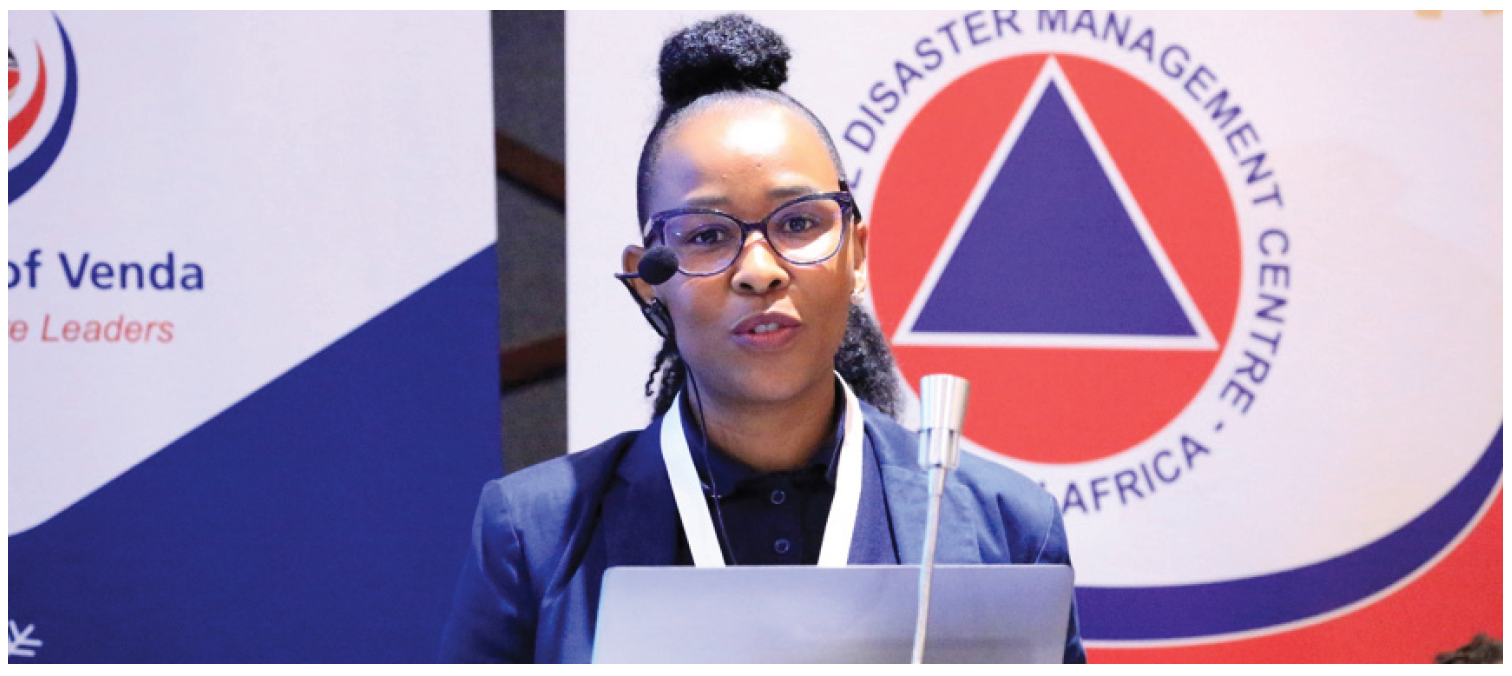
Providing an overview of the National Disaster Management Research Agenda, Ms Cynthia Nonjola, Director: Education, Training, Awareness and Research at the National Disaster Management Centre, outlined the legislative framework underpinning disaster management research in South Africa. She explained that the research agenda, developed in 2023 in terms of the Disaster Management Act (Act 57 of 2002) and aligned with the Sendai Framework for Disaster Risk Reduction 2015–2030, provides strategic guidance for research by identifying national priority areas. Based on an extensive assessment of the disaster management education, research and training sector, the agenda identified 57 research gaps that were consolidated into 16 priority thematic areas.
Ms Nonjola observed that while considerable research has focused on vulnerabilities, capacity development, innovation, technology and disaster hazards, several critical areas, including urban risk, disaster risk reduction financing, early warning systems, hazard monitoring and nature-based solutions, remain under-researched. She further highlighted challenges such as limited funding, fragmented research efforts and incomplete national data submissions, which continue to impede the development of a comprehensive disaster management research database. Calling for stronger collaboration among universities, government departments and practitioners, she encouraged stakeholders to contribute research outputs to the national database and ensure that research directly informs policy development and practical interventions that strengthen community resilience.
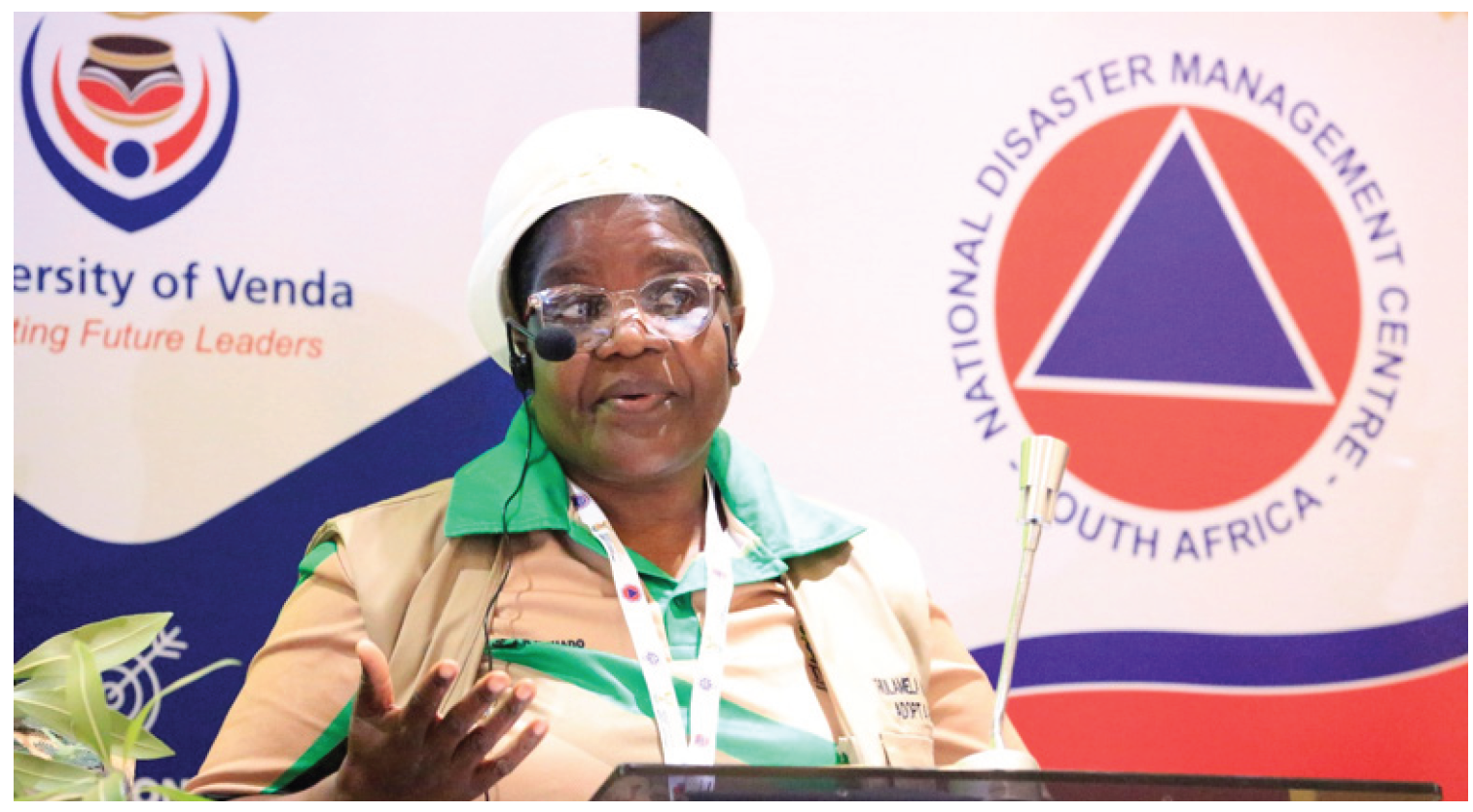
The seminar’s keynote presentation, “Lived Experiences of Women in Disaster Risk Reduction and Resilience,” was delivered by Ms Pfarelo Ramugondo, who shared practical lessons from the Thulamela-Makhado Adopt-a-River Organisation, a community-based environmental conservation initiative established in 2015. Drawing on the organisation’s experience of working with hundreds of community participants across more than 100 villages, she demonstrated how women have become central to protecting rivers, wetlands and water resources while strengthening environmental stewardship and disaster resilience.
Ms Ramugondo highlighted the success of partnerships with organisations including Thulamela Local Municipality, the Department of Forestry, Fisheries and the Environment, the Department of Water and Sanitation, the Vhembe Biosphere Reserve, traditional leaders and civic organisations, which have created employment opportunities, promoted environmental awareness and strengthened community resilience. She urged communities to prioritise environmental protection by preventing illegal dumping, safeguarding wetlands and promoting sustainable land-use practices, stressing that environmental degradation significantly increases vulnerability to disasters. She concluded by encouraging communities to become active custodians of the environment, recognising women as key drivers of sustainable development and resilience.
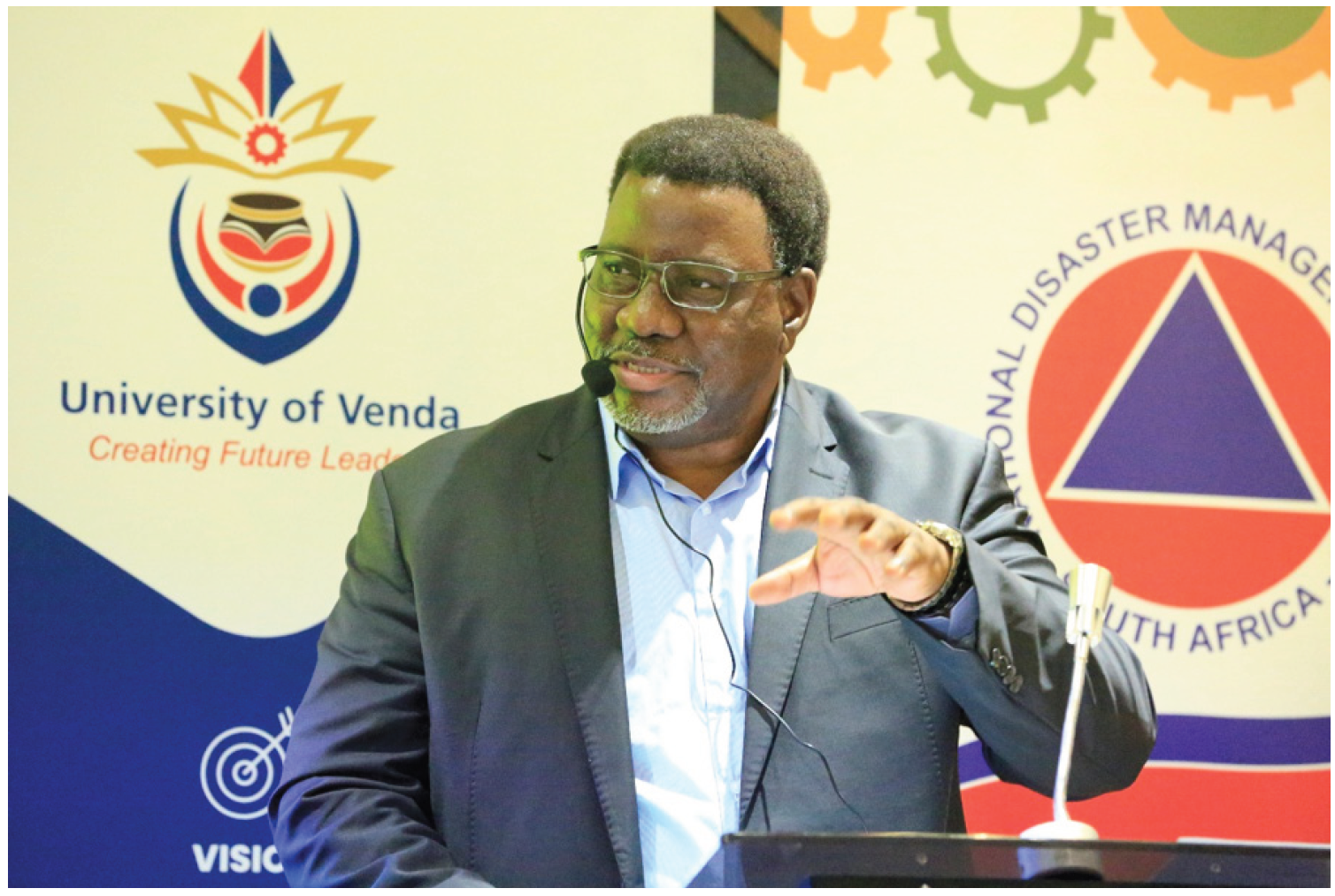
Delivering the keynote address, Dr Bongani Elias Sithole, Head of the National Disaster Management Centre, underscored the importance of research, innovation and collaboration in strengthening disaster risk reduction across South Africa. He emphasised that the growing frequency and intensity of disasters, driven by climate change and socio-economic vulnerabilities, require a decisive shift from reactive disaster response to proactive, evidence-based resilience building. He called on researchers to generate knowledge that addresses the realities faced by vulnerable communities and to ensure that scientific evidence informs practical interventions, policy development and sustainable development initiatives.
Highlighting the seminar’s focus on women, Dr Sithole recognised women as leaders, first responders and agents of resilience whose experiences and perspectives must be integrated into disaster management planning, governance and decision-making. He encouraged delegates to use the seminar as a catalyst for strengthening partnerships, sharing best practices and developing innovative solutions that address emerging disaster risks, reaffirming the National Disaster Management Centre’s commitment to supporting research that delivers meaningful change for communities.
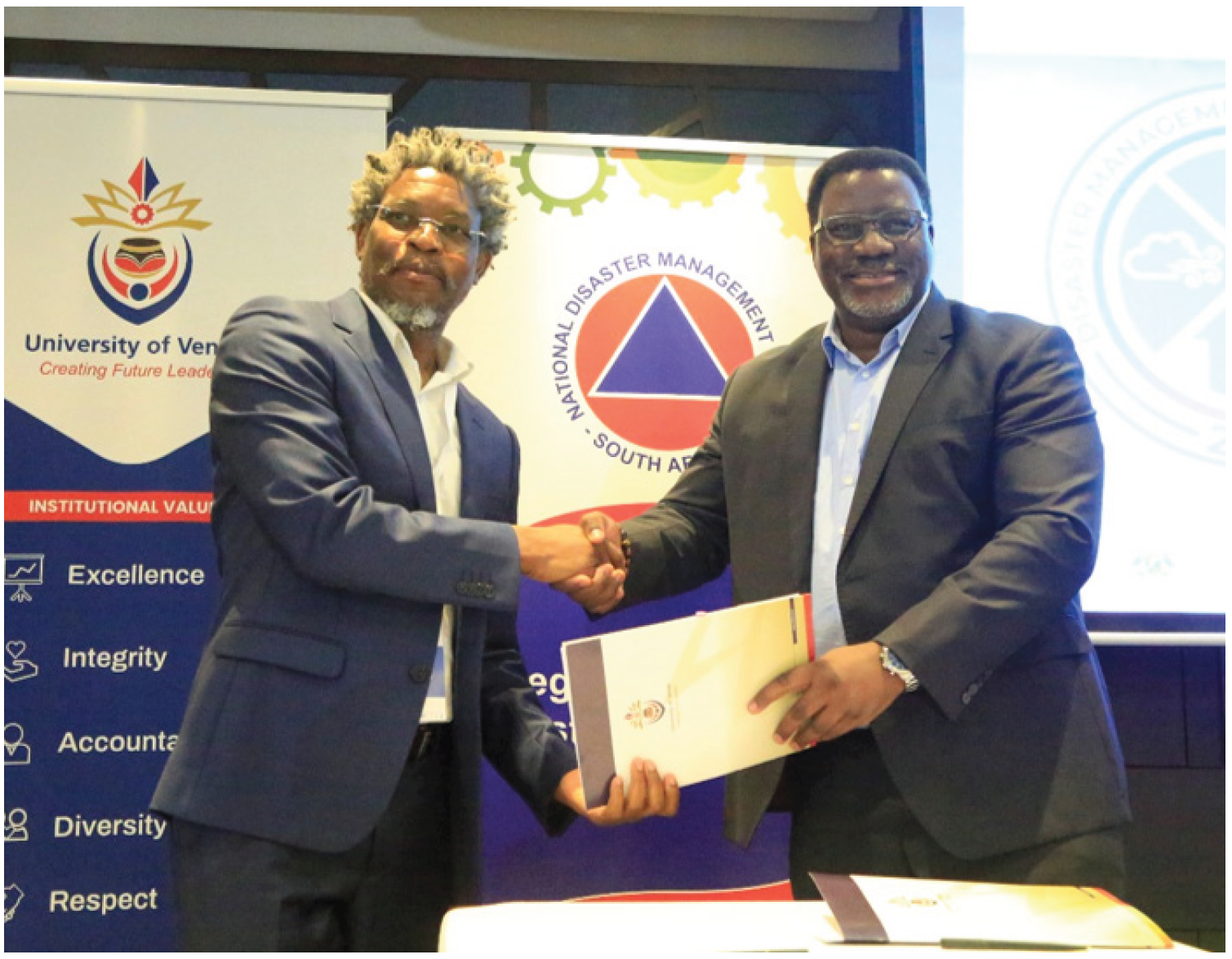
Prof Netswera and Dr Sithole exchanging the signed MoU
A major milestone of the seminar was the ceremonial signing of a Memorandum of Understanding (MoU) between the National Disaster Management Centre and the University of Venda, through the Department of Geography and the Environment in the FSEA. This reinforced the shared commitment to advance disaster management research, innovation, education and capacity development through strategic collaboration.
The seminar also showcased cutting-edge research through technical paper presentations covering a wide range of disaster risk reduction challenges. Researchers examined topics including the impact of fire and flood rescue kits on evacuation preparedness among persons with disabilities; gender-based violence and femicide as a national disaster; flood response in Thulamela Local Municipality; the disproportionate impacts of disasters on women and children; agricultural drought trends; climate variability and water resources; flood vulnerability mapping; and community coping strategies in drought-prone areas.
University of Venda (UNIVEN) researchers and students also showcased a range of impactful studies at the 2026 Disaster Management Research Seminar, demonstrating the University’s commitment to advancing evidence-based research that informs policy and strengthens community resilience. Presentations addressed critical issues in disaster risk reduction, climate resilience and sustainable resource management, including Ms Hlengiwe Mukhwathi’s evaluation of flood response actions in the Thulamela Local Municipality, Dr Rendani Munyai’s analysis of spatiotemporal drought trends, livelihood impacts and coping strategies in the Musina Local Municipality, Ms Mutshidzi Mavhaga’s investigation into the impacts of climate variability on surface water resources in the Thulamela Municipality, and Ms Khumbelo Tshiambaro’s assessment and mapping of flood-prone areas to identify flood vulnerability in the Thulamela Local Municipality, Vhembe District, South Africa.
Interactive panel discussions further explored women’s leadership in disaster risk governance, policy formulation and decision-making; the role of research, technology, indigenous knowledge and innovation in empowering women to reduce disaster risks; and strategies for building resilient communities through partnerships, capacity development and economic inclusion. Experts from universities, government departments, research councils, municipalities, civil society organisations and the private sector shared practical experiences and innovative approaches to strengthening resilience across South Africa.
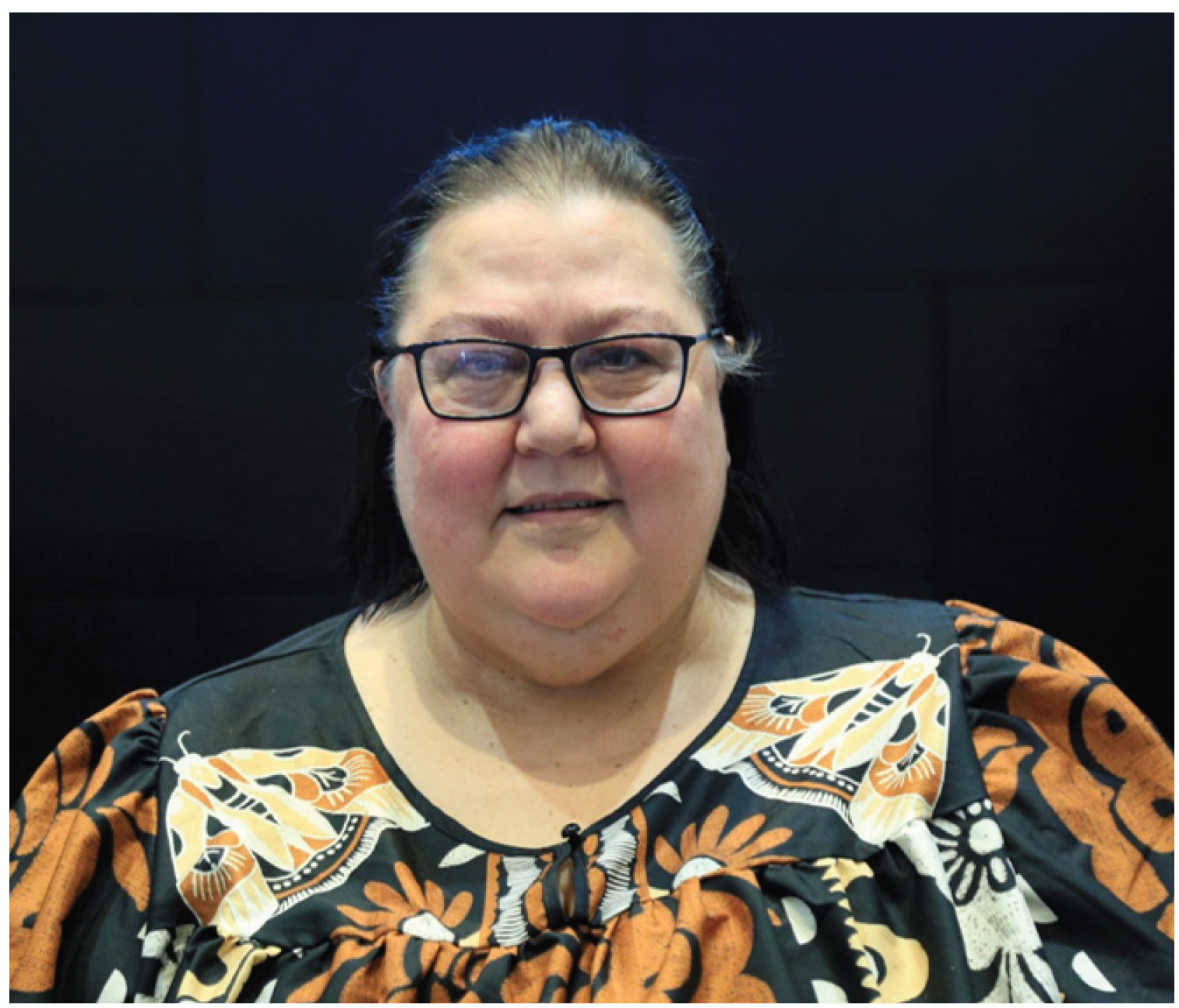
Prof Natasha Potgieter, Executive Dean of the Faculty of Science, Engineering and Agriculture, delivered the vote of thanks by describing the seminar as a transformative platform that celebrated the growth of disaster risk management at the University of Venda while reinforcing the value of collaboration, research and women’s leadership in building resilient communities. She congratulated the University’s first cohort of Disaster Risk Management and Reduction graduates and expressed appreciation to the Acting Vice-Chancellor, keynote speakers, presenters, moderators, organisers, participants and the behind-the-scenes support teams whose commitment ensured the seminar’s success. Reflecting on the discussions, Prof Potgieter emphasised that research should generate practical solutions that inform policy and improve communities, while advocating for women’s empowerment through inclusive governance, innovation, technology and capacity building. She also encouraged young researchers to continue developing their confidence and reminded delegates that meaningful transformation begins within local communities.
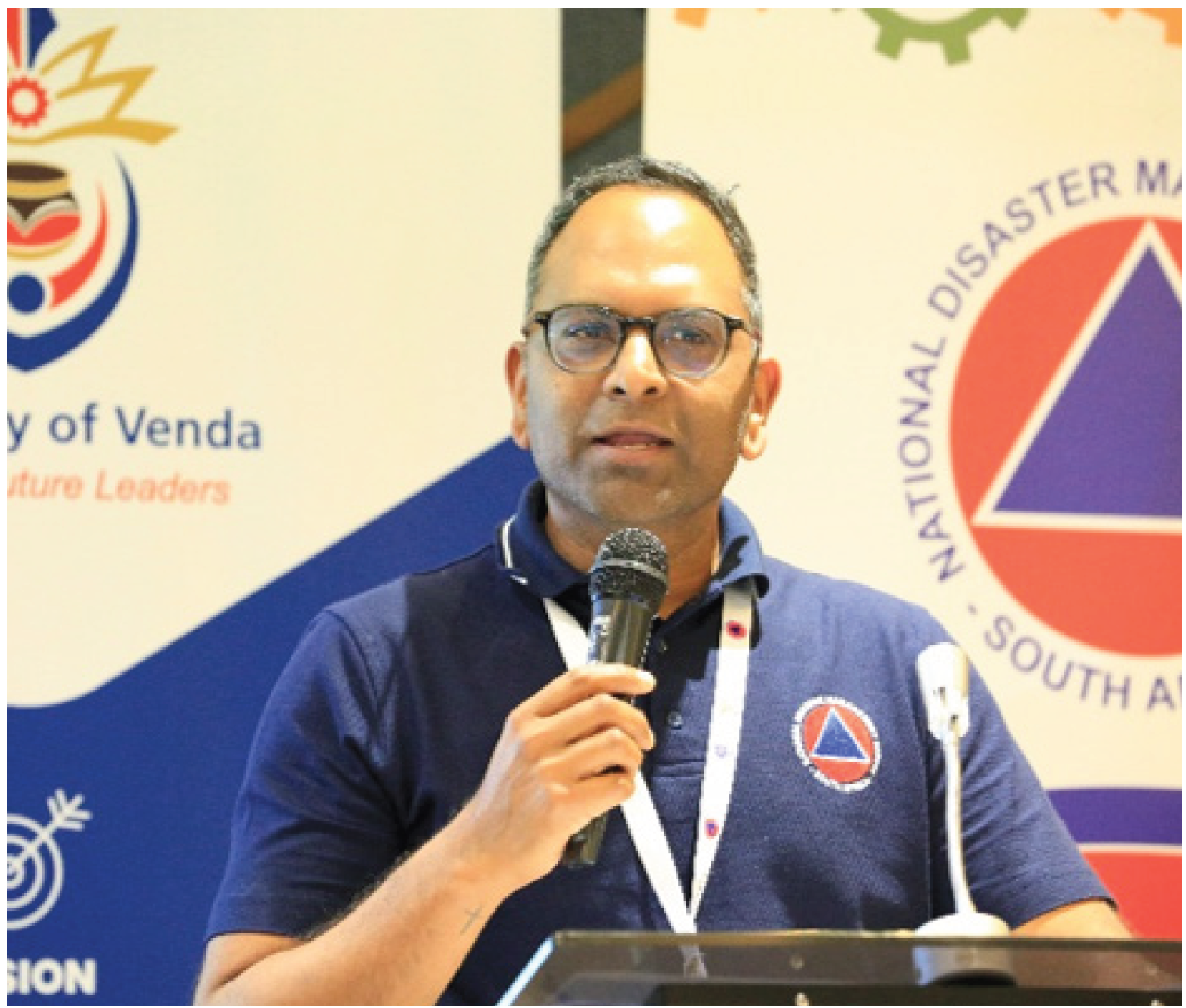
Delivering the way forward and closing remarks, Mr Dechlan Pillay from the National Disaster Management Centre described the seminar as an inspiring platform that reaffirmed the critical role of women in disaster risk reduction, resilience and sustainable development. He highlighted the importance of sustaining research, innovation, collaboration and partnerships across academia, government, civil society and communities to translate the seminar’s discussions into tangible action. Mr Pillay encouraged participants to maintain the networks established during the event, announced plans to continue hosting similar Women’s Month engagements in future, thanked the organising team and partners for their dedication, and concluded by wishing delegates safe travels while encouraging their continued participation in future disaster management initiatives. Delegates left with a renewed commitment to strengthening collaboration between government, academia and communities, ensuring that research translates into practical action that empowers women, reduces disaster risks and builds resilient, inclusive and sustainable communities for future generations.
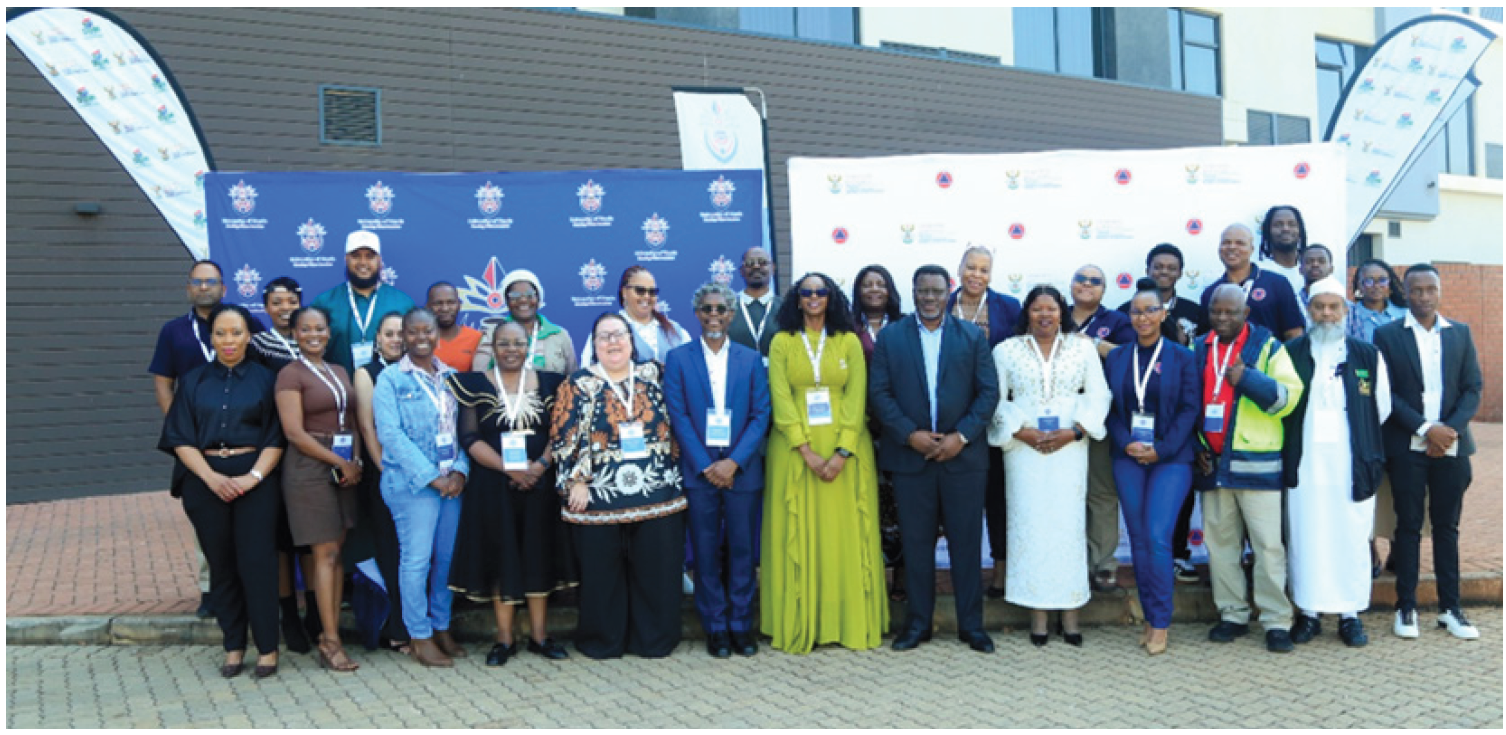
In the picture, dignitaries and delegates pose for a photo
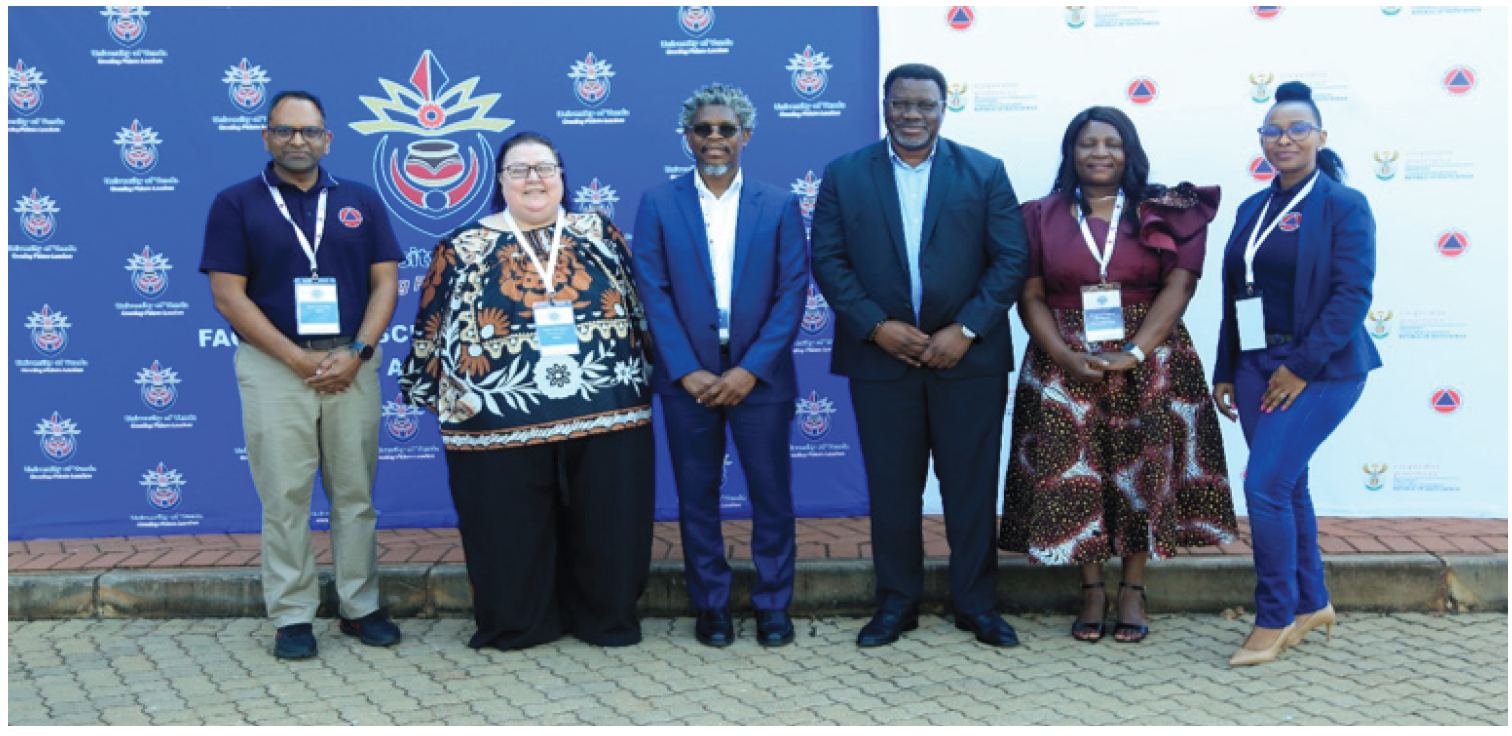
Posing together: Dr Deglan Pillay (National Disaster Management Centre), Prof Potgieter (Executive Dean: FSEA), Prof Netswera (Acting VC: UNIVEN), Dr Bongani Sithole (Head of the National Disaster Management Centre), Dr Murungweni (HOD of the Dept of Geography and the Environment, UNIVEN) and Ms Cynthia Nonjola (Director: Education, Training, Awareness and
Research at the National Disaster Management Centre}.
Issued by:
Department of Marketing, Branding & Communication
University of Venda
Tel: 082 868 2218 / 082 868 1811


