
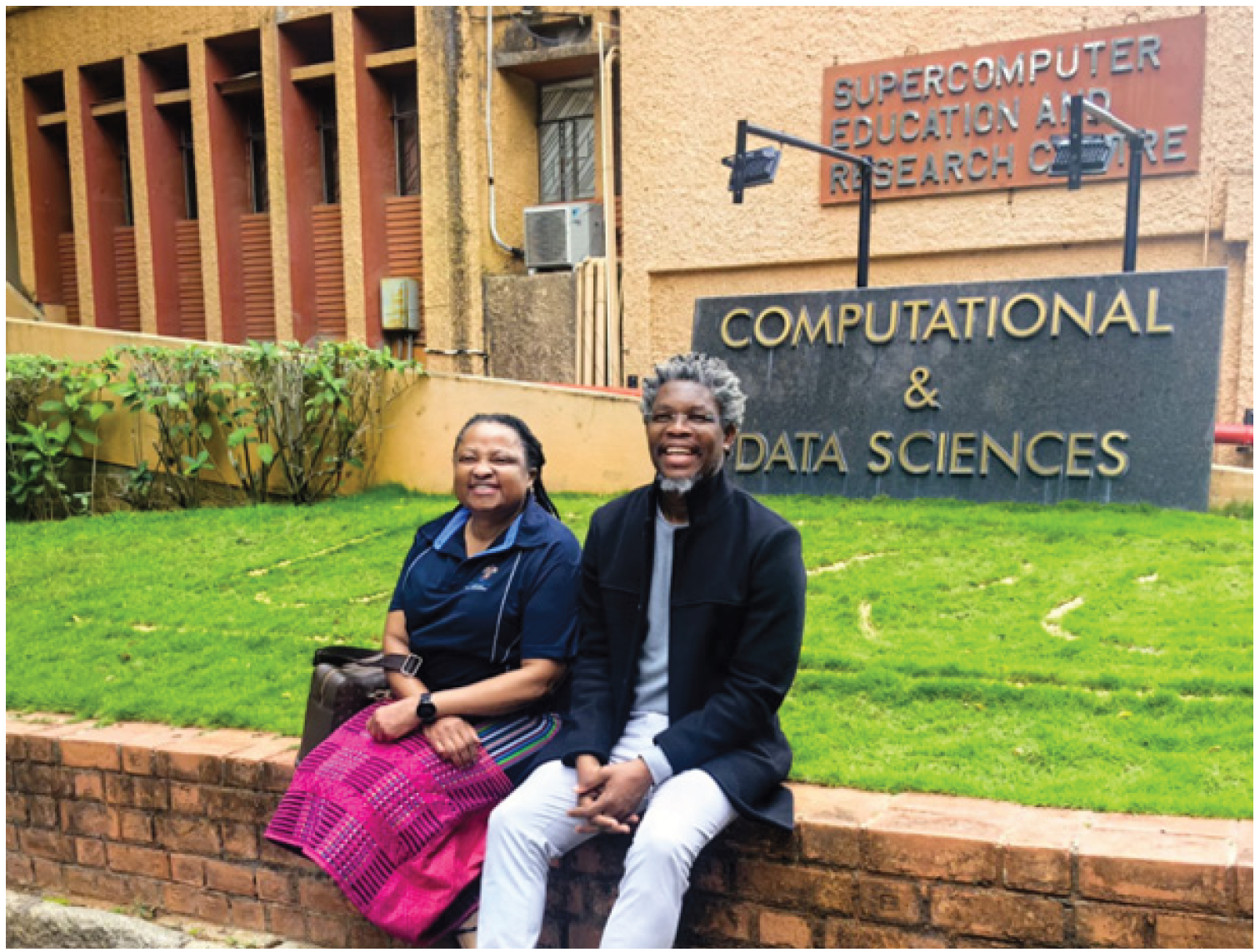
In the picture L-R: Professor Vhonani Netshandama and Professor Fulufhelo Netswera
UNIVEN is a member of the Technology Higher Education Network South Africa (THENSA) and through THENSA’s facilitated study tour, Professor Fulufhelo Netswera (DVC Research and Postgraduate Studies), and Professor Vhonani Netshandama (Director: Community Engagement, Entrepreneurship, Inclusive Innovation and Commercialisation), participated in a productive study visit to the Indian Institute of Science (IISc), Bengaluru, from 29 June to 3 July 2026. The visit explored innovative approaches to research excellence, interdisciplinary collaboration, entrepreneurship, technology commercialisation, and societal transformation.
A University that Prioritises Societal Problems
One of the key lessons from IISc’s philosophy is that transformative research and innovation should begin by solving real societal challenges, bringing together people from various disciplines, rather than prioritising disciplinary interests or isolated technologies. Faculty and students are encouraged to engage with communities, industry, public institutions, and end-users to understand problems before developing solutions. Innovation, therefore, follows a pathway from societal need to research, design, prototyping, entrepreneurship, and commercialisation, yielding societal impact. The visit reinforced the philosophy that universities create the greatest impact when they organise knowledge around solving complex societal problems.
Advancing transdisciplinary research culture
UNIVEN learned that IISc institutionalises transdisciplinary research through institutes like the Interdisciplinary Centre for Water Research, the Centre for Sustainable Technology, the Interdisciplinary Centre for Energy Research, and ARTPARK, demonstrating that today’s most pressing societal challenges require collaboration among engineers, environmental scientists, health researchers, data scientists, social scientists, entrepreneurs, policymakers, and communities.
The delegation observed that successful innovation ecosystems are not built around departments working independently but around integrated platforms where different forms of expertise converge around shared societal missions. IISc’s approach enables researchers to address challenges such as water security, climate resilience, sustainable energy, food systems, public health, artificial intelligence, and digital transformation through collaborative knowledge creation.
These lessons strengthen UNIVEN’s strategic case for transdisciplinary research platforms focused on, among others:
- Climate resilience and environmental sustainability;
- Water security;
- Agricultural innovation and food systems;
- Indigenous knowledge systems;
- Community health and wellbeing;
- Renewable energy;
- Digital transformation and artificial intelligence.
An integrated Research-Innovation and Entrepreneurship Ecosystem
The delegation observed mature innovation ecosystems in which research discoveries are systematically supported through proof-of-concept, pre-incubation programmes, startup formation, investment readiness, industry partnerships, and commercialisation pathways.
Importantly, entrepreneurship is not treated as a separate institutional engagement. Policies that enable and encourage entrepreneurship among researchers, students, societal entrepreneurs, funders, industrial partners, and government agencies permeate the shared ecosystem dedicated to translating knowledge into impact.
Entrepreneurial universities do not merely establish incubators; they deliberately cultivate institutional cultures that encourage curiosity, experimentation, creativity, collaboration, innovation, and calculated risk-taking. IISc has embedded innovation and entrepreneurial thinking within its teaching, research, postgraduate training, and industry engagements.
A particularly valuable lesson for UNIVEN was that entrepreneurship should not be viewed solely as business creation; rather, it represents a mindset that empowers students, researchers, academics, and communities to identify opportunities, solve problems, mobilise resources, and generate value for society.
Commercialisation, inclusive innovation and benefit sharing
An important feature of the IISc model is its emphasis on translating knowledge into practical solutions of social and economic value. Through structures such as the Foundation for Science, Innovation and Development (FSID) and the IISc Innovation Council, research is deliberately connected to enterprise creation, technology transfer, product development, and industry partnerships. The visit also highlighted that commercialisation contributes to inclusive development and community benefit. UNIVEN sees particular relevance in applying these lessons to indigenous knowledge systems, biodiversity-based innovation, natural products, traditional medicines, essential oils, indigenous foods, and other community-derived innovations.
UNIVEN should be deliberate towards firstly incubating startups, and to commercialise its innovative outcomes so that it can generate economic value in its society. This aligns with UNIVEN’s commitment to strengthening livelihoods, supporting local enterprise development, and creating shared value between researchers, communities, entrepreneurs, and industry partners.
Projectised and Entrepreneurial Curriculum
The IISc’s Department of Design and Manufacturing (DM) provided profound lessons. Beyond its achievements in design, manufacturing and Industry 4.0, the department offers a compelling model of how universities can rethink curriculum, research, innovation and entrepreneurship as an integrated ecosystem rather than as separate institutional functions.
This department deliberately distinguishes itself from traditional teaching and research approaches, moving away from disciplinary content, technologies, or predefined academic projects. This is because learning starts with societal challenges that require investigation, co-creation, and problem-solving. Students are expected to engage with communities to understand the context of a challenge, with industries and end-users, to develop prototypes, and test solutions towards entrepreneurship and commercialisation. The model follows a clear innovation pathway:
Societal Need – Problem Understanding – Design – Prototype – Solution – Market – Societal Impact.
The engagement also strongly resonated with UNIVEN’s aspiration to advance a project-organised curriculum, where students learn through addressing real-world challenges drawn from communities, industries, government and society. Such an approach has the potential to simultaneously advance student-centredness, community engagement, innovation, entrepreneurship and graduate employability. The IISc model further demonstrated that a thriving innovation ecosystem depends on cultivating an institutional culture where teaching, research and innovation are mutually reinforcing. This culture fosters curiosity, experimentation, collaboration, prototyping and responsible risk-taking, while maintaining a strong commitment to addressing societal challenges.
Towards a distinctive UNIVEN innovation model
UNIVEN can develop a distinctive model of university- and society-led transformation rooted in rural realities through community partnerships. UNIVEN’s doors are open to local and regional communities and solicit the same from the very communities in order to support, promote, and scale indigenous knowledge practices through transdisciplinary research, and inclusive innovation. Importantly, UNIVEN shall prioritise sustainable entrepreneurship and commercialisation. The study visit strengthens UNIVEN’s collaborations with IISc. UNIVEN prioritises continuation of the mutual partnership with the IISc by, among other things, sending its students, academics and entrepreneurship support personnel to IISc. In line with its vision, UNIVEN sees itself as a leading university in engaged scholarship. Its scholarship shall promote entrepreneurship and commercialisation, among its staff, students and society.
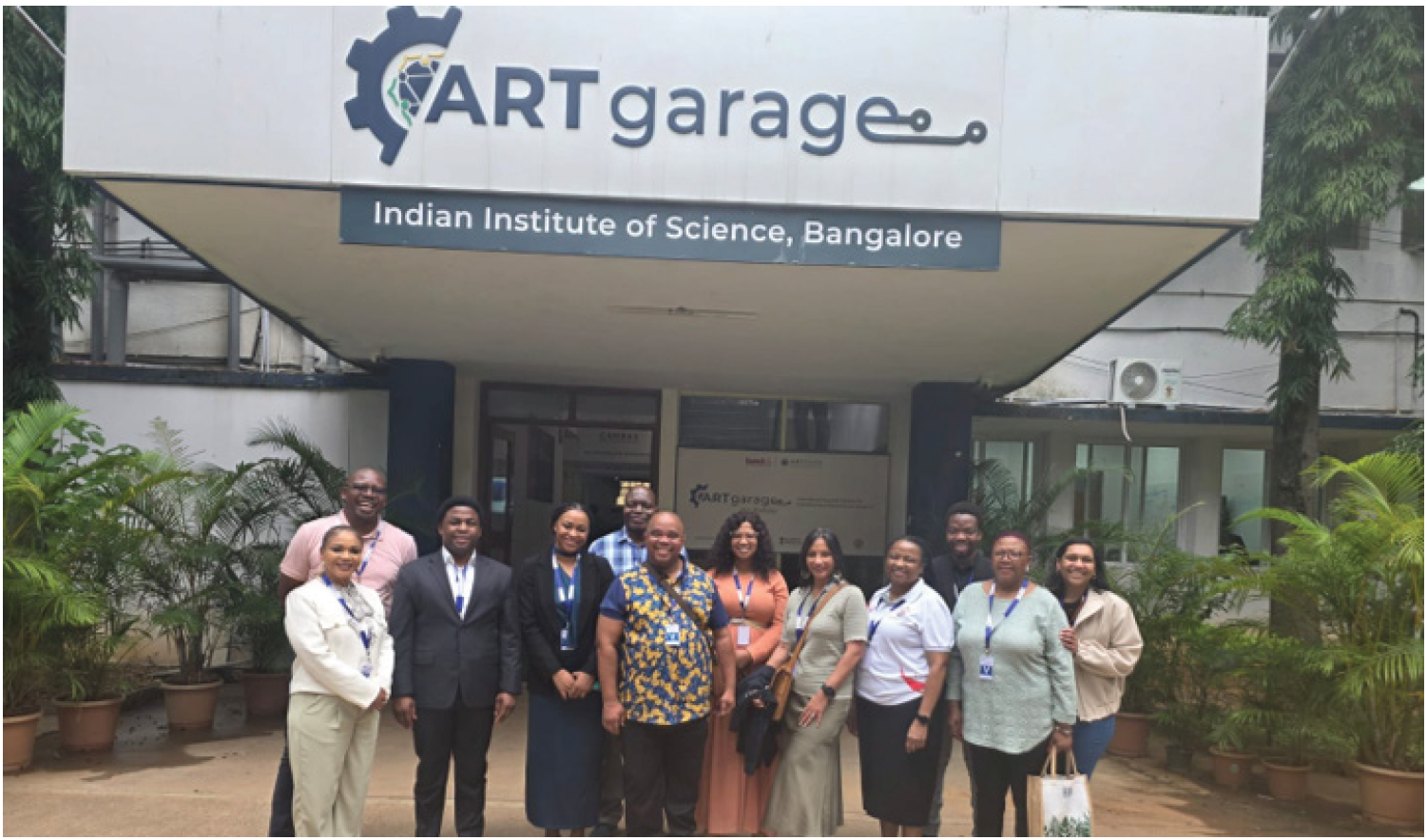
In the picture: Members of the THENSA partnership universities at the ARTGarage at IISc
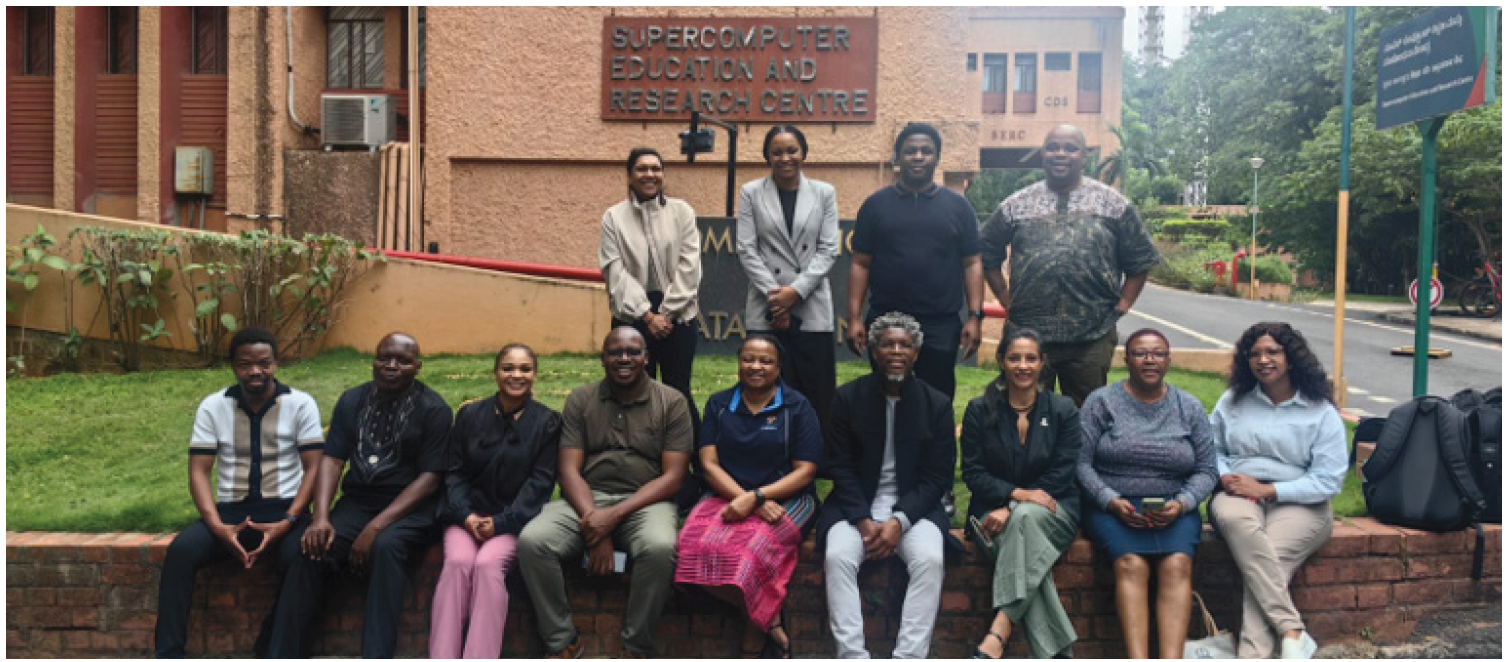
In the picture: Members of the THENSA partnership universities after viewership of the Computational and Data Centre equipment at IISc.
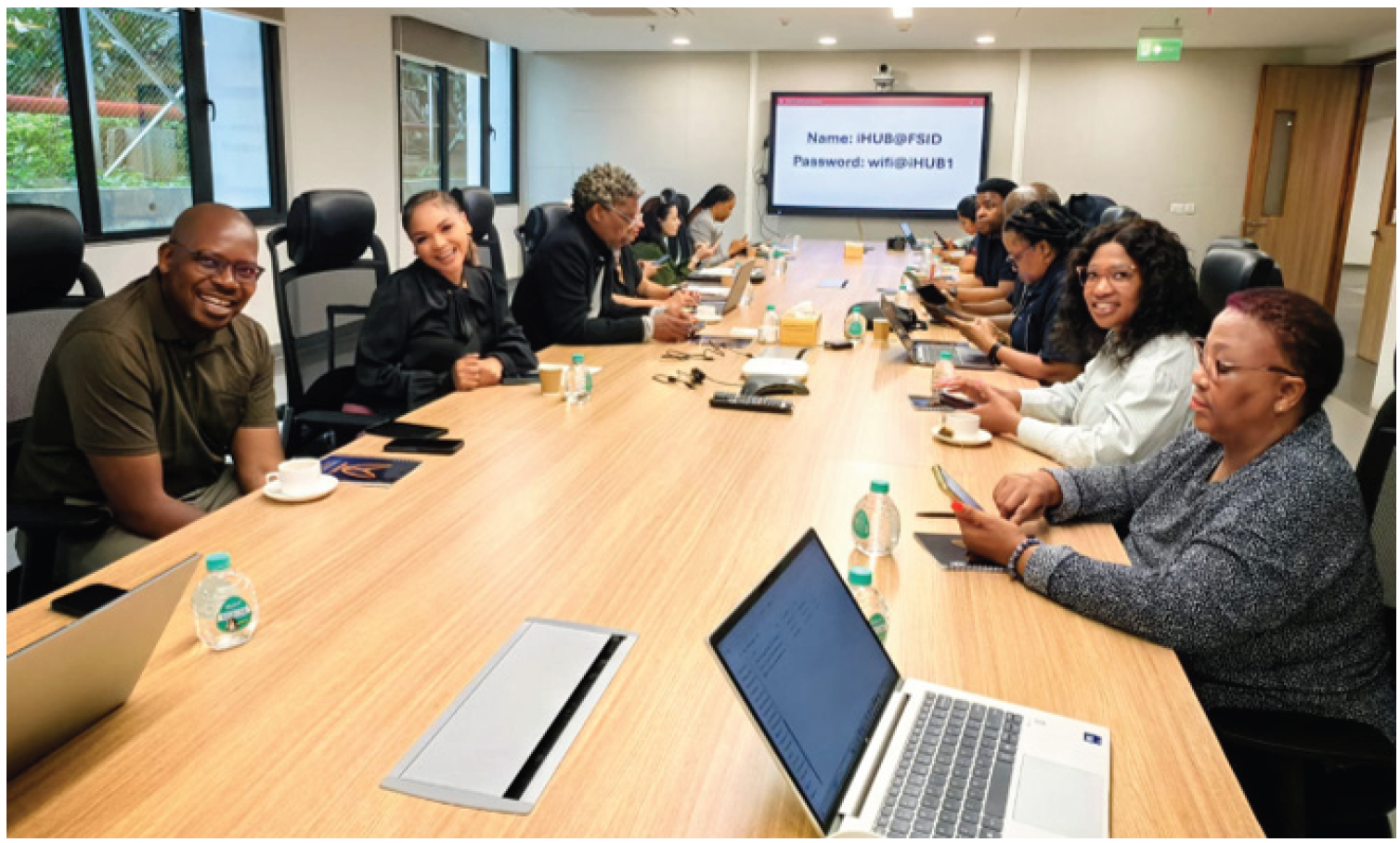
In the picture: Members of the THENSA partnership universities attending presentations by Innovation Staff members at the IISc
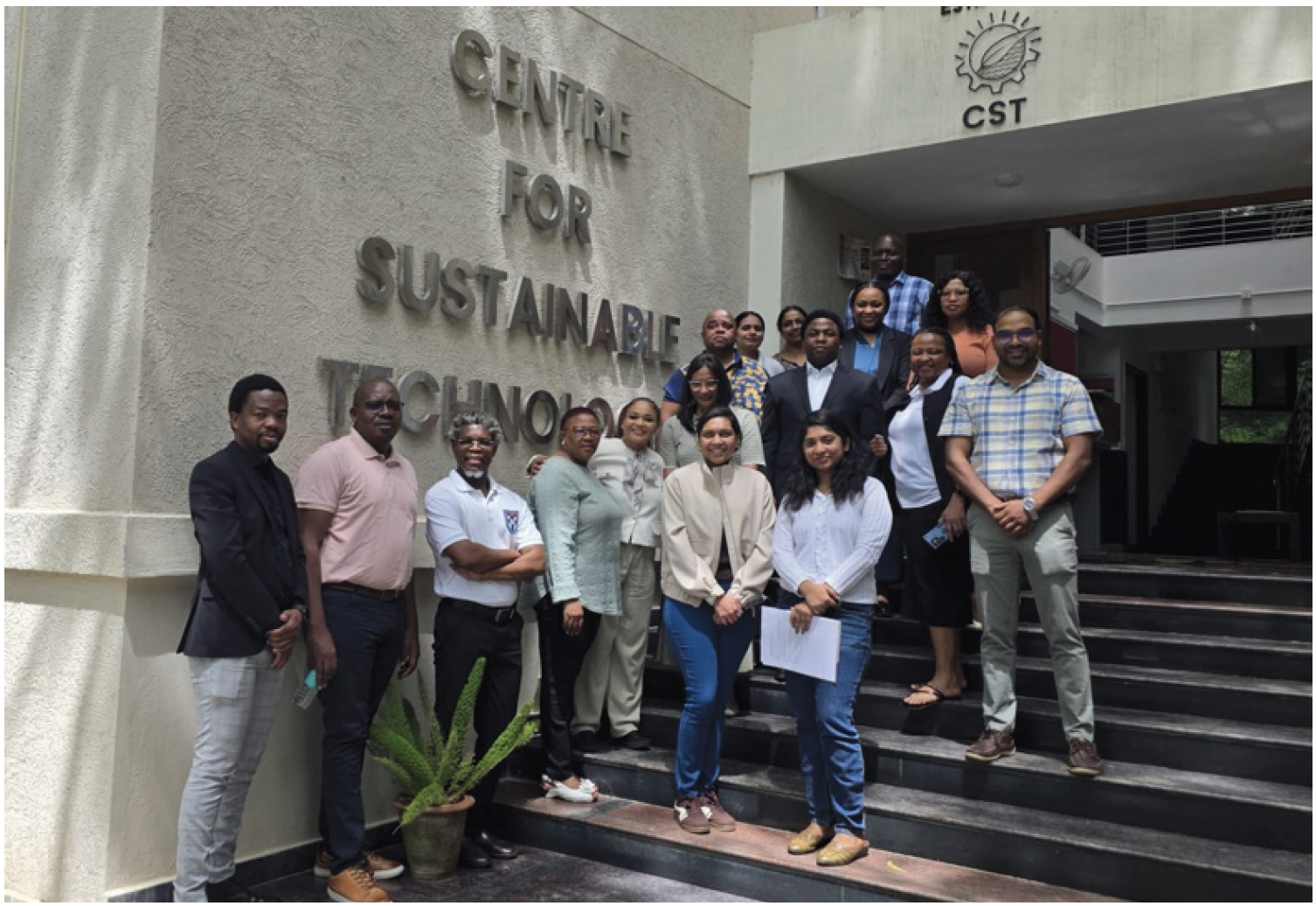
In the picture: Members of the THENSA partnership universities at the Centre for Sustainable Technologies IISc
Issued by:
Department of Marketing, Branding & Communication University of Venda
Tel: 082 868 2218 / 082 868 1811


